|
|
|
279 zł
|
|
price without VAT: 226,83 zł
|
| |
 Shop online: Shop online:
● ready for shipping
Shop in Warsaw (qty): 10+
● ready for shipping
Shop in Chorzow (qty): 2
● ready for shipping
|
|
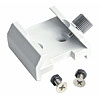
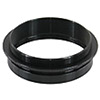
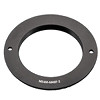
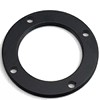
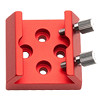
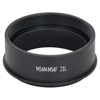
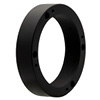
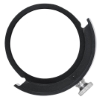
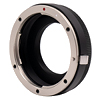
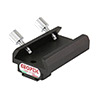
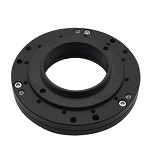
New (2020) tilter from ZWO. Tilter - the adapter for adjusting the camera plane with respect to the optical axis of the telescope or lens. Equipped with additional threaded holes, so it can be connected to the ZWO EFW (filter wheel).
It works with all ASI cameras, excluding ASI071, ASI2600 and ASI6200.
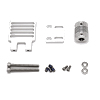
Included:
• tilter (φ = 78 mm, thickness 11 mm without the T2-T2 adapter),
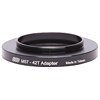
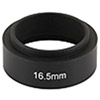
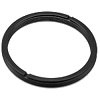
• T2-T2 adapter (M42 * 0.75, thickness 2 mm),
• hex key


0. Make sure your telescope is correctly collimated. To find out, it is best to make a test with a bright star, the so-called "startest". Point the telescope at a very bright star in such a way that it is in the center of the matrix or in the center of the eyepiece field of view and gently move the extractor around the focus (see "startest" on the Internet). If chromatic aberration is a problem in your system, you can apply a narrowband filter to reduce it. Red colors also undergo less atmospheric deflection.
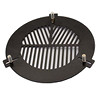
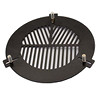
1. The center of the light sensor is almost always located in the center of the optical tube. To check the correctness of collimation, rotate the camera or camera to check the position of the star, which should remain as close as possible to the center of the matrix or eyepiece during this time. 2. Use the Bathinova mask to bring the star in focus to the center of the field of view to the ideal focus.
3. When setting the focus, check which direction of the stripe center shift corresponds to the movement outside the fire (if not everything is clear to you, see the instructions on using the Bathinova mask) .
4. Without changing the focus settings, position the optical tube so that the star you used to focus on is in the corner of the field of view. The image obtained then may not be perfect, but thanks to Bahtinov's mask it is easy to judge how much it differs from the ideal setting in relation to the telescope focal point. If, when you line up the star in each corner of the field of view, you find that the shift in the middle band is the same, you don't need to use a tilter.
5. You will need a tilter when the shift in the middle stripe on one side of the field of view will be different than on the other. 6. If you have performed point 3 correctly, you will easily judge in which direction the camera or camera matrix tilt should be corrected. Warning! Remember that the camera turns the image upside down.
7. Use the adjusting screws to move the plane closer to the focus away and repeat the steps described in step 4. If the telescope is correctly collimated, then the focus in the center of the field of view should not be change. Nevertheless, they should be inspected from time to time and corrected if necessary.
8. After a few more tries, you will achieve a significant improvement in the alignment of the matrix with the focal plane of your telescope. Remember, however, that the focal plane is curved and the image at the corners of the matrix should be slightly shifted from the focus relative to the center of the field of view, but the shift should be the same in every corner. After gaining experience and having someone to help you, the entire procedure should not take more than 20 minutes. These operations need not be performed in complete darkness, and can be done just after the sun goes down, right before shooting.
Remember that proper collimation applies not only to the optical tube itself, but to the entire set, including the telescope, guide scope, finder and camera. One should also take into account the influence of gravity depending on the final position of the optical tube on the assembly. For this reason, it is best to perform the activities described above at the place of observation.
Author: Przemys³aw M. for teleskopy.pl
|