Yes, we have measured many times (last time on February 19, 2021). The diameter of the base circle, including the widening, protective, black plastic tapes, in both 8" and 10" Sky-Watcher Dobsonians is 52 cm.

GO AND DOWNLOAD STELLARIUM FOR FREE Question : Can a DSLR camera be connected to this telescope? What accessories are needed for this?
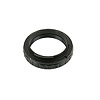
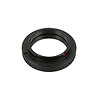
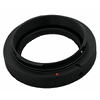
Answer: Of course YES, you can connect a digital SLR camera to this, as well as to any other telescope. For this purpose, you need: a projection connector and a T2 ring appropriate for your SLR camera (there are 5 standards of SLR bayonets: Canon EOS, Nikon, Olympus E, Petax K and Sony Alfa / Minolta AF). These connectors are available in our online store in the astronomical accessories section.
Question : Can a compact camera be connected to this telescope? What accessories are needed for this?
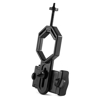
Answer: Of course you can. You can find a suitable shelf for compact cameras in the astronomical accessories section of our online store ( universal adapter for compact digital cameras ).
Question : Can a HYBRID camera (a large compact camera with the dimensions of a SLR) be connected to this telescope? What accessories are needed for this?
Answer: You can try this, but it is not recommended. The so-called hybrids do not work well in astrophotography because they do not have the ability to remove the lens like an SLR camera, and they are large and have large lenses, which means that shelf systems cannot be used, and the vignetting is high because you cannot bring the objective lens very close to the last optical surface of the telescope eyepiece. We recommend purchasing a SLR camera or a cheap compact camera.
Question : What else is worth buying for this telescope?
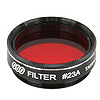
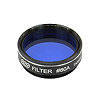
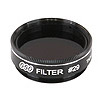
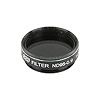
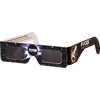
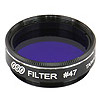
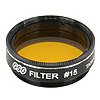
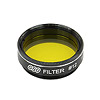
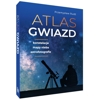
Answer: The presented telescope is a complete set, ready to conduct astronomical observations on the first clear night. As an addition, we first recommend educational publications that will make both the use of the telescope and the observations themselves more conscious and easier. Additionally, it is worth considering purchasing contrast planetary filters and solar filter foils (available in the astronomical accessories section).
Question : Can this telescope be used as a viewing telescope/nature telescope?
Answer: NO. This (Newton) mirror telescope is not suitable for observing terrestrial objects because it produces an upside-down image ("green down") and there are no optically good ways to "restore" it. However, this does not interfere with astronomical observations, because for an Earth observer the concept of up and down makes sense on Earth, but does not exist in space.
However, the Newton system telescopes work quite well in photography of ground objects and observations of aircraft at cruising altitudes.
Question : Can I observe both planets and nebulas with this telescope? Is this a telescope only for the city or only for the countryside?
Answer: All offered telescopes allow you to observe the planets of the Solar System (all) and nebulae, or more precisely, galaxies, star clusters, emission nebulae, etc. A separate issue is the clarity of details of the planets' surfaces and the number and brightness of nebular objects. A smaller telescope has its own sky, a large one has its own, but we can always count on wonderful observations of the structures of the Moon's surface, the phases of Mercury and Venus, the disk of Mars, the belts on Jupiter and the four Galilean moons of Jupiter, the ring of Saturn and the disks of Uranus and Neptune. The brightest nebulae, such as the Great Andromeda Nebula M31, the Great Orion Nebula M42 or the globular cluster in Hercules M13 always delight, even a small telescope will reveal several dozen of the most beautiful nebulae. Finally, a telescope equipped with a solar filter can be used to observe spots on the Sun's disk.
There is no division into telescopes for the city and the countryside , but rather recommendations: if the telescope will be used mainly in the city, in conditions of urban light pollution and high atmospheric instability (buildings give off heat at night, heating the air and the image starts to "float" like on hot days over a hot road!), then an achromatic refractor (lens telescope) or Maksutov (meniscus-reflector) is recommended. Our target will be mainly planets and compact objects. In turn, under the pitch-black, rural sky, it is worth using a Newtonian telescope (mirror) with the largest possible mirror we can afford, because we can count on a more stable and transparent atmosphere and great opportunities to observe nebulae.
Question : Does this telescope come with a tripod/mount included?
Answer: Of course YES, every telescope has an assembly, unless it is described as OTA ( Optical Tube Assembly).
Question : You write that the telescope comes with an assembly, does this mean that you will come and assemble the telescope for me?
Answer: Mounting does not mean mounting , but the system of mounting the telescope tube. You need to understand that we never make hand-held observations with an astronomical telescope - we have to mount the telescope on a system that allows it to be precisely positioned in any part of the sky.
In the case of a Dobsonian mount , the optical tube of the telescope is mounted on a type of box that serves as an azimuth mount , i.e. having two perpendicular axes: a height axis ("up - down") and an azimuthal axis ("left - law").
Question : I see that this telescope is quite low. How/in what position is it observed?
Answer: Telescopes with a Dobson mount have an eyepiece - that is, the place where we look / "put our eye" - often relatively low, especially when the mirror diameter does not exceed 35 centimeters. Nevertheless, observation is possible in a standing position, and the most comfortable position is sitting - for this purpose, it is worth purchasing a height-adjustable stool or even a foldable fishing chair. The lying position is probably not practiced :-)