|
|
|
337 EUR
|
|
price without VAT: 274 EUR
|
| |
 Shop online: Shop online:
● ready for shipping
Shop in Warsaw (qty): 1
● ready for shipping
Shop in Chorzow (qty):
● on request
|
|
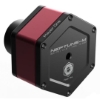
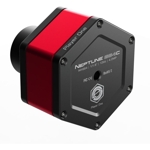
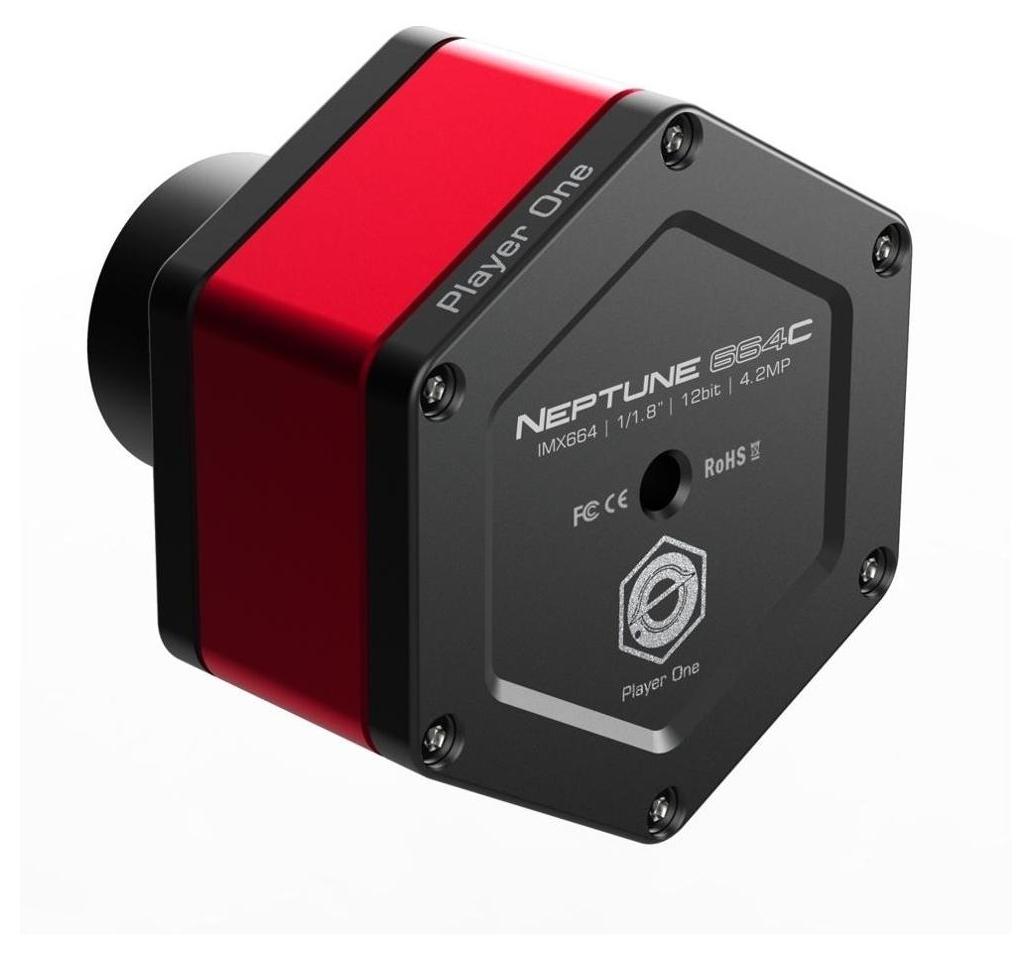
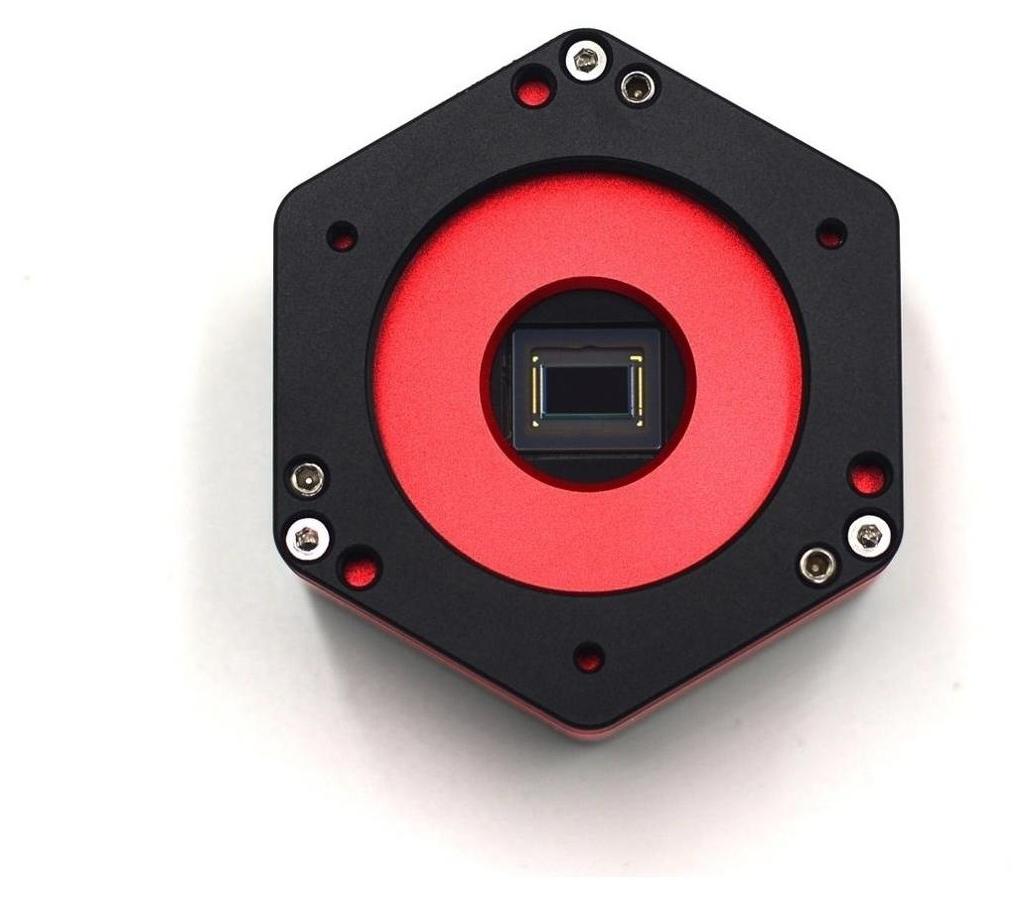
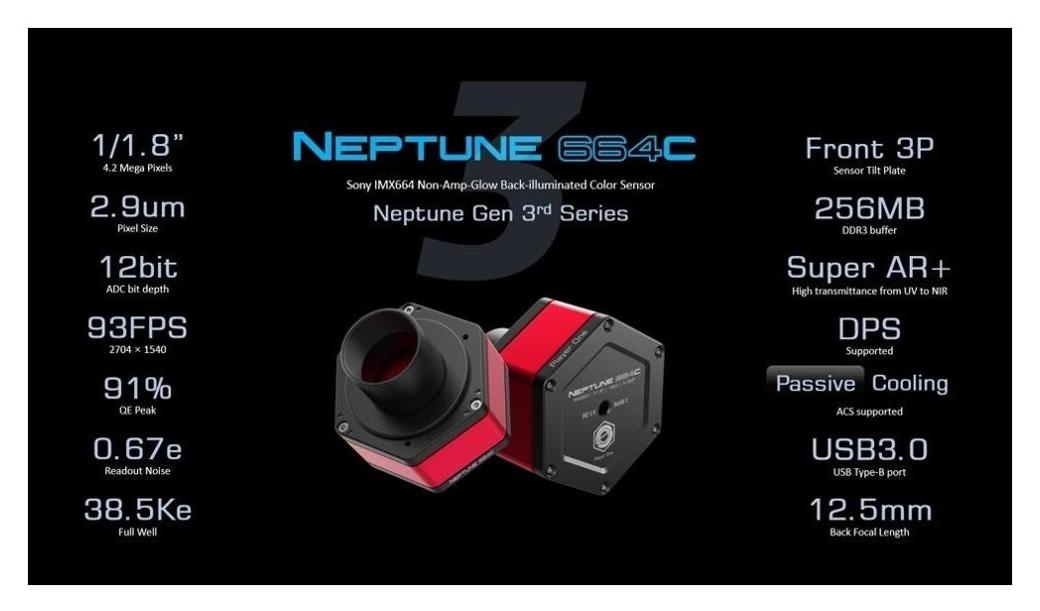
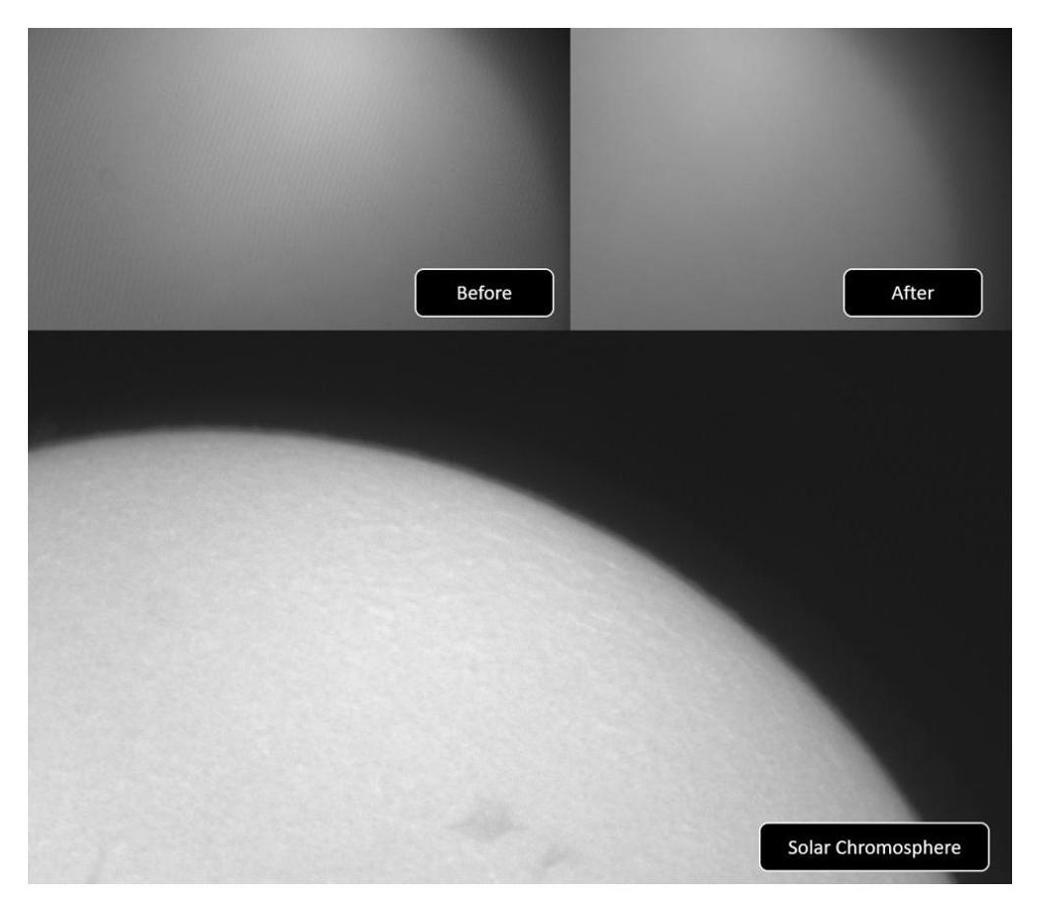
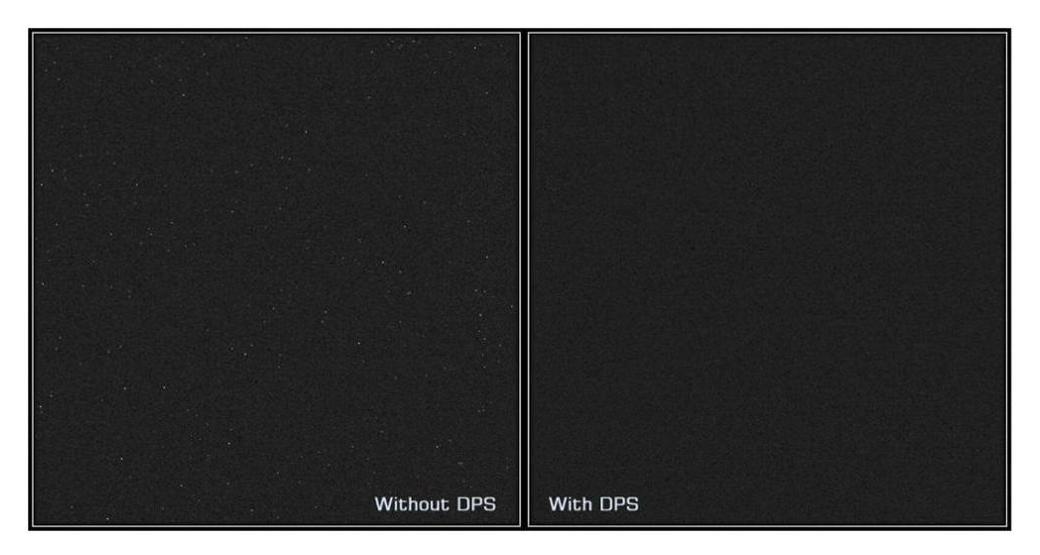
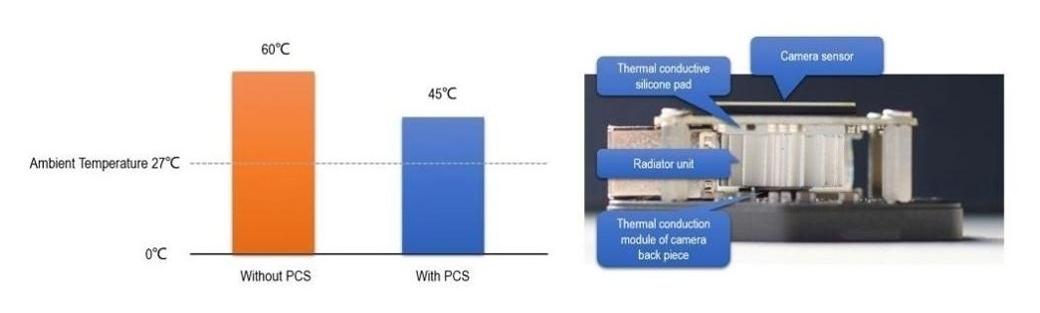
Player One NEPTUNE-664C Color (SKU: POA-NEPTUNE-664C ) is the third generation of the popular Neptune series planetary cameras. It uses the latest Sony IMX664 (STARVIS 2) sensor with a 1/1.8″ diagonal and a resolution of 4.2 MP (2704 × 1540 px). With a 2.9 µm pixel, globally amp-glow-free electronics and a 256 MB DDR-III buffer, the camera provides high sensitivity (~91% QE), a full well of 38.5 ke- and smooth recording up to ≈ 93 fps in full frame (RAW 10/12). The built-in PCS (Passive Cooling System) with a radiator and a Super AR Plus window guarantees low sensor temperature even when imaging the Sun. • Sony IMX664 COLOR sensor, 1/1.8″, 4.2 MP – 2704 × 1540 px
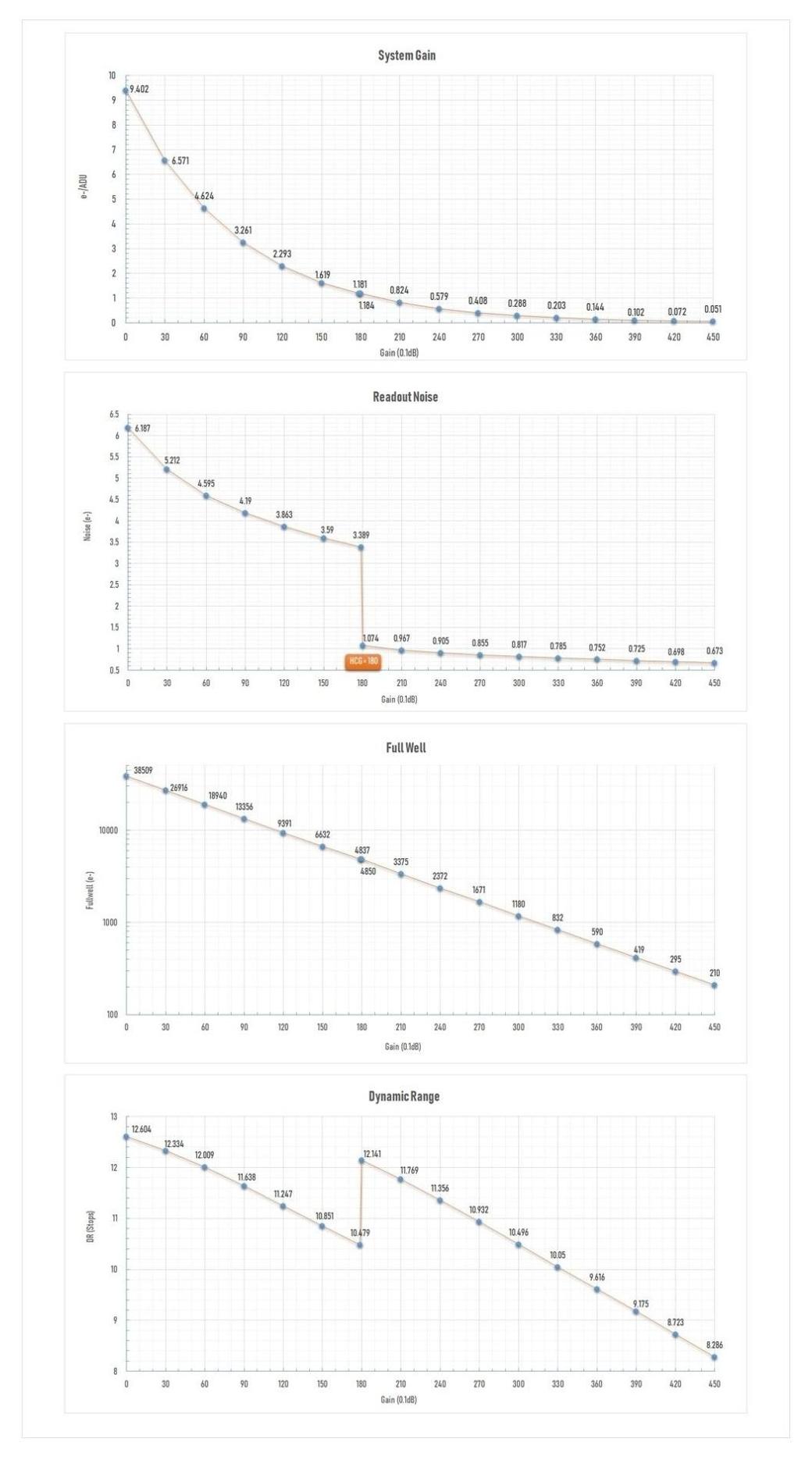
• 2.9 µm pixel, 38.5 ke- full well, read noise 6.1 e- → 0.67 e- (HCG)
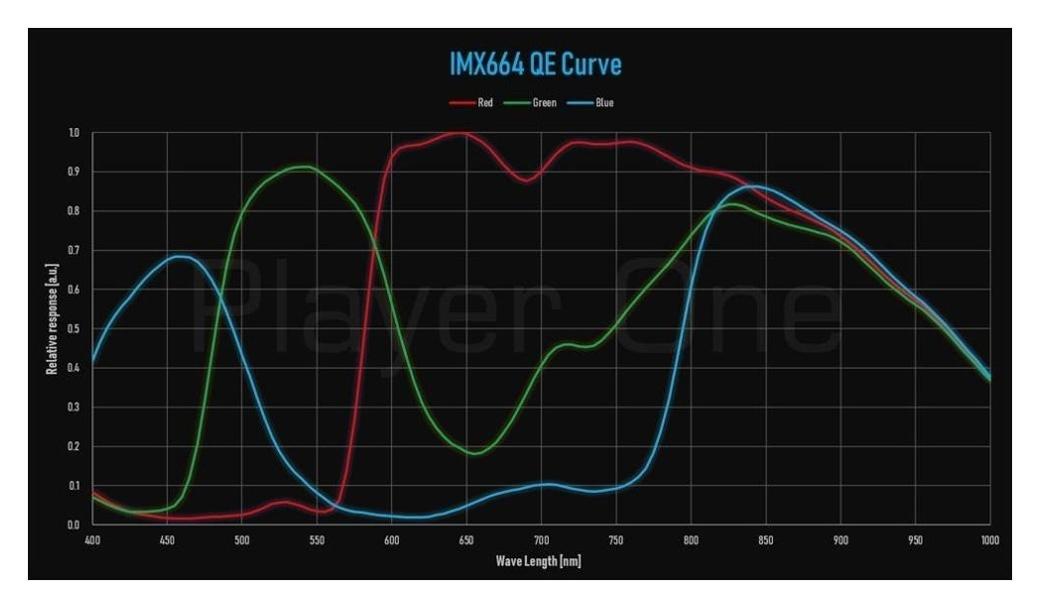
• STARVIS 2 technology – peak QE ~ 91% and no amp-glow
• max. 93 fps in full frame (RAW 10/12), up to ≈ 400 fps at ROI 640 × 480
• 256 MB DDR-III buffer – zero dropped frames even with a slow disk
• PCS (heat-sink) body + optional ACS active cooling module
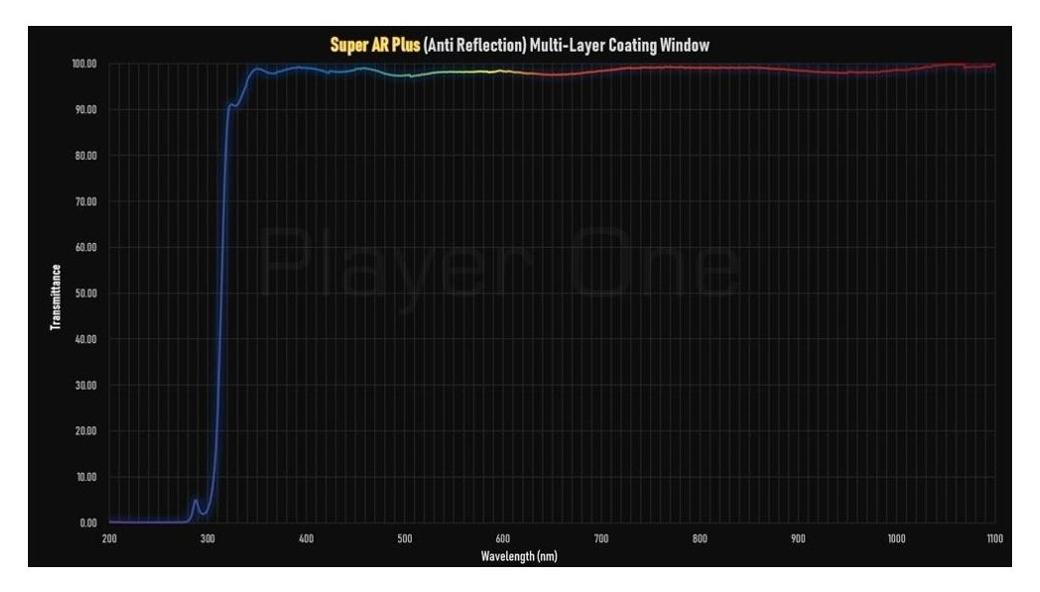
• Super AR Plus window – high transmission 310–1100 nm (UV → NIR)
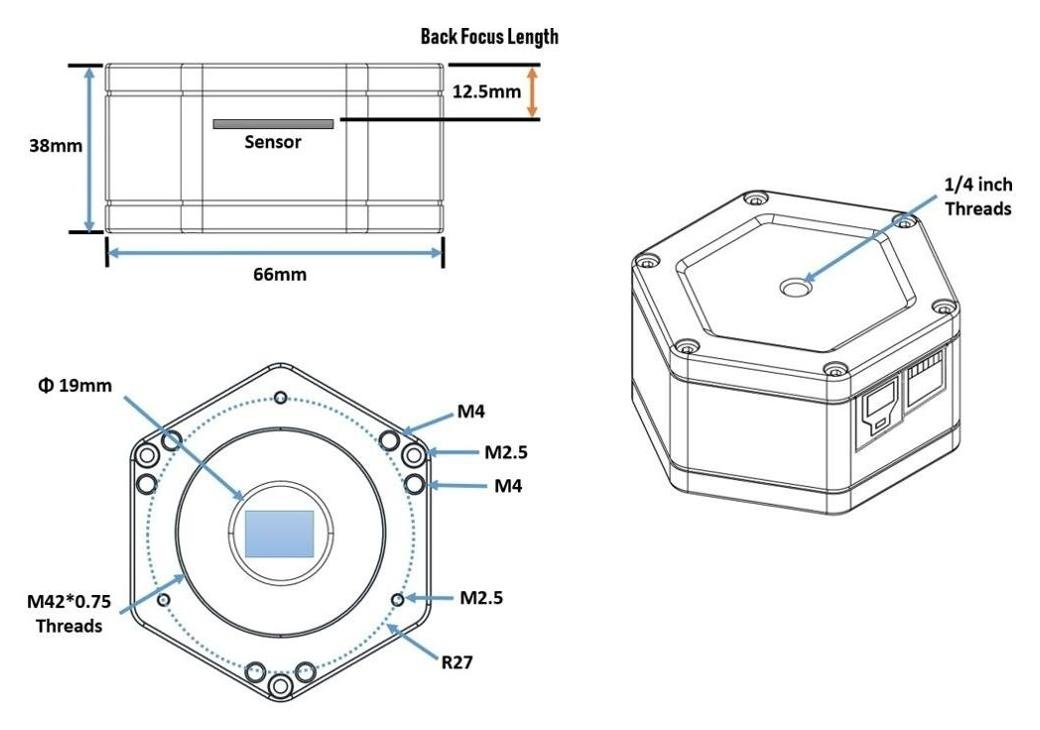
• threads: internal M42 × 0.75 + nose 1.25″ (standard), back-focus 12.5 mm
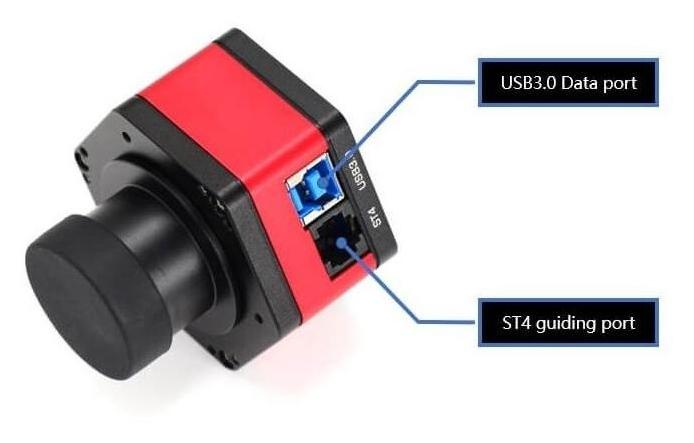
• USB-C 3.0 interface (400 MiB/s) + autoguider port ST-4
• ASCOM / INDI software; Windows, macOS, Linux
• matrix: Sony IMX664 (rolling shutter, Bayer RGGB)
• diagonal: 6.46 mm (1/1.8″) – chip 7.8 × 4.5 mm
• resolution: 2704 × 1540 px (4.2 MP)
• pixel: 2.9 µm
• ADC: 12 bit / 10 bit (RAW)
• Buffer: 256MB DDR-III
• full well: 38.5 ke-
• reading noise: 6.1 e- (gn 0) → 0.67 e- (HCG ≥ 180)
• fast frame: 93 fps @ 2704 × 1540 (USB 3.0), 398 fps @ 640 × 480
• exposures: 32 µs – 2000 s
• power supply: 5 V from USB (≤ 450 mA)
• dimensions / weight: Ø 66 mm × 32 mm, 180 g
• Cooling: PCS passive; ACS active compatible
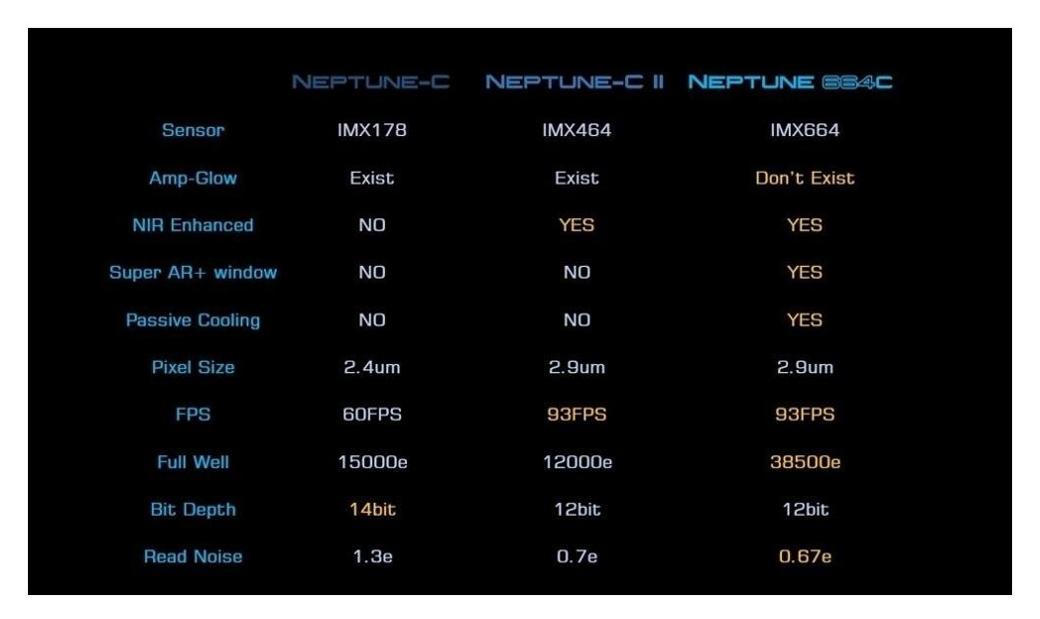
Neptune-664C is the successor of Neptune-C II and sets a new level of quality in high-speed photography of the Sun, Moon and planets. High sensitivity, no amp-glow and extremely fast readout speeds make it an excellent tool for “lucky imaging” with narrowband filters (H-α, Ca-K, CH 4 ), as well as for color recordings of the ISS or tracking dynamic phenomena in the atmospheres of Jupiter and Saturn.
|