|
|
|
915 EUR
|
|
price without VAT: 744 EUR
|
| |
 Shop online: Shop online:
● not available
Shop in Warsaw (qty):
● not available
Shop in Chorzow (qty):
● not available
|
|
Astronomical observations have never been so simple and accessible to everyone as now, thanks to the new line of Sky-Watcher Star Discovery telescopes! Star Discovery telescopes are intended for beginner users who are lost in the maze of various telescope models and are looking for their dream equipment:
• lighter than others
• fastest to assemble
• easiest to use
• more modern than others
• reliable in learning the first astronomical observations
These are the Star Discovery telescopes. Their stable, azimuthal mounting on a steel, extendable tripod is equipped with a modern GO-TO SynScan system. Using the built-in Wi-Fi network in the mount and the user's smartphone, it allows you to locate and track over 42,000 objects in the sky! Moreover, the dual axis encoder system allows the telescope to be moved manually without the risk of losing the telescope's orientation towards the stars.
The mounting head has a basket for 8 batteries/rechargeable batteries, thanks to which the telescope can operate wirelessly. This opens up wonderful possibilities for observations away from buildings, e.g. during a car trip to the dark, starry sky outside the city. It is also an ideal proposition for organizers of sky shows, astronomy popularizers and teachers.
Nothing stops you from going on a night adventure with the new Star Discovery telescope. Express assembly/disassembly of the optical tube and assembly of the tripod is performed using single knobs and takes 3 minutes. Compositions: The tripod, along with the tube, fits into any car and is easy to carry and assemble by one person.
The adjustable elevation axis clutch allows for smooth and easy telescope control, even at the zenith. A high-quality finder scope or red-dot (depending on the model) allows you to quickly find out in which part of the sky the found object is located. Impress your friends with your knowledge of the sky by showing it with the Star Discovery telescope!
The installation of Star Discovery telescopes is not only about astronomical equipment. Just remove the telescope and install a digital SLR camera with a lens to enter the world of simple astrophotography, time-lapse photography and video filming. This mount offers the functionality of the Virtuoso mount - it allows you to trigger the shutter of digital cameras (via an appropriate cable available outside the set), is battery-powered and has a similar system for mounting accessories on an L-adapter (dovetail).
The Star Discovery series includes several types of optical instruments:
• achromatic refractor 102/500 mm
• Maksutov-Cassegrain 127/1500 mm
• Newton's parabolic reflector 130/650 mm
• Newton's parabolic reflector 150/750 mm The Maksutov optical system is one of the most highly valued optical designs, widely appreciated for its mobility, ease of use and multifunctionality. It is an excellent choice for both astronomical observations, terrestrial observations and aircraft observations. Excellent optics provide an exceptionally sharp image across the entire field of view. The telescope consists of a meniscus correction plate, a main mirror and a secondary mirror placed on the inner part of the meniscus. These telescopes have a reduced coma and show only residual chromatic aberration, giving very sharp and expressive images. The great advantage of Maksutov telescopes is their compact design and low weight. Due to their large focal length and low light intensity, they are perfect for planetary observations. This type of construction works well in urban conditions, where the main emphasis is on objects in the solar system, not on nebulae. The telescope is equipped with a focuser that allows the use of 1.25" glasses. The set includes two 20 mm and 10 mm glasses. The telescope can be successfully used to photograph the Moon, planets and bright deep sky objects. The Maksutov system telescope works well in observing ground objects, especially at long distances, and in observing and photographing aircraft at high altitudes. THE OFFERED TELESCOPE ALLOWS YOU TO START OBSERVATIONS ON THE FIRST CLEAR NIGHT - IT CONTAINS ALL NECESSARY ACCESSORIES
Moon planets clusters nebulae control from PC
| • Optical system: | Maksutow-Cassegrain | | • Lens diameter: | 127mm | | • Lens focal length: | 1500mm | | • Lightpower: | 1/11.8 | | • Theoretical stellar range: | 13.2 magnitude | | • Maximum useful magnification: | 260x | | • Tripod: | steel | | • Installation: | azimuth with GOTO, SynScan AZ | | • Finder: | optical, 6x30 | | • Spectacle focuser: | 1.25" |
• telescope
• foldable steel tripod
• Star Discovery GT head with built-in Wi-Fi
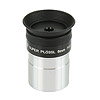
• 1.25" 20 mm and 10 mm glasses
• 90° 1.25" angle connector
• 6x30 optical finder
• table-strut 5 years warranty for mechanics, 2 years for electronics
(note: version without remote control, with built-in Wi-Fi module)


READ : SHORT GUIDE TO CLEANING OPTICS
 [PDF] [PDF]
READ : HOW TO CONNECT A COMPACT CAMERA WITH A TELESCOPE
[PDF]
READ : HOW TO CONNECT A DIGITAL SLR Camera WITH A TELESCOPE
[PDF]
>> FREQUENTLY ASKED QUESTIONS <<
Question : Can a beginner cope with assembling and operating this telescope?
Answer: Each telescope is supplied with extensive instructions in Polish, from which the user will learn how to assemble the telescope and how to use it during observations. Customers usually have no difficulty assembling the telescope as long as they read the instructions.
A separate issue is searching for objects in the sky during the first observations. That's why we recommend educational items in the Publications section (especially maps and astronomical guides) and Stellarium: an excellent, free "planetarium" program in Polish, ideal for learning the sky and planning observations.

GO AND DOWNLOAD STELLARIUM FOR FREE Question : Can a DSLR camera be connected to this telescope? What accessories are needed for this?
Answer: Of course YES, you can connect a digital SLR camera to it and to any other telescope. For this purpose, you need: a projection connector and a T2 ring appropriate for your SLR camera (there are 5 standards of SLR bayonets: Canon EOS, Nikon, Olympus E, Petax K and Sony Alfa / Minolta AF). These connectors are available in our online store in the astronomical accessories section. Question : Can a compact camera be connected to this telescope? What accessories are needed for this?
Answer: Of course you can. A suitable shelf for compact cameras can be found in the astronomical accessories section of our online store ( universal adapter for compact digital cameras ). Question : Can a HYBRID camera (a large compact camera with the dimensions of a SLR) be connected to this telescope? What accessories are needed for this?
Answer: You can try this, but it is not recommended. The so-called hybrids do not work well in astrophotography because they do not have the ability to remove the lens like an SLR camera, and they are large and have large lenses, which means that shelf systems cannot be used. , and the vignetting is high because the lens cannot be very close to the last optical surface of the telescope eyepiece. We recommend purchasing a SLR camera or a cheap compact camera. Question : What else is worth buying for this telescope?
Answer: The presented telescope is a complete set, ready to conduct astronomical observations on the first clear night. As an addition, we first recommend educational publications that will make both the use of the telescope and the observations themselves more conscious and easier. Additionally, it is worth considering purchasing contrast planetary filters and solar filter foil (available in the astronomical accessories section). Question : Can this telescope be used as a viewing telescope / nature telescope?
Answer: YES. Through the angle connector, the telescope gives an uninverted image of the Earth. Question : Can I observe both planets and nebulae with this telescope? Is this a telescope only for the city or only for the countryside?
Answer: All offered telescopes allow you to observe the planets of the Solar System (all) and nebulae, or more precisely, galaxies, star clusters, emission nebulae, etc. A separate issue is the clarity of details of the planets' surfaces and the number and brightness of nebular objects. A smaller telescope has its own sky, a large one has its own, but we can always count on wonderful observations of the structures of the Moon's surface, the phases of Mercury and Venus, the disk of Mars, the belts on Jupiter and the Galilean four moons of Jupiter, the ring of Saturn and the shields of Uranus and Neptune. The brightest nebulae, such as the Great Andromeda Nebula M31, the Great Orion Nebula M42 or the globular cluster in Hercules M13 always delight, even a small telescope will show several dozen of the most beautiful nebulae. Finally, after equipping it with a solar filter, a telescope can be used to observe spots on the Sun's disk.
There is no division into telescopes for the city and the countryside , but rather recommendations: if the telescope will be used mainly in the city, in conditions of urban light pollution and high atmospheric instability (buildings warm at night, heating the air and the image begins to "swim" like on hot days over a hot road!), then an achromatic refractor (lens telescope) or Maksutov (meniscus-mirror) refractor is recommended. Our target will be mainly planets and compact objects. In turn, under a pitch-black rural sky, it is worth using a Newtonian (mirror) system telescope with the largest possible mirror we can afford, because we can count on a more stable and transparent atmosphere and a large possibilities of observing nebulae. Question : Does this telescope come with a tripod/mount included?
Answer: Of course YES, every telescope has an assembly, unless it is described as OTA ( Optical Tube Assembly ). Question : You write that the telescope comes with an assembly, does this mean that you will come and assemble the telescope for me?
Answer: Assembly does not mean mounting , but the system of mounting the telescope tube. You need to understand that we never use an astronomical telescope to observe "hand-held" - we have to mount the telescope on a system that allows it to be precisely positioned in any part of the sky.
In the case of azimuth mounting , the tube is moved in two axes - azimuth ("left - right") and height ("up - down"). Please don't worry - it's nothing difficult, although the names may seem exotic at first. Additionally, the assembly is equipped with stepper motors to move the telescope and the GOTO object search system, which greatly simplifies work under the starry sky on the first night.
|