Samyang 500mm Mirror is a mirror lens with an extremely large focal length. It allows you to perform amazing close-ups. Thanks to the mirror construction, the length of the lens remained very small. Ideally suited for astrophotography, nature photography and wherever very close approximations are required.
The lens is made very solidly and precisely with high quality optical glass (all coated layers). It has a metal casing. It provides high quality photos, it is also much cheaper than equivalents with similar parameters.
It is a manual lens with constant light. However, this is not a problem at such high focal lengths.
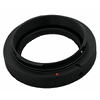
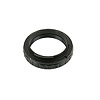
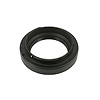
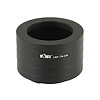
The set includes a practical cover and lid. With the use of T2 adapters, this lens can be successfully used with Canon, Nikon, Sony, Olympus, Pentax, Micro 4/3, Sony NEX (adapters available separately). The offer also includes 2x converters (using the lens focal converter increases twice).
In most cases, the focal length should be multiplied by 1.5-1.6x. Actual lens focal length is even 800mm!
Samyang 500mm Mirror cooperates, among others with cameras such as
Canon EOS 5D 50D 40D 30D 20D 450D 400D 350D 1000D
• Nikon D3X, D700, D300, D200, D100, D90, D80, D70, D70s, D60, D50, D40, D40X
• Sony Alpha A900, A700, A350, A300, A200, A100
• Olympus E-30, E-3, E-520, E-510, E-500, E-420, E-410, E-400, E-330, E-300
• Pentax K20D, K10D, K200D, K110D, K100D, K100D Super, Km and many more.


>> FREQUENTLY ASKED QUESTIONS and EXPLANATION OF BASIC NOTES <<
(click to expand the list of questions) QUESTION : How do you attach this lens to your camera body?
Answer: To connect a manual lens with a T2 thread and a camera body, you must have the correct T-2 ring. SEE THE PUSH OFFER T2
QUESTION : Is it possible to use a UV / polarizing / effect filter for this lens?
Answer: Any filter with a diameter of 95mm can be attached to the lens.
BASIC CONCEPTS
MC - short for English Mulit Coated. It means that multi-layered anti-reflective coatings preventing reflection of light from the surface were applied on the glass. MC layers increase the optical efficiency (transmission) of optics and minimize glare.
IF - short for English Internal Focusing. It means that in the optical construction of the lens the lens that is responsible for the focusing position is not one of the external lenses. Thanks to this solution, neither the front nor the last lens of the lens rotates, which is important when using filters or sunblinds.
The Preset lens - the lens in the construction of which the ring is located to set the aperture value.
ED - means the use of extra low dispersion lens in the construction of the objective lens. Such lenses are characterized by less cleavage of the components of the visible spectrum, thanks to their use, chromatic aberration is minimized.
Chromatic aberration - this is a feature of the lens or optical system resulting from different focusing distances for individual colors of the light spectrum. Its result is colored discolorations visible on the borders of the contrasting areas of the image observed by the lens or lens. In order to minimize it, ED lenses are used or go in the direction of mirrored structures, which are not affected by this optical disadvantage.
Aspherical - a lens that contains in its optical construction an aspherical lens, i.e. in which at least one of the surfaces is not a section of the sphere. Due to this shape, spherical aberration is prevented. The disadvantage is that more and less non-axially moving light rays are focused at different points, which causes the image to blur. Examples of such lenses are Samyang 85mm f / 1.4 IF MC or Samyang 8mm f / 3.5 fish-eye IF MC.
Mirror lens - this is a type of telephoto construction in which, apart from the lenses, also parabolic mirrors are used. Thanks to such a construction, the length of the housing decreases and its diameter grows. Typically, lenses with this design are also lighter. Another characteristic feature is the impossibility of changing the aperture.
Scheme of the mirror lens: