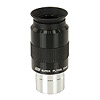
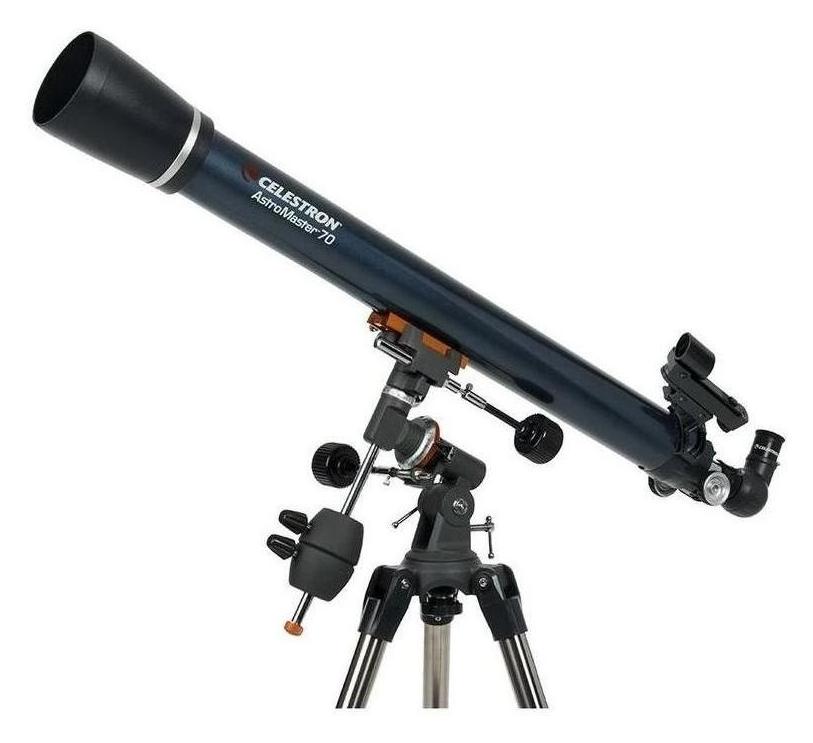
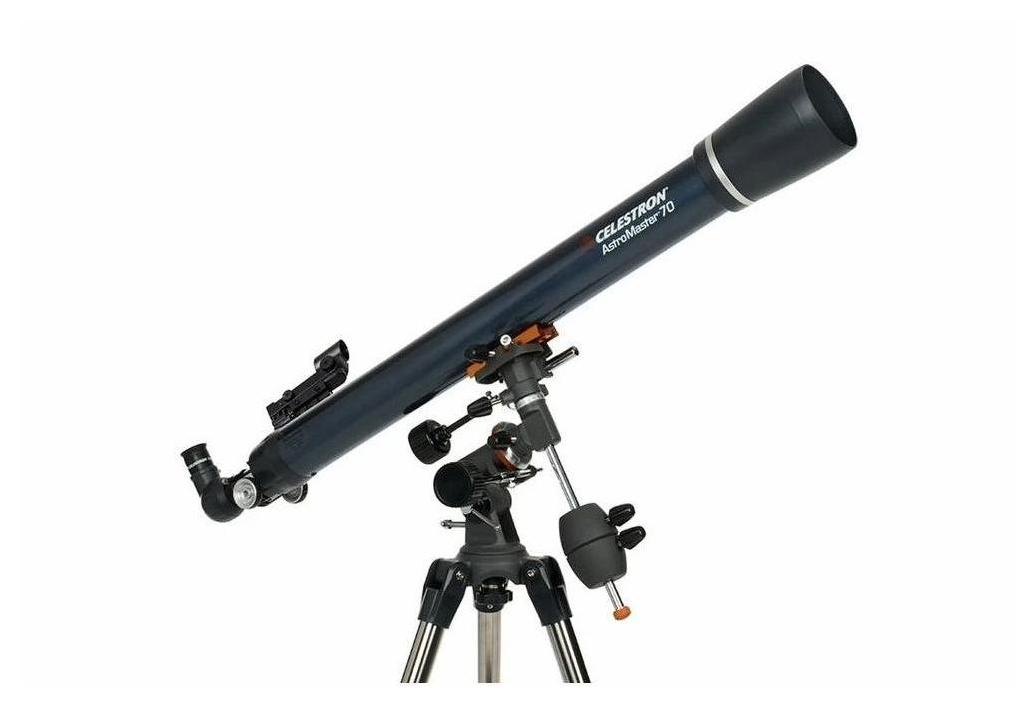
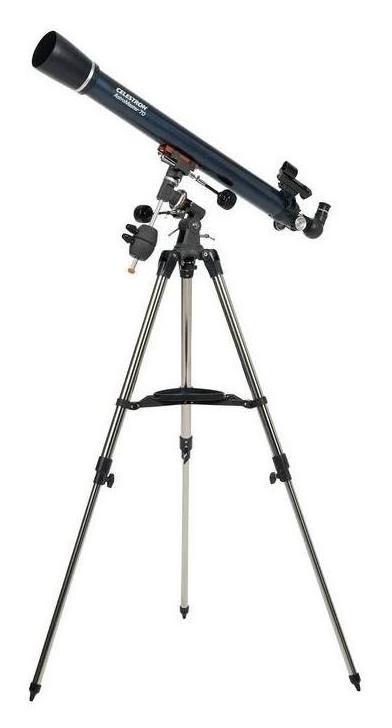
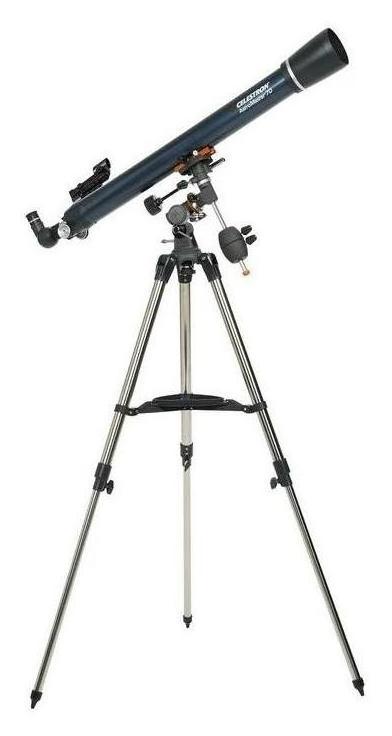
A refractor (lens telescope) on an equatorial mount with micro-motion, a versatile optical instrument for astronomical observations and as a telescope for terrestrial objects. Designed primarily for observing the Moon and planets. The 70mm objective lens allows for observations of the Sun – sunspots (after installing a solar filter available in our store), the Moon – craters, maria, mountains, Mercury – phases, Venus – phases, Mars – disk, details during opposition, Jupiter (tropical belts, Jupiter's moons), Saturn (ring, Titan – the largest moon), the disk of Uranus and Neptune. This telescope can observe brighter comets (when visible), asteroids, dozens of galaxies, nebulae, globular and open clusters, and countless double and multiple stars. Due to its low weight, the telescope is ideal for travel and portability.
| • Optical system: | refractor (achromatic doublet) |
| • Lens diameter: | 70 mm |
| • Lens focal length: | 900 mm |
| • Light Force: | 1/12.9 |
| • Resolving power: | 2'' |
| • Theoretical stellar range: | 11.2 mag |
| • Maximum usable magnification: | 140x |
| • Steel tripod height: | 106 cm |
| • Distance between legs at maximum tripod height: | 110 cm |
| • Libra: | 8 kg |
Moon
planets
star clusters
nebulae
landscapes
The set includes the following accessories:
• 1.25'' focuser
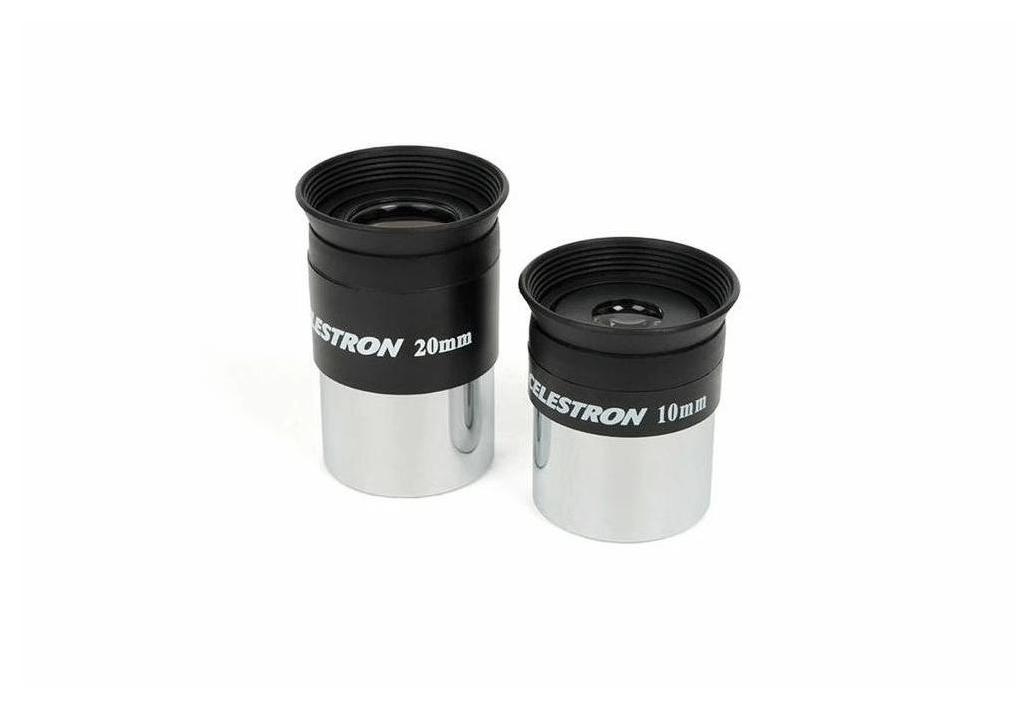
• Plossl eyepieces (50° apparent field of view): 20 mm (45x magnification) and 10 mm (90x magnification) - standard 1.25'', 50° apparent field of view
• StarPointer riflescope
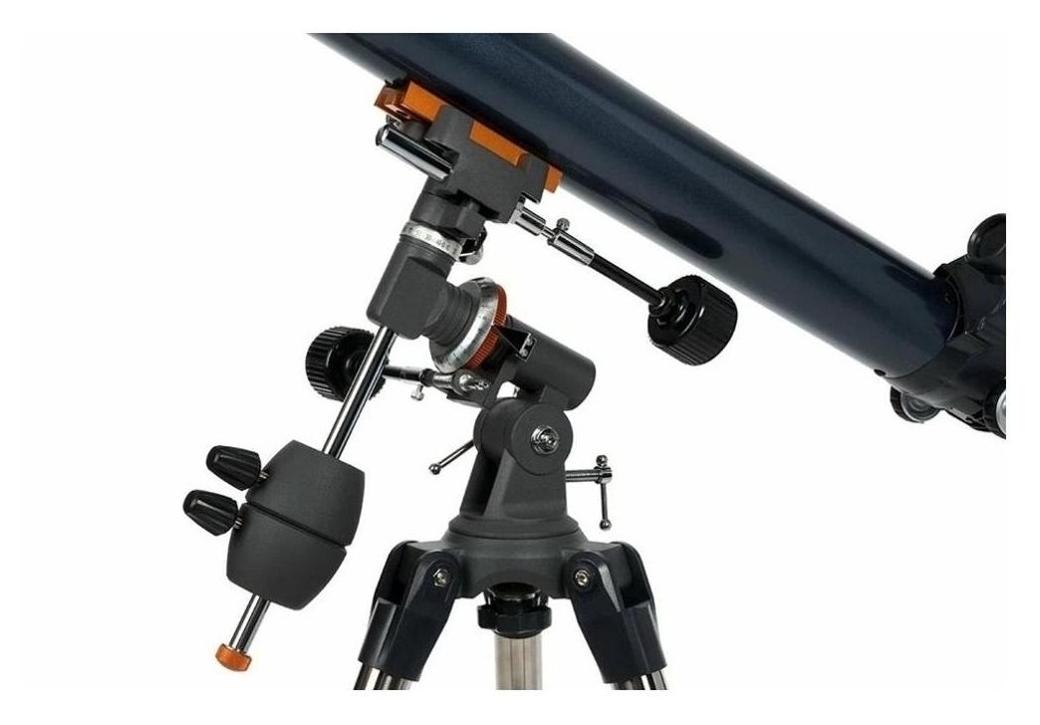
• Equatorial mount with micro-movements
• Steel tripod
• 90° angle attachment
• Accessory stand
• Educational CD "Sky Level 1" (in English)
3-year manufacturer's warranty on mechanics, 2-year warranty on electronics
This device focuses a large amount of light. Looking directly at the Sun through it can cause partial or complete vision loss. For observing the Sun, we recommend the safest method, eyepiece projection, which projects the image of the Sun's disc onto a sheet of paper.