|
|
") Shop online: Shop online:
● not available
Shop in Warsaw (qty):
● not available
Shop in Chorzow (qty):
● not available
|
|
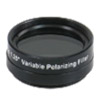
Orion IR-Cut 1.25" is a professional astrophotographic filter blocking ultraviolet and infrared radiation, intended for use with astronomical cameras.
The use of this filter allows for significant improvement in the contrast and sharpness of objects photographed in the visible range. Unlike the human eye, devices of this type are sensitive to the influence of infrared, the component of which causes a noticeable deterioration of image quality (More information on this subject can be found in the expert note at the bottom of the page).
Since the transmittance range of the Orion IR-Cut 1.25" filter covers the Hα band (656.3 nm), it can also be used in solar photography to protect the much more expensive Hα filter against thermal damage.
Attention! Visual observations of the Sun should always be conducted through a dedicated solar filter or Herschel wedge. • UV / IR cut filter improving contrast and color reproduction
• ideal for use in the luminance channel for LRGB photography
• compatible with cameras equipped with CMOS and CCD matrices • filter type: UV / IR cut
• Filter diameter: 1.25"
• blocked bands: ultraviolet, infrared
• transmittance window: 390 - 690 nm
• transmission in the transmittance window: >97%
• filter shape: round
• filter holder: aluminum • Orion IR-Cut 1.25" filter An infrared and ultraviolet (IR/UV) blocking filter is generally considered a must-have for every astrophotography enthusiast working with a refractor, as well as reflecting telescopes equipped with dedicated corrective lenses, e.g. coma reducers. Many posts on various astronomy forums suggest the need to use such a filter in the absence of a narrow or multi-band filter.
The use of this type of filter prevents the phenomenon known as "star bloating". It is caused by the high probability of chromatic aberrations occurring at wavelengths close to the lower and upper limits of the visible light range (near infrared and UV-A). The effect of such a filter is visible in the attached photograph taken using an apochromatic refractor (author: Carl Björk, ZWO ASI group, Facebook).
In addition to improving the quality of the obtained image, the IR/UV filter covers the camera sensor or matrix along with the mirror in the case of digital SLR cameras. Thanks to this, these delicate elements are not exposed to dirt, making maintenance and cleaning of the camera or SLR camera easy and quick. Users of reflecting telescopes, where the light-sensitive element is directly exposed to external factors, should pay particular attention to this aspect of the use of the IR/UV filter. 12 months


|