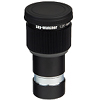
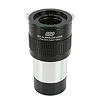
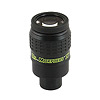
The large telescope of the Newton Delta Optical GSO Dobson 10 "F / 5 M-CRF system was designed for beginners, advanced, albeit demanding lovers of the night sky. For bright, sharp and clear images, equipment of this size is capable of showing all of the Messier objects and most of the NGC objects, but it will have the best performance under a dark, rural sky. An experienced observer can make very advanced observations with this telescope, and despite its large size, high mobility is still maintained.
Tube
Designed in the classic Newton system. It is made of rolled sheet of high stiffness. Additionally, a good blackening of the inside of the tube results in lower flares and better contrast of bright objects, especially the moon and planets.
Optical system
The parabolic main mirror is made of high quality BK7 glass. The diameter is 250 mm and the focal length is 1250 mm. It is mounted in a solid cell with three attachment points. The secondary mirror mounted on a thin and durable spider minimizes image defects caused by reflections. Thanks to the improved aluminum coatings, the manufacturer declares the reflectance coefficient of the reflective mirrors at the level of about 93%.
Assembly
Setting up and preparing a telescope for observation has never been so easy. The telescope is installed on a special box mount, which does not need to be aligned with the directions of the world and aligned with the North Pole of the sky. Dobson's assembly is a simple and very stable structure with a high load capacity, allowing for easy rotation of the telescope in the azimuth axis and height. The telescope is mounted on both sides in a fork holder with two metal pins. Each of them has a lock in the form of knobs and ensures proper pressure. Thanks to the use of roller bearings, the rotation of the telescope along the azimuth axis is light and smooth. Low center of gravity and made of quite stiff materials make the telescope suspended in a much more stable way than in the case of equatorial mounts. Additionally, GSO telescopes have a balancing system of the optical tube depending on the weight of the eyepiece used.
Statement
One of the most recognizable elements of GSO telescopes are high-quality Crayford lifts made of precision-machined aluminum using CNC technology. Thanks to four bearings and a roller, the sleeve of the extractor moves smoothly and precisely and the structure does not show any play. All DO GSO telescopes have hoods equipped with micromodes with 10: 1 gear ratio. The extractor hood also has two large adjustment screws. The first of them is used to completely block the operation of the extractor, it can be useful when using the heaviest accessories or to prevent accidental change of focus. The second screw enables smooth adjustment of the working resistance. Thanks to the attached reduction, 1.25 "and 2" glasses are compatible with the hood. The total load capacity of the lift is about 3 kg.
Cooling
Delta Optical-GSO Dobson telescopes have a built-in fan located under the main mirror. The fan powered by the voltage of 12V improves the air circulation around the mirror and accelerates its cooling. Power is supplied by the enclosed 8xAA battery pack.
Ground observations
A telescope with this type of optics is not suitable for ground observation because the generated image is inverted. To "straighten" the image, use the so-called straightening lens. Together with the straightening lens and the mount on which it is placed, it can be used as a simple ground observation device. Thanks to a very easy to use and stable assembly, the telescope becomes a very good tool for observing airplanes at cruising altitudes.
Astronomical Observations
1. The Solar System
a. Objects of the Moon's surface larger than 1.5 km in size;
b. All the planets of the solar system:
- Mercury and Venus phases;
- Mars shield, polar caps in opposition periods and details of the planet's surface;
- distinct zones of Jupiter belts and Galilean moons;
- Rings of Saturn with Cassini's break. The stripes in the atmosphere and the moons of the planet;
- Uranus and Neptune visible as stars with a distinctly blue tint;
- The movement of many asteroids against the background of stars;
- Observations of many weak comets;
2. Stars
a. About 2.7 million stars across the sky with brightness down to about 15.5;
b. Double and multiple stars
3. Nebulae objects
a. All Messier catalog objects and most of the NGC catalog.
Due to the diameter of the telescope's mirror of 25 cm, objects are visible much more clearly and details are presented more clearly than with smaller telescopes. For this reason, the image seen in such a large telescope becomes very susceptible to the influence of artificial light of the sky, air pollution and the stability of the atmosphere (seeing). The accuracy of the optics collimation also plays an important role. Please be aware of these limitations and take them into account in order to obtain optimal images of the sky.
• mirror diameter: 250 mm
• focal length: 1250 mm
• lighted: f / 5
• optical system: Newton's reflector
• figure of a mirror: rotational paraboloid
• stellar range: magnitude 15.4
• maximum useful magnification (parameter): 375x
• theoretical resolving power: 0.56 "
• Extract: Crayford 2 "with reduction 1.25" and gearing ± 10: 1
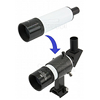
• finder: optical 8x50 straight
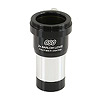
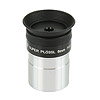
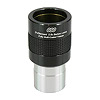
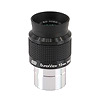
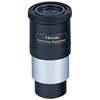
• glasses included: 30 mm 2 "(Erfla), 9 mm 1.25" (Ploessl)
• weight of the optical tube: 15.5 kg
• assembly weight: 12.2 kg
• total weight: 28 kg
24 months