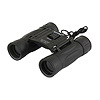
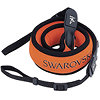
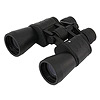
The Fujinon 7x50 FMTR-SX binoculars are basically no introduction - iconic hunting binoculars, with phenomenal brightness in twilight conditions, offering a 7.1 mm diameter, full waterproofness and shock resistance. These binoculars score very high in optical tests, outperforming practically all binoculars from the shelf up to PLN 8 thousand.
Fujinon FMT series binoculars have been designed with the most demanding users in mind. They are equipped with BaK4 glass prisms with top quality anti-reflective coatings, as are all lens surfaces (EBC technology), thanks to which light transmission is close to 95%, and images are sharp and contrasting. The applied lens system eliminates field curvature, ensuring good reproduction throughout the field of view.
The parameters of these binoculars are appreciated by astronomy enthusiasts, sailors and birdwatchers.
| • Lens diameter: | 50mm |
| • Zoom: | 7x |
| • Exit pupil: | 7.1mm |
| • Prism construction: | porro prism |
| • Glass elements material: | BaK-4 optical glass |
| • Anti-reflective layers: | MC, blue, total system efficiency 95% |
| • Field of view: | 7.5° / 131m / 1000m |
| • Eye relief : | 23mm |
| • Relative brightness: | 49 |
| • Twilight efficiency: | 18.7 |
| • Focus adjustment: | individually for each eyepiece, +/- 5D |
| • Minimum viewing distance: | 7 m |
| • Interpupillary distance/exit pupil range: | 56mm - 74mm |
| • Waterproof: | YES |
| • Nitrogen filling: | YES |
| • Possibility to connect a tripod: | YES |
| • Weight: | 1400g |
30-year manufacturer's warranty


(note: currently the set includes a graphite/black cover with a grey logo)
• C - equipped with a built-in compass
• CF - "central focusing" - central focusing
• ED - binocular optics made of glass with very low dispersion (Extra low Dispersion), which provides very good correction of chromatic aberration
• F - for Fujinon and Flat Field - the highest quality selected optical elements for perfect reproduction - contrast, sharpness and a large field of view
• M - "military" - meets the strength and durability requirements for military binoculars
• MT - "marine tested" - tested for the Navy (meets US Navy standards, including those regarding the impact of salt water)
• r - "reticle" - built-in rangefinder reticle
• R - "rubber coated" - rubberized casing
• SX - computer-designed BaK4 lenses and prisms are covered with MC layers in the patented EBC (Electron Beam Coating) technique, thanks to which the transmission for a single medium boundary reaches 99.9% of the intensity of the incident light beam; thanks to this, the transmission of the entire binoculars reaches up to 95%
• WP - "waterproof" - waterproof binoculars (up to 2 meters deep)
>> FREQUENTLY ASKED QUESTIONS << Question : On the Internet I come across the terms FMTR-SX- 2 and FMTR-SX. What is the difference between these two models? Is the model you offer without the "2" some older / worse type?
Answer: A few years ago, the European distributor of Fujinon introduced the SX-2 designation for binoculars with a slightly modified, improved design. However, this was only a temporary designation, when two versions of the binoculars were available for sale. Today, all binoculars offered on the primary market (i.e. new) are of this new design. That is why we do not distinguish between SX and SX-2, because the manufacturer itself does not make such a distinction. Such "relics" can still be found on the Polish Internet, but one should not pay attention to them.
Here is the exact position of the distributor (from 2014):
Due to numerous inquiries regarding the markings on MT, FMT and FMTR binoculars, I would like to inform you that the only marking on binoculars at present is SX. FujiFilm explained that about 10 years ago, the MT, FMT and FMTR series binoculars produced were marked with the SX symbol, which indicated the type of coating. The coatings were modernized around that time. Since there were still binoculars with old coatings in the warehouses, in order to distinguish them, binoculars with new coatings were marked SX2. After some time, when the binoculars with old coatings were sold out, the SX markings were returned. Currently, binoculars with old coatings are not produced, this has been the case for about 10 years. They may be available on the secondary market. However, in many documents and descriptions, you can find the SX2 markings. However, currently produced binoculars do not have such markings. They are marked as SX.
Question : What do the numbers 10x25 / 10x50 / 7x50 / 20x60 / 20x80 / 8-20x50 / 10-30x50 next to the name of the binoculars mean?
Answer: The first number in the 7x50 notation denotes the angular magnification (seven times), while the second - the diameter of the objective lenses expressed in millimeters. Notation such as 8-20x50 or 10-30x50 means that we are dealing with binoculars with a zoom, i.e. equipped with a system for smooth change of magnification, in this case from 8 to 20 times or from 10 to 30 times. 50 of course denotes the diameter of the objective lenses.
Question : Does the set include a case and a strap to hang the binoculars around your neck?
Answer: Yes, every binocular comes with a case and neck strap, and usually also with lens and eyepiece caps, unless it is specifically stated that it does not.
Question : What effect do the magnification and objective lens diameter have on the image of binoculars?
Answer: The higher the magnification , the greater the visibility of details, but also the lower the surface brightness of objects. Therefore, if we are looking for hunting binoculars, the magnification should be between 7 and 10x, for birds and landscapes we recommend binoculars with magnification between 7 and 12x, and for observing airplanes, we usually choose binoculars with high magnifications, in the order of 15-20x or binoculars with zoom.
In turn, the larger the objective lens diameter , the higher the resolution of the binoculars and the brighter the image, but also the greater the weight and size of the binoculars, sometimes requiring a photographic tripod.
Question : I still don't know which binoculars to choose, I want to buy universal binoculars with good parameters so that "you can see a lot". Which one to choose?
Answer: The most universal parameters of binoculars are 10x50 and we recommend them - they are characterized by good visibility and brightness at the same time, a large field of view and do not require a tripod.
Question : Should I choose fixed magnification binoculars or zoom binoculars?
Answer: Zoom binoculars are equipped with an additional optical system that allows you to change the magnification. In optics, "less is more" is often the case. Any additional optical system that does not correct one of the optical defects always has a negative impact on the image quality. It is like with photographic lenses - the most valued are those with a fixed focal length, not those with a variable focal length. On the other hand, zoom binoculars are more versatile, because nobody carries 2-3 binoculars with different magnifications.
Question : Do these binoculars have glass or plastic lenses?
Answer: All decent binoculars have all glass optics because only glass can be ground and polished into shape, whereas polymers ("plastics") are limited in accuracy by the accuracy of the molds.
Question : You write in the specification about anti-reflective/anti-glare layers, what is that? Are the anti-reflective layers there so that I am not visible, i.e. so that the binoculars do not give "reflections" e.g. from the Sun?
Answer: Anti-reflective coatings, also called anti-reflective coatings, are used to increase the efficiency of an optical system, for example binoculars, but in principle any other device. Optical efficiency determines what percentage of the beam entering the optical system passes through the system. It is important to know that when light falls on the boundary of two optical media, e.g. glass / air, a certain fraction of the beam is reflected. From everyday experience, we know that you can see your reflection in a glass - for this very reason. In order to minimize losses, anti-reflective coatings are used, thanks to which more light passes through the boundary of the media and less is reflected.
Anti-reflective coatings can be of various types and classes, and they often determine the price of the best binoculars, whose total efficiency can reach up to 95%.
It is worth knowing that anti-reflective coatings are applied to the optical surfaces of microscopes, telescopes, spotting scopes, camera lenses or night vision devices for the same purpose as in the case of binoculars.
Question : In the descriptions of binoculars you write about prism glass, BK7 and BaK-4, what do you mean?
Answer: Most optical prisms are made from BK-7 (borosilicate) or BaK-4 (barium crown) glass. BAK-4 is a higher quality glass and produces brighter, sharper images. It is also a more expensive glass, usually used in higher-end binoculars. It is worth considering, especially if you are looking for binoculars for hunting and astronomy.
Question : I didn't find some parameters of binoculars in the description, which I found on other sites. Can I find out what brightness these binoculars have and what twilight efficiency they have?
Answer: For the sake of clarity, we usually do not provide secondary parameters that do not provide additional information than those provided. Nevertheless, these parameters can be calculated independently:
• exit pupil is the area in the eyepiece where the image is formed; the diameter of the exit pupil is equal to the ratio of the objective lens diameter to the magnification, e.g. for 7x50 binoculars it is 50/7 = 7mm, for 10x50 binoculars: 50/10 = 5mm, and for 20x60 binoculars: 60/20 = 3mm; this parameter is usually given in the description
• relative brightness is the square of the exit pupil (exit pupil: see above); for 10x50 binoculars the exit pupil is 5, so the brightness is 25, similarly for 7x50 binoculars the brightness is 50, for 20x60 binoculars the brightness is 9, etc.
• twilight efficiency ( twilight factor ) is another secondary parameter that night hunters like to pay attention to; it is equal to the square root of the product of magnification and lens diameter; with an ordinary calculator, we can quickly calculate this parameter:
- for 8x40 binoculars: 17.9
- for 7x50 binoculars: 18.7
- for 10x50 binoculars: 22.4
- for 20x60 binoculars: 24.5
Question : I am looking for binoculars for astronomy, which one should I choose?
Answer: There is no simple and short answer to this question. Astronomy binoculars are simply very good binoculars. This means very good correction of optical aberrations (mainly chromatic aberration and distortion at the edges) and high optical efficiency. For these reasons, we do not recommend zoom binoculars for astronomy, with perhaps a few exceptions. Astronomy binoculars do not have to have high magnification - that's what a telescope is for, to conduct observations at high magnifications. Binoculars - usually - should be handy, so that you can always take them with you when you can't take a telescope with you - then choose 7x50, 10x50 or 15x70 binoculars. Typically, large binoculars dedicated to astronomy, such as 20x80 and 22x100, constitute a separate class of optical instruments that require observation from a tripod.
For a beginner observer, astronomical binoculars are used to learn about the sky, the colors of the stars, and to find the brightest deep-sky objects. For an advanced observer, large binoculars are a very efficient device for observing comets, variable stars, nebulae, star clusters, and galaxies.
Question : I am looking for binoculars for a yacht / kayak trip / fishing / sea, which one should I choose?
Answer: Water binoculars must be waterproof, nitrogen-filled and should have 7x magnification, because only this magnification guarantees a bright and stable image.
Question : I am looking for binoculars for bird watching, should I get high magnification binoculars (16x, 20x or zoom binoculars)?
Answer: For birdwatching, we usually recommend binoculars with low or medium fixed magnification, i.e. from 7 to 12 times. The optimal set for a birdwatcher is a pair of fixed magnification binoculars and a spotting scope with a zoom on a photographic tripod.