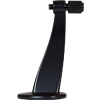
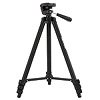
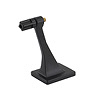
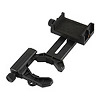
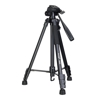
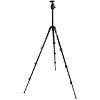
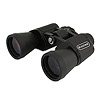
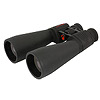
Powerful binoculars with an 80mm objective lens and 20x magnification, excellent for astronomy and nature observation. High-quality optics at a reasonable price for an optical instrument of this class. A popular model among astronomy enthusiasts. The optics are coated with high-quality anti-reflective coatings and feature barium crown (BaK-4) prisms. The body is additionally stiffened with a rod and a tripod adapter (for photographic tripods with a 1/4-inch mounting screw).
Great binoculars for observing nebulae, variable stars and searching for comets.
Comes with a neck strap, lens and eyepiece covers, and a carrying case with a strap
This device focuses a large amount of light. Looking directly at the sun through it may cause partial or complete vision loss.
Question : What do the numbers 10x25 / 10x50 / 7x50 / 20x60 / 20x80 / 8-20x50 / 10-30x50 next to the name of the binoculars mean?
Answer: The first number in the 7x50 notation denotes the angular magnification (seven times), while the second number denotes the objective lens diameter in millimeters. Notations such as 8-20x50 or 10-30x50 mean these are zoom binoculars, meaning they feature a variable magnification system, in this case from 8x to 20x or from 10x to 30x. The 50, of course, denotes the objective lens diameter.
Question : Does the set include a case and a neck strap for the binoculars?
Answer: Yes, every binocular comes with a case and a neck strap, and usually also with lens and eyepiece caps, unless it is specifically stated that it does not.
Question : What effect do the magnification and objective lens diameter have on the image of binoculars?
Answer: The higher the magnification , the greater the detail visibility, but also the lower the surface brightness of objects. Therefore, if you're looking for hunting binoculars, the magnification should be between 7x and 10x; for birdwatching and landscape photography, we recommend binoculars with magnification between 7x and 12x; and for aircraft observation, you'll typically choose binoculars with higher magnifications, around 15-20x, or zoom binoculars.
In turn, the larger the objective lens diameter , the higher the resolution of the binoculars and the brighter the image, but also the greater the weight and size of the binoculars, sometimes requiring a photographic tripod.
Question : I still don't know which binoculars to choose. I want to buy a universal pair of binoculars with good parameters so I can "see a lot." Which one should I choose?
Answer: The most universal parameters of binoculars are 10x50 and we recommend them - they are characterized by good visibility and brightness at the same time, a large field of view and do not require a tripod.
Question : Is it better to choose fixed magnification binoculars or zoom binoculars?
Answer: Zoom binoculars are equipped with an additional optical system that allows you to change the magnification. In optics, "less is more" is often the case. Any additional optical system that doesn't correct one of the optical aberrations always negatively impacts image quality. It's like with photographic lenses – fixed focal length lenses are most valued, not variable ones. On the other hand, zoom binoculars offer greater versatility, because nobody carries two or three binoculars with different magnifications.
Question : Do these binoculars have glass or plastic lenses?
Answer: All decent binoculars have all glass optics because only glass can be ground and polished into shape, while polymers ("plastics") are limited in accuracy by the accuracy of the molds.
Question : Your specifications mention anti-reflective/anti-glare coatings. What are they? Are the anti-reflective coatings there to prevent me from being seen, meaning the binoculars won't "glare" from, for example, the sun?
Answer: Anti-reflective coatings, also known as anti-reflective coatings, are used to increase the efficiency of an optical system, such as binoculars, but essentially any other device. Optical efficiency determines what percentage of the beam entering the optical system passes through the system. It's important to know that when light strikes the boundary of two optical media, such as glass and air, a certain fraction of the beam is reflected. From everyday experience, we know that you can see your reflection in glass—for this very reason. To minimize losses, anti-reflective coatings are used, allowing more light to pass through the boundary and less to be reflected.
Anti-reflective coatings can be of various types and classes, and they often determine the price of the best binoculars, whose total efficiency can reach up to 95%.
It is worth knowing that anti-reflective layers are applied to the optical surfaces of microscopes, telescopes, spotting scopes, viewfinders, photographic lenses or night vision devices for the same purpose as in the case of binoculars.
Question : In the descriptions of binoculars you write about prism glass, BK7 and BaK-4, what do you mean?
Answer: Most optical prisms are made of BK-7 (borosilicate) or BaK-4 (barium chromium) glass. BAK-4 is a higher-quality glass and produces brighter, sharper images. It's also a more expensive glass, typically used in higher-end binoculars. It's worth considering, especially if you're looking for binoculars for hunting or astronomy.
Question : I didn't find certain parameters of these binoculars in the description, which I found on other sites. Can I find out what the brightness and twilight performance of these binoculars are?
Answer: For clarity, we typically omit secondary parameters that provide no additional information. However, these parameters can be calculated independently:
• exit pupil is the area in the eyepiece where the image is formed; the diameter of the exit pupil is equal to the ratio of the objective lens diameter to the magnification, e.g. for 7x50 binoculars it is 50/7 = 7mm, for 10x50 binoculars: 50/10 = 5mm, and for 20x60 binoculars: 60/20 = 3mm; this parameter is usually given in the description
• relative brightness is the square of the exit pupil (exit pupil: see above); for 10x50 binoculars the exit pupil is 5, so the brightness is 25, similarly for 7x50 binoculars the brightness is 50, for 20x60 binoculars the brightness is 9, etc.
• twilight efficiency ( twilight factor ) is another secondary parameter that night hunters like to pay attention to; it is equal to the square root of the product of the magnification and the objective lens diameter; with a standard calculator, we can quickly calculate this parameter:
- for 8x40 binoculars: 17.9
- for 7x50 binoculars: 18.7
- for 10x50 binoculars: 22.4
- for 20x60 binoculars: 24.5
Question : I am looking for binoculars for astronomy, which one should I choose?
Answer: There's no simple, short answer to this question. Astronomical binoculars are simply very good binoculars. This means very good correction of optical aberrations (primarily chromatic aberration and distortion at the edges) and high optical efficiency. For these reasons, we don't recommend zoom binoculars for astronomy, with perhaps a few exceptions. Astronomical binoculars don't need high magnification—that's what a telescope is for—observing at high magnifications. Binoculars—usually—should be handy, so you can always take them with you when you can't take your telescope—in which case, choose 7x50, 10x50, or 15x70 binoculars. Typically, large binoculars dedicated to astronomy, such as 20x80 and 22x100, constitute a separate class of optical instruments that require observation from a tripod.
For the beginner astronomer, binoculars are useful for exploring the sky, the colors of stars, and finding the brightest deep-sky objects. For the advanced observer, large binoculars are a highly effective tool for observing comets, variable stars, nebulae, star clusters, and galaxies.
Question : I am looking for binoculars for a yacht / kayak trip / fishing / sea, which one should I choose?
Answer: Water binoculars must be waterproof, nitrogen-filled and should have 7x magnification, because only this magnification guarantees a bright and stable image.
Question : I am looking for binoculars for bird watching, should I buy high magnification binoculars (16x, 20x or zoom binoculars)?
Answer: For birdwatching, we typically recommend binoculars with low or medium fixed magnification, i.e., 7x to 12x. The optimal set for a birdwatcher is a pair of fixed magnification binoculars and a spotting scope with a zoom on a camera tripod.