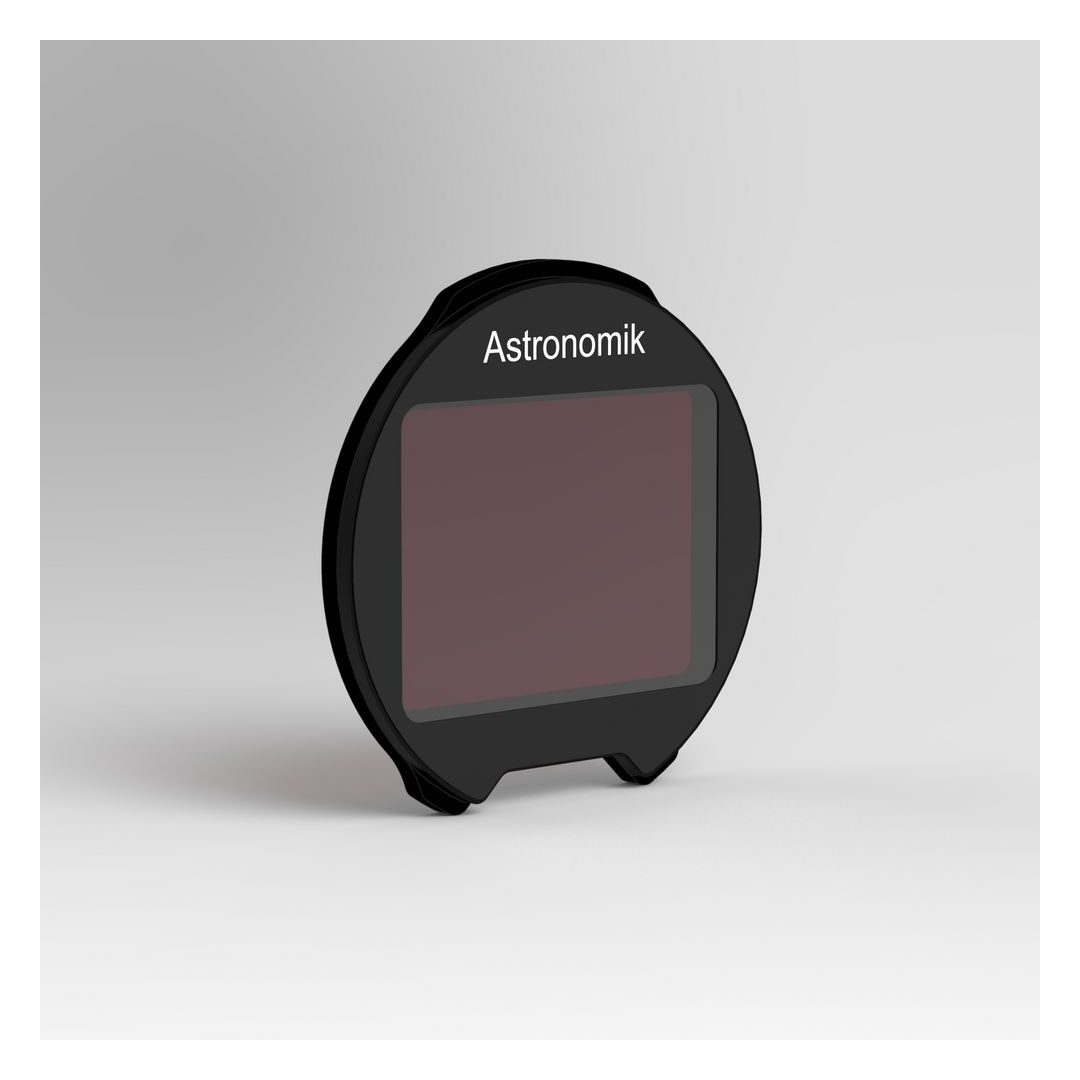
Astronomik SII 6 nm Clip-Filter EOS M (Astronomik, SKU: 10204096) is a narrowband filter for imaging nebulae emitting ionised sulphur SII light. Selective transmission increases the contrast of the nebular signal by reducing unwanted background light at both dark and light-polluted sites. The Clip-Filter EOS M version is designed to fit inside a compatible camera body.
• narrow 6 nm passband that increases nebula-to-background contrast
• blocking of unwanted out-of-band radiation, including UV and IR
• use with CMOS and CCD cameras to record a separate emission-line channel
• narrower passband than 12 nm filters suppresses background and starlight more strongly
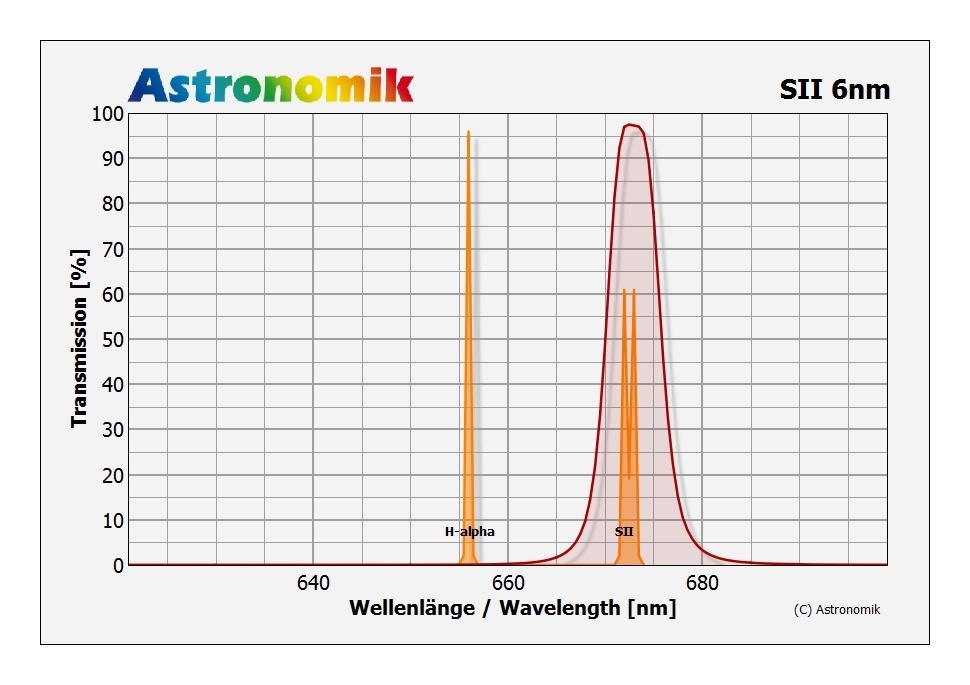
• suppression of H-alpha helps separate sulphur signal from hydrogen emission
• installation and removal of the Clip-Filter without modifying the camera body or using additional tools
• coatings: Astronomik MFR for use with conventional astrophotography systems
• optically polished glass and durable coatings resistant to scratches and humidity
• one Astronomik filter in the specified version, SKU: 10204096
• protective storage box
• manufacturer: Astronomik
• manufacturer SKU: 10204096
• filter type: SII narrowband
• emission lines: 671.7 nm and 673.0 nm
• full width at half maximum (FWHM): 6 nm
• guaranteed transmission for both SII lines: 671.7 nm and 673.0 nm: over 90%
• typical transmission for both SII lines: 671.7 nm and 673.0 nm: 93%
• out-of-band blocking: from UV to IR
• coatings: Astronomik MFR
• recommended focal ratio range: f/4–f/15
• mounting: Clip-Filter EOS M
• compatible Canon EOS cameras: M, M2, M3, M5, M6, M6 Mark II, M10, M50/Kiss M, M50 Mark II/Kiss M2, M100 and M200
• compatible lenses: EF-M, and EF and EF-S via the Canon EF-EOS M adapter
• storage: in the supplied box between sessions; the manufacturer advises against leaving the filter permanently inside the camera
• glass thickness: 1 mm
• parfocality: with Astronomik filters with 1 mm glass thickness
• country of manufacture: Germany
The SII filter records a selected component of nebular emission as a separate channel for further processing or a multiband composite.