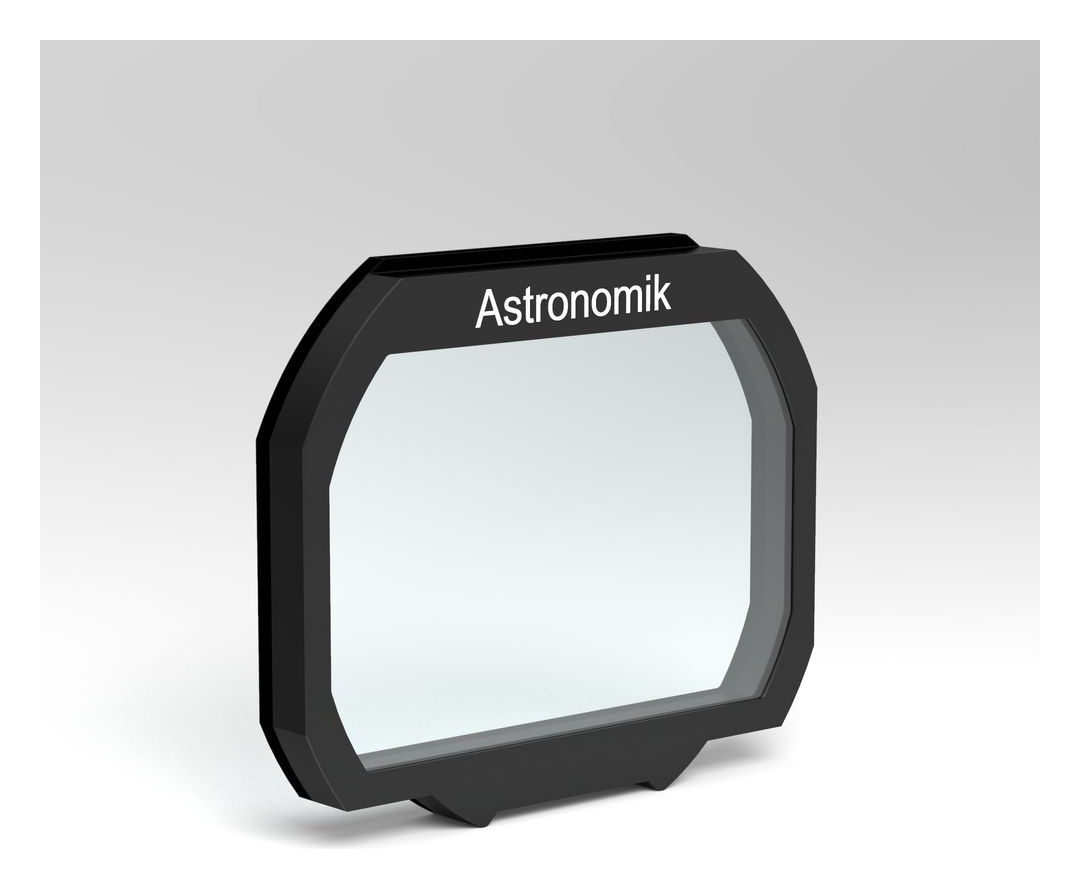
Astronomik L-2 UV-IR Block XT Clip-Filter Sony Alpha 7 (Astronomik, SKU: 10216210) is a luminance filter that blocks ultraviolet and infrared light. The L-2 version has a standard transmission window in the L-1/L-2/L-3 family, allowing the recorded band to be matched to the chromatic correction of the instrument. The Clip-Filter Sony alpha 7 version is designed to fit inside a compatible camera body.
• luminance-channel imaging with UV and IR cut-off
• recommended application: APO refractors and well-corrected doublets at their native focal length, reflecting telescopes with reducers, and RASA systems
• coatings: Astronomik MFR, reducing unwanted reflections
• can be used with Deep-Sky RGB filters for LRGB imaging
• installation and removal of the Clip-Filter without modifying the camera body or using additional tools
• thin substrate in the XT version to reduce edge aberrations with wide-angle lenses
• optically polished glass and durable coatings resistant to scratches and humidity
• one Astronomik filter in the specified version, SKU: 10216210
• protective storage box
• manufacturer: Astronomik
• manufacturer SKU: 10216210
• filter type: luminance, UV-IR Block
• version: L-2
• transmission window: a standard in the L-1/L-2/L-3 family
• blocking: UV and IR
• coatings: Astronomik MFR
• mounting: Clip-Filter Sony alpha 7
• compatible Sony Alpha cameras: 7, 7 II, 7 III, 7 IV, 7 V, 7C, 7C II and 7CR
• compatible Sony Alpha cameras: 7R, 7R II, 7R III, 7R IV, 7R V; 7S, 7S II, 7S III; 9, 9 II, 9 III and 1
• not compatible: Sony Alpha 7R VI, 58, 68, 77 and 99 in all versions, Alpha 6000, and Sony A-mount DSLRs
• incompatible lenses: Sigma 14 mm f/1.4 DG DN Art; Sony FE 12–24 mm f/2.8 GM (SEL1224GM); Sony FE 16 mm f/1.8 G (SEL16F18GB.SYX)
• slight corner vignetting may occur and can be corrected with flat frames
• storage: in the supplied box between sessions; the manufacturer advises against leaving the filter permanently inside the camera
• version: XT
• country of manufacture: Germany
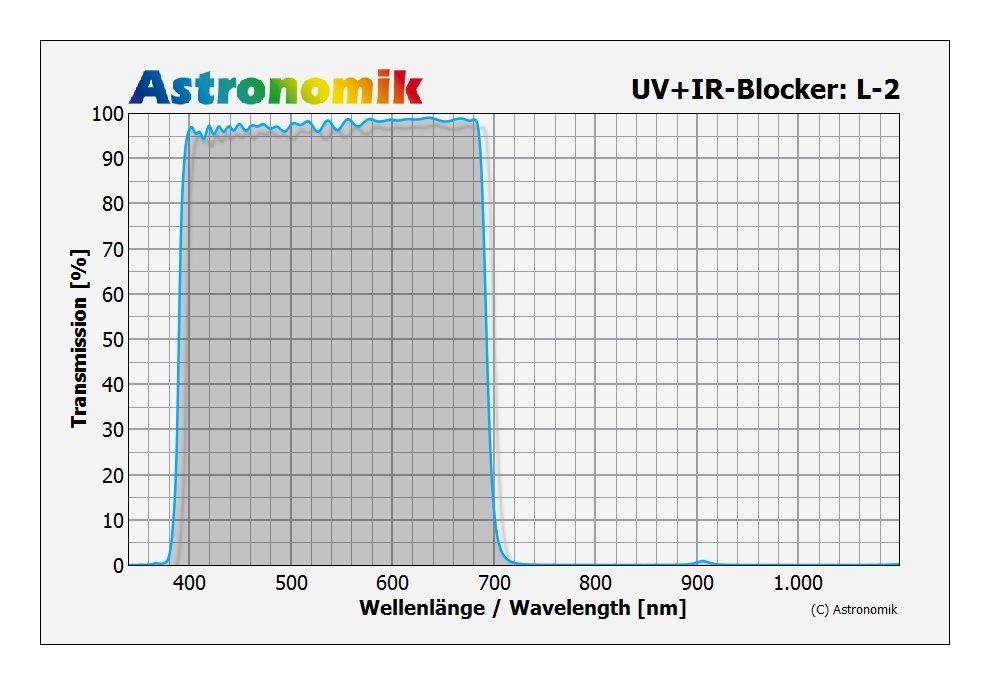
Matching the L-2 version to the optical correction enables luminance imaging without recording unwanted UV and IR light.