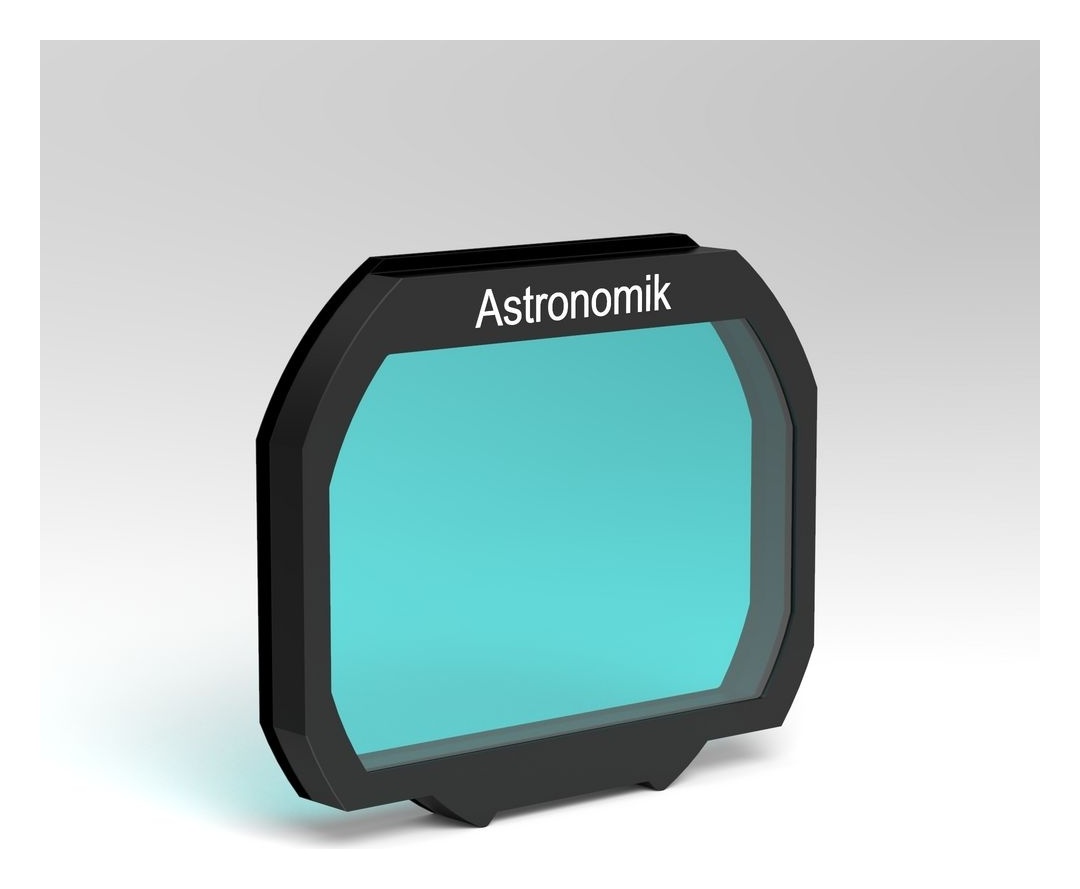
Astronomik CLS XT Clip-Filter Sony Alpha 7 (Astronomik, SKU: 10216082) is a filter that reduces the effects of light pollution in astrophotography. It transmits useful bands of light from astronomical objects while suppressing sources including sodium and mercury lamp lines. Its broad transmission windows retain more starlight than narrow emission-line filters. The Clip-Filter Sony alpha 7 version is designed to fit inside a compatible camera body.
• suitable for deep-sky imaging under skies affected by artificial light pollution
• transmission of H-beta, OIII and H-alpha lines
• no infrared blocking: a camera without its own IR-cut filter requires an additional IR-Block filter
• installation and removal of the Clip-Filter without modifying the camera body or using additional tools
• thin substrate in the XT version to reduce edge aberrations with wide-angle lenses
• optically polished glass and durable coatings resistant to scratches and humidity
• one Astronomik filter in the specified version, SKU: 10216082
• protective storage box
• manufacturer: Astronomik
• manufacturer SKU: 10216082
• filter type: CLS, light-pollution reduction
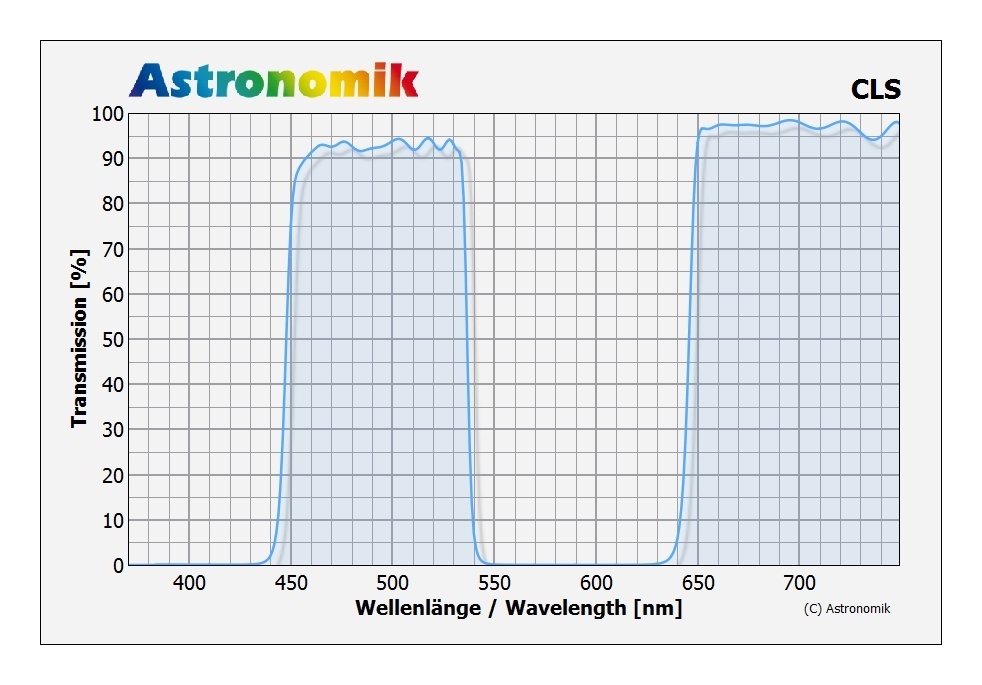
• transmission ranges: 450–540 nm and above 650 nm
• transmission at 486 nm (H-beta), 496 nm and 501 nm (OIII): 92%
• transmission at 656 nm (H-alpha): 97%
• mounting: Clip-Filter Sony alpha 7
• compatible Sony Alpha cameras: 7, 7 II, 7 III, 7 IV, 7 V, 7C, 7C II and 7CR
• compatible Sony Alpha cameras: 7R, 7R II, 7R III, 7R IV, 7R V; 7S, 7S II, 7S III; 9, 9 II, 9 III and 1
• not compatible: Sony Alpha 7R VI, 58, 68, 77 and 99 in all versions, Alpha 6000, and Sony A-mount DSLRs
• incompatible lenses: Sigma 14 mm f/1.4 DG DN Art; Sony FE 12–24 mm f/2.8 GM (SEL1224GM); Sony FE 16 mm f/1.8 G (SEL16F18GB.SYX)
• slight corner vignetting may occur and can be corrected with flat frames
• storage: in the supplied box between sessions; the manufacturer advises against leaving the filter permanently inside the camera
• version: XT
• country of manufacture: Germany
The filter helps reduce background brightness when imaging deep-sky objects from locations with increased light pollution.