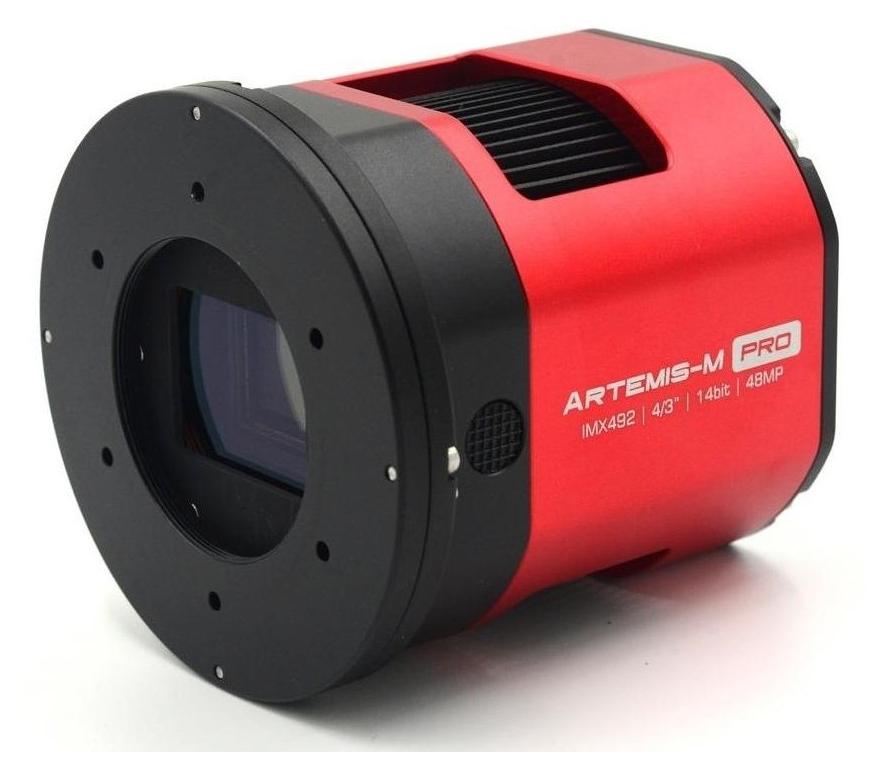
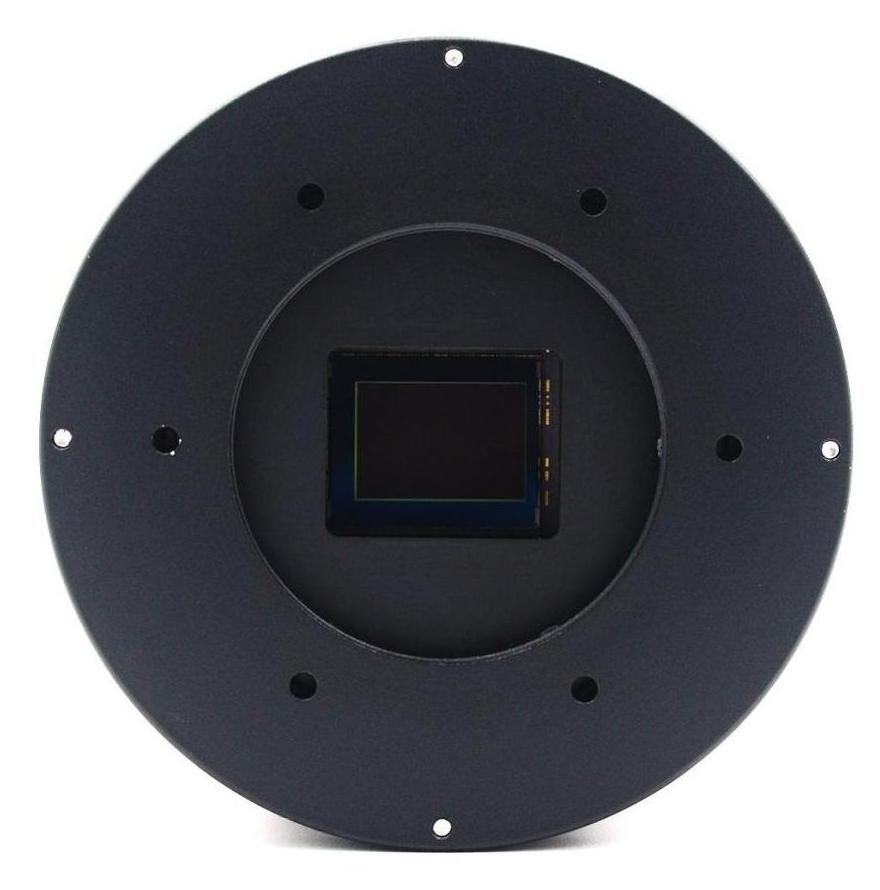
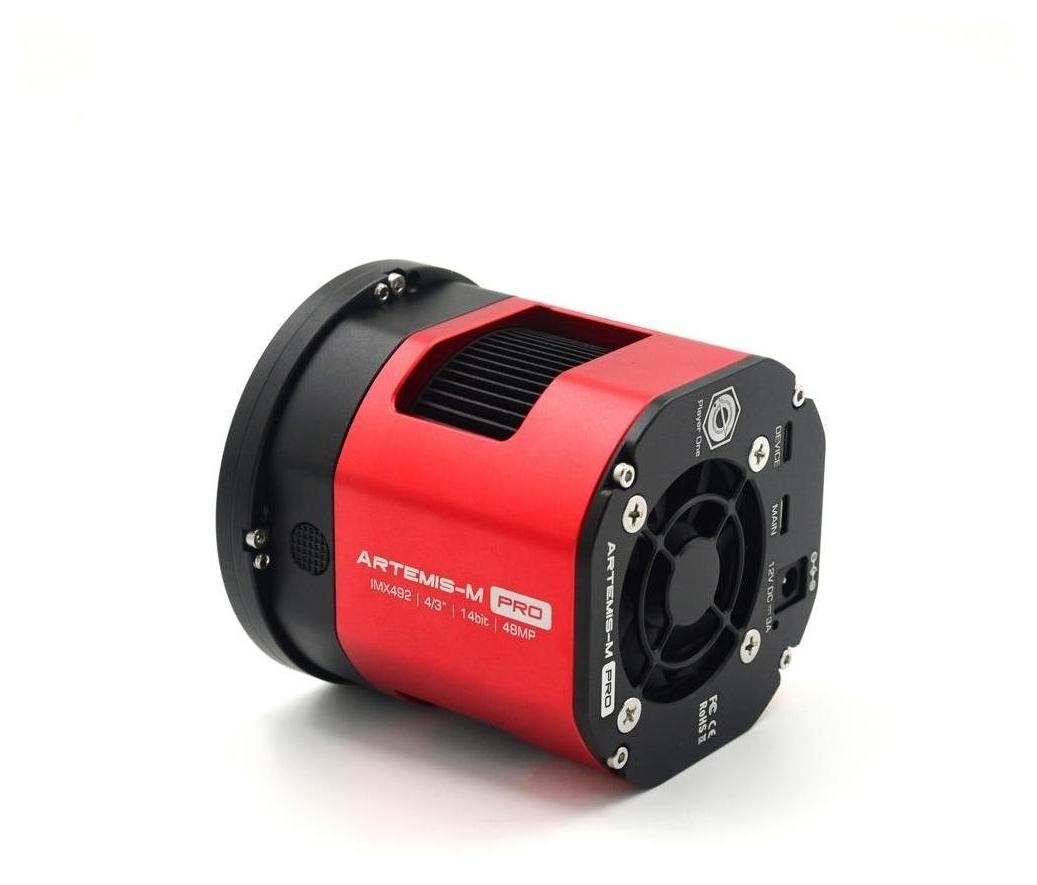
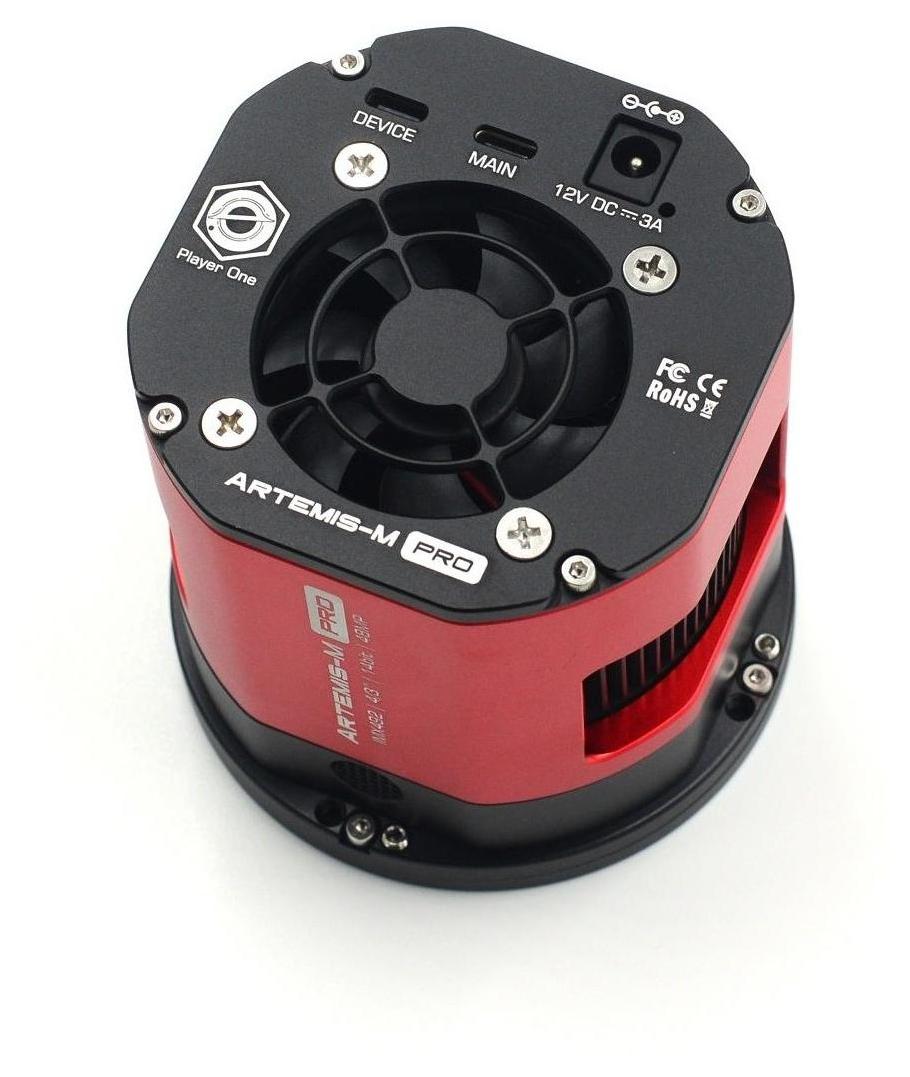
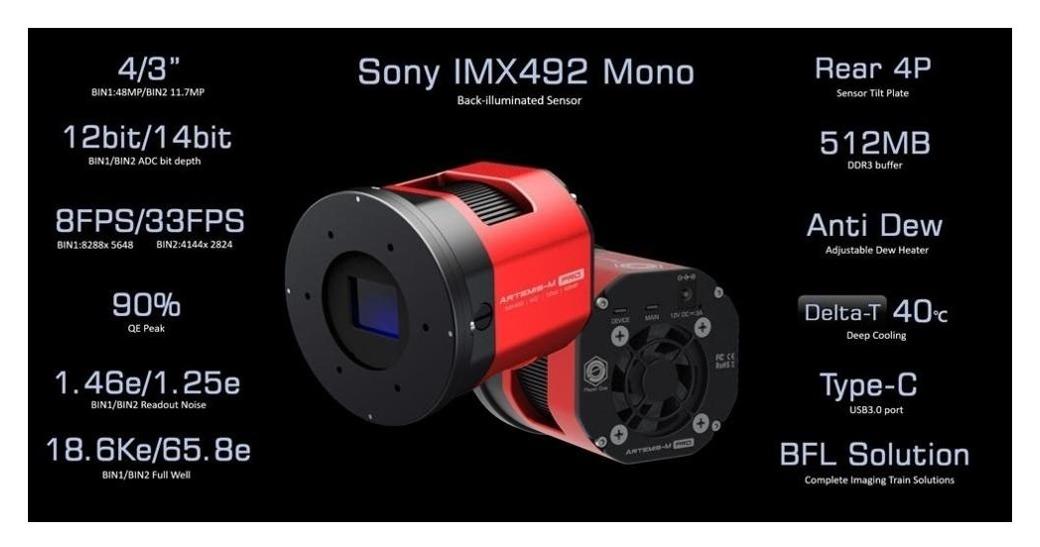
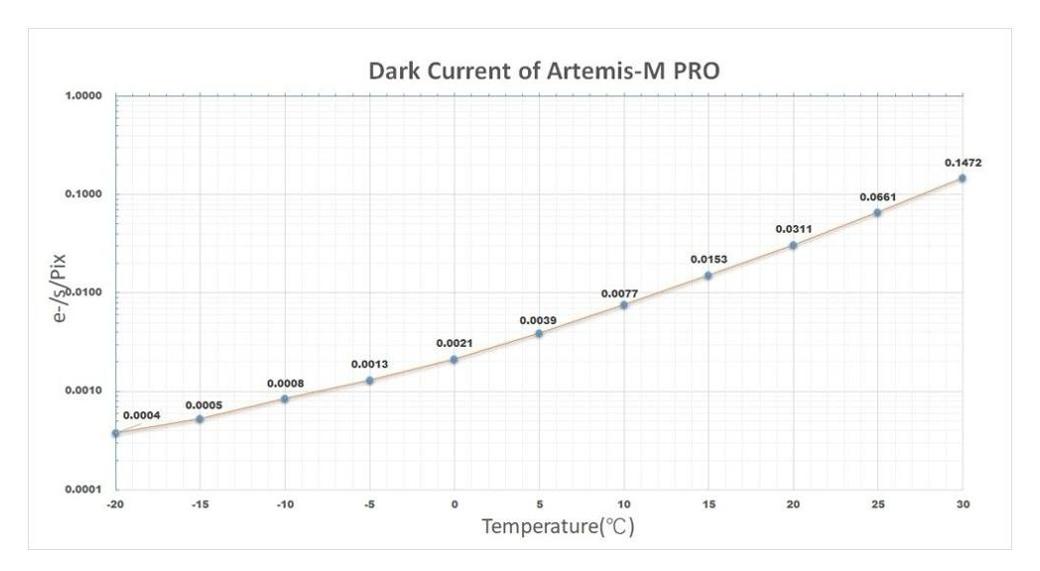
Player One ARTEMIS-M PRO Mono (SKU: POA-ARTEMIS-M-PRO) is a 47MP cooled mono camera based on a 4/3″ Sony IMX492 sensor. An ultra-small 2,315µm pixel and 14-bit ADC deliver exceptional detail in wide-field images, while 2-stage TEC cooling reduces sensor temperature by ≈40°C relative to ambient, minimizing thermal noise during multi-hour exposures of nebulae and galaxies.
• Sony IMX492 mono sensor – 8288 × 5648 px (47 MP), pixel 2.315 µm
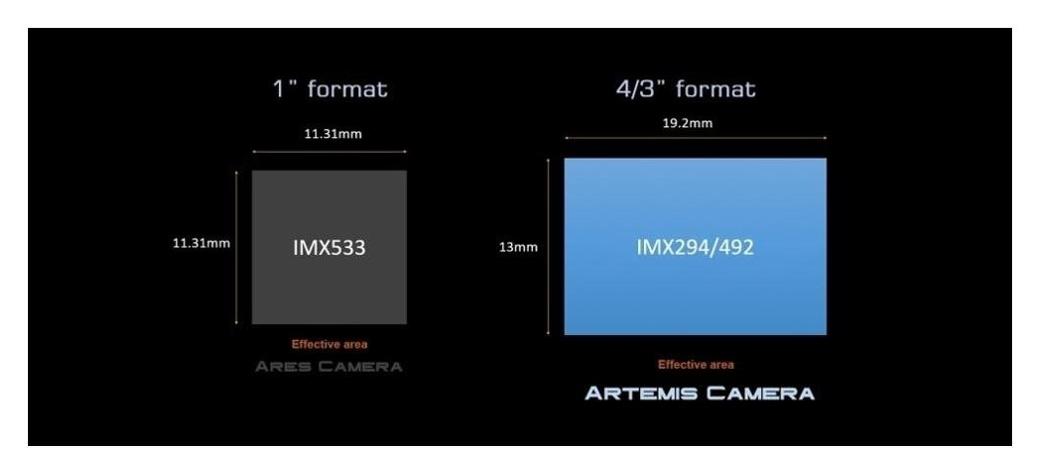
• 4/3″ format, 23.2 mm diagonal – wide field even with 0.7× reducers
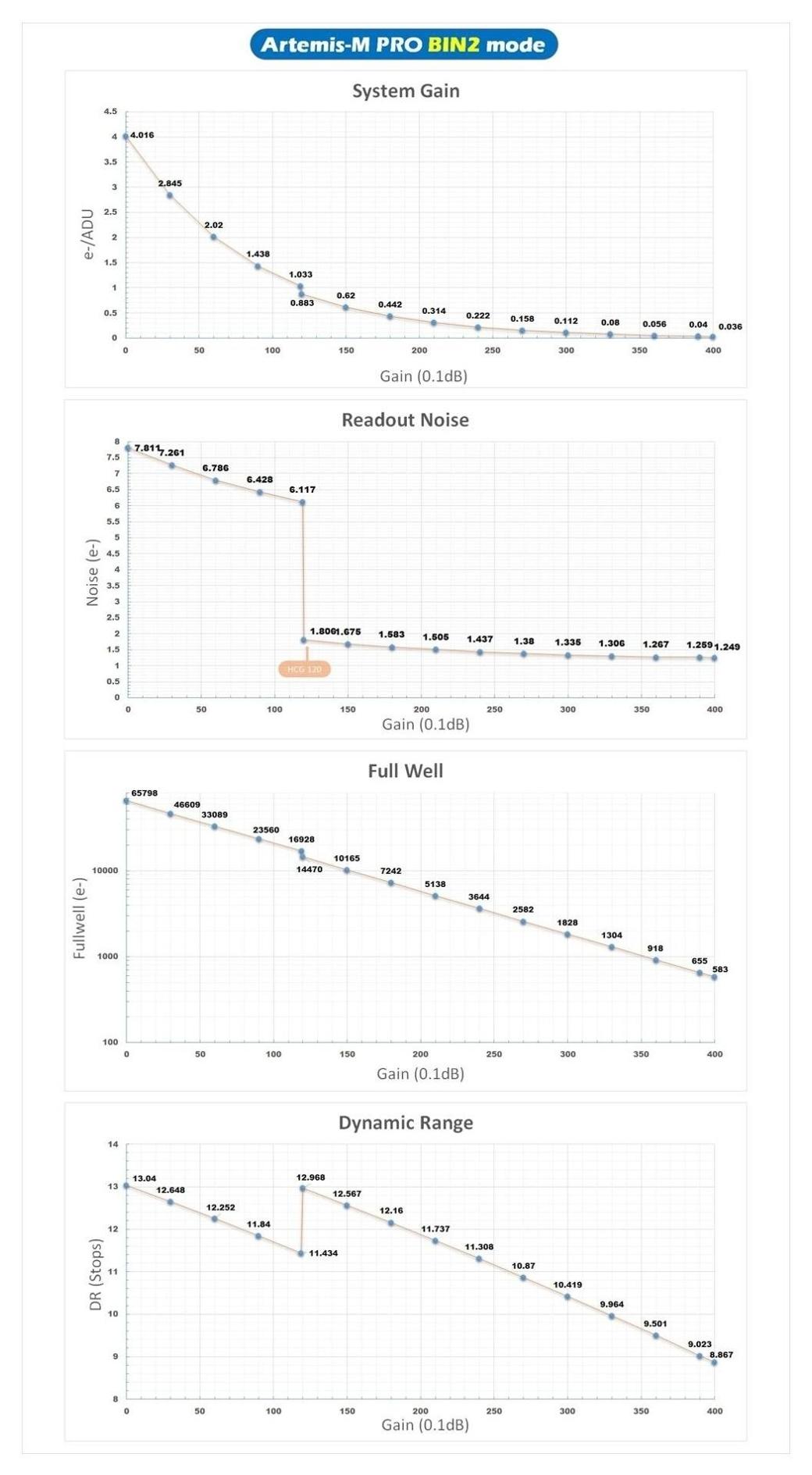
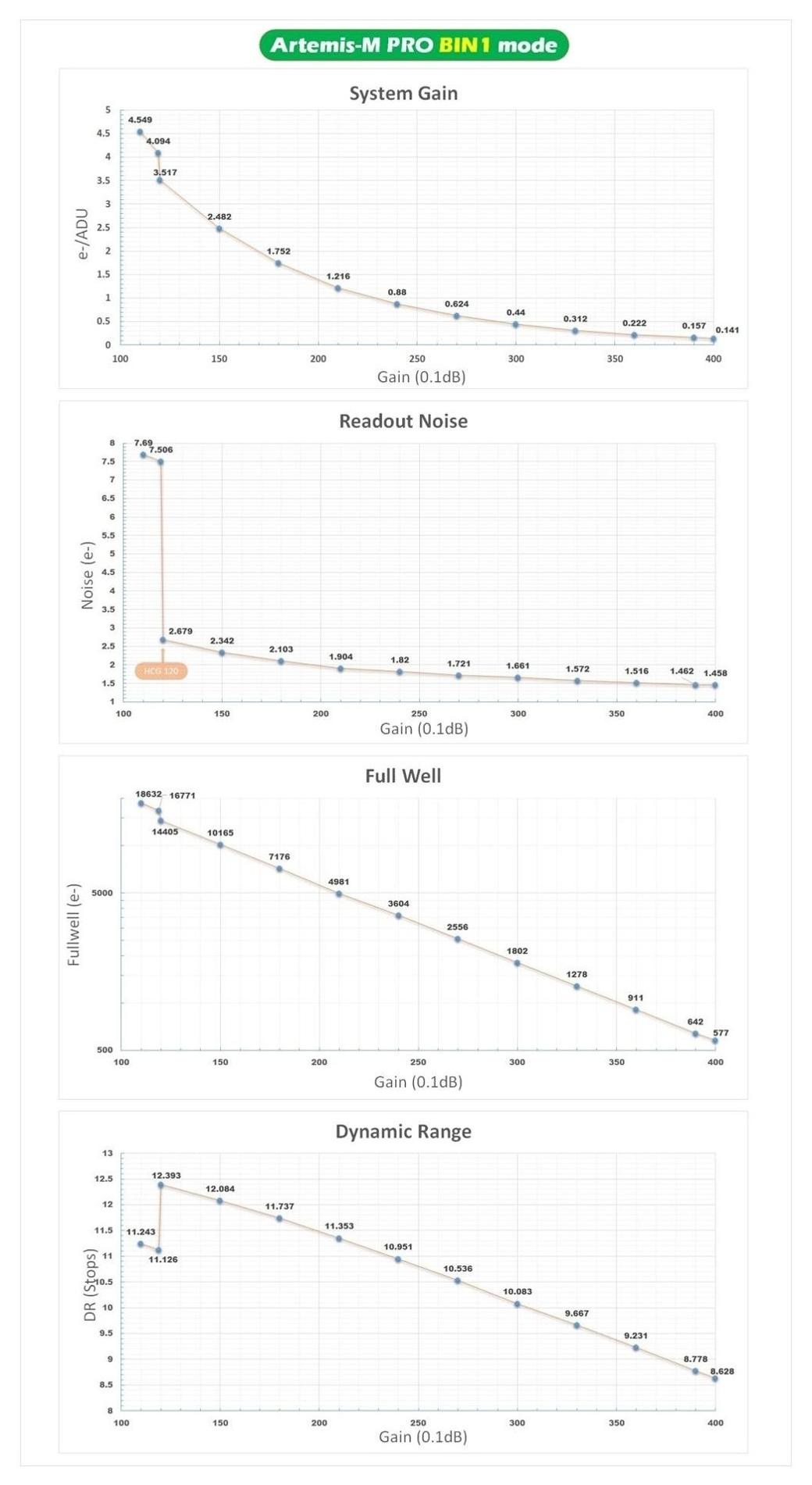
• full well 18.6 ke- @ BIN1 / 65 ke- @ BIN2 – wide tonal range
• 14-bit ADC + HCG mode – read noise 1.2–7.8 e- (gain-dependent)
• 512 MB DDR-III buffer – smooth burst recording without dropped frames
• speed: 8 fps (BIN1 RAW8), 33 fps (BIN2 RAW8) – ideal for stacking DSO sessions
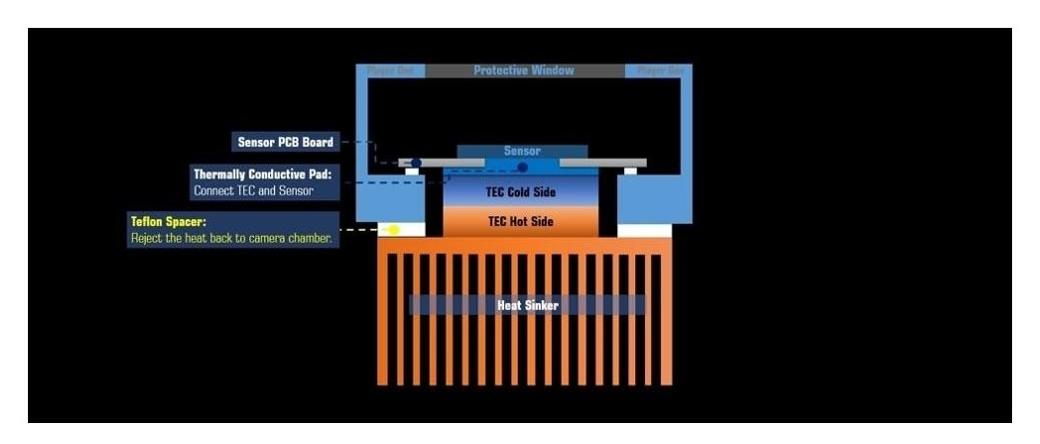
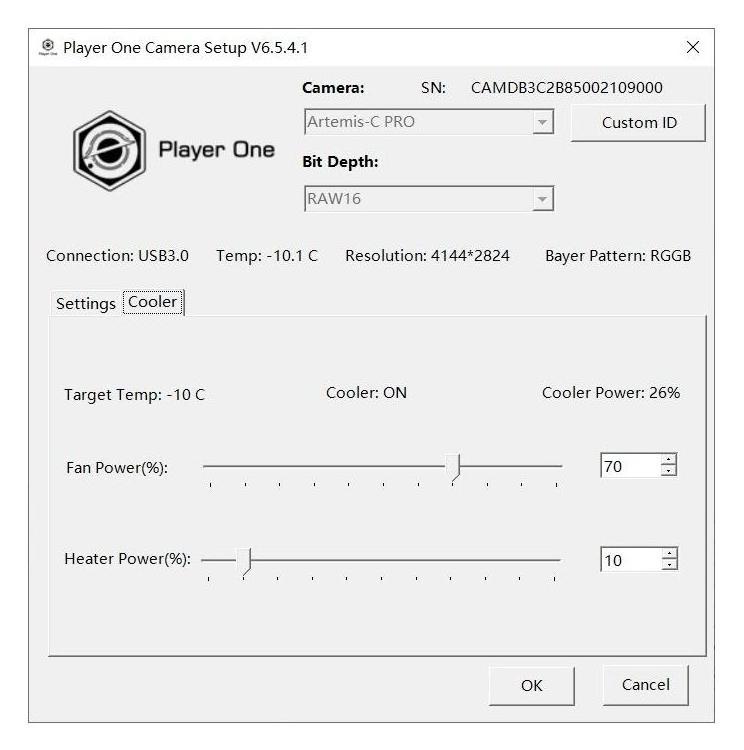
• 2-stage TEC – ΔT 35–40 °C; integrated anti-condensation heater
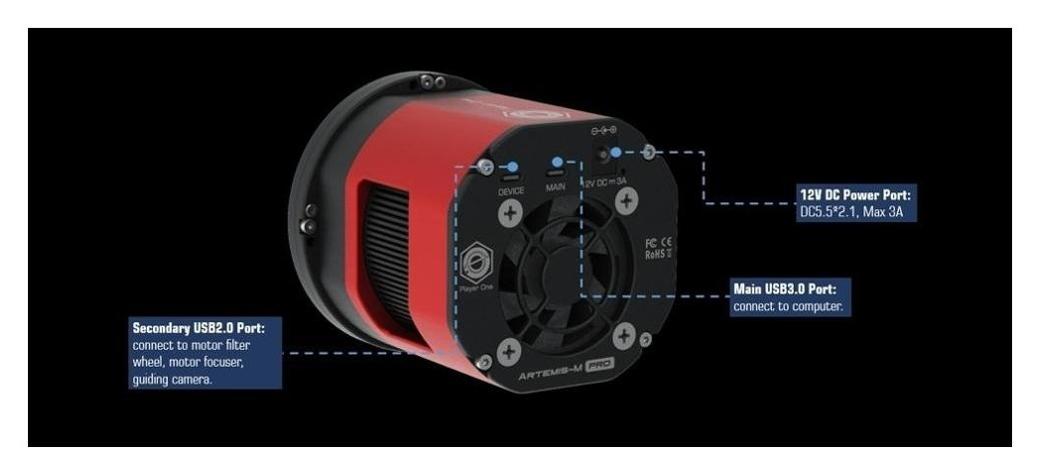
• USB-C 3.2 Gen 1 connector + ST-4 port for autoguider
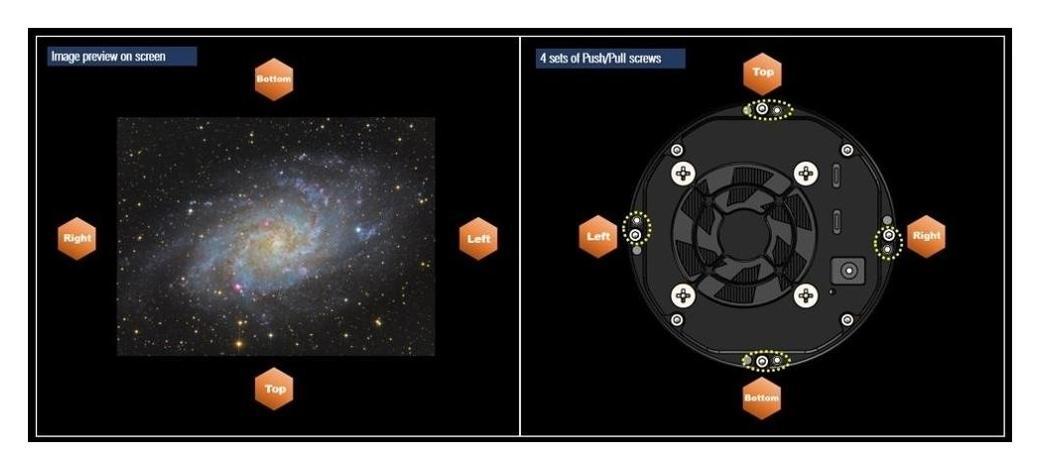
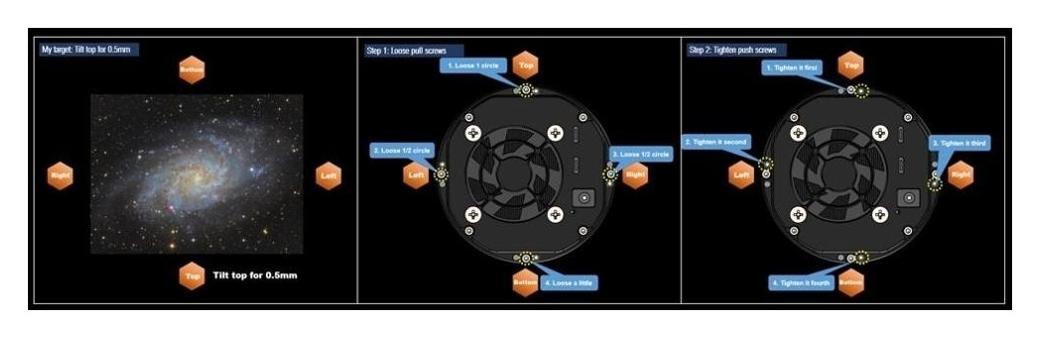
• adjustable tilt-plate 4P – easy alignment of the sensor plane
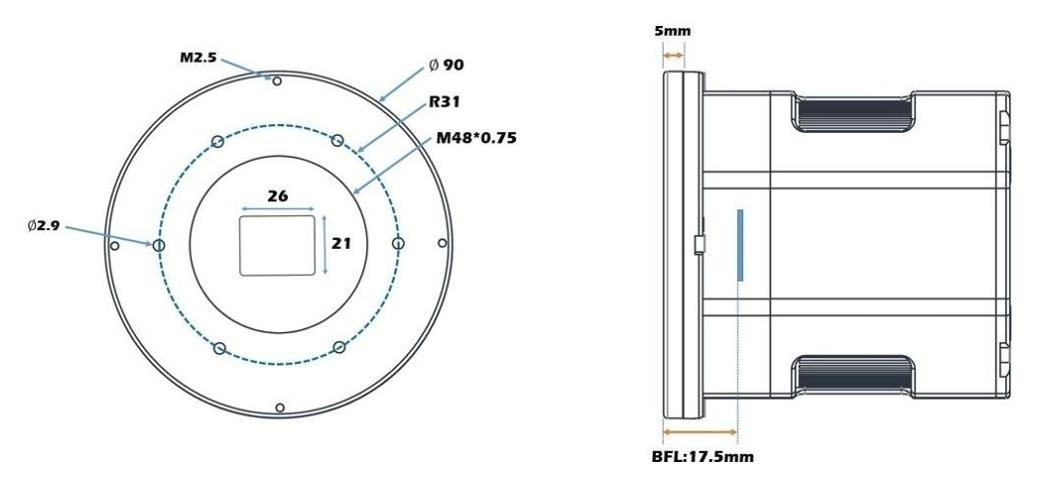
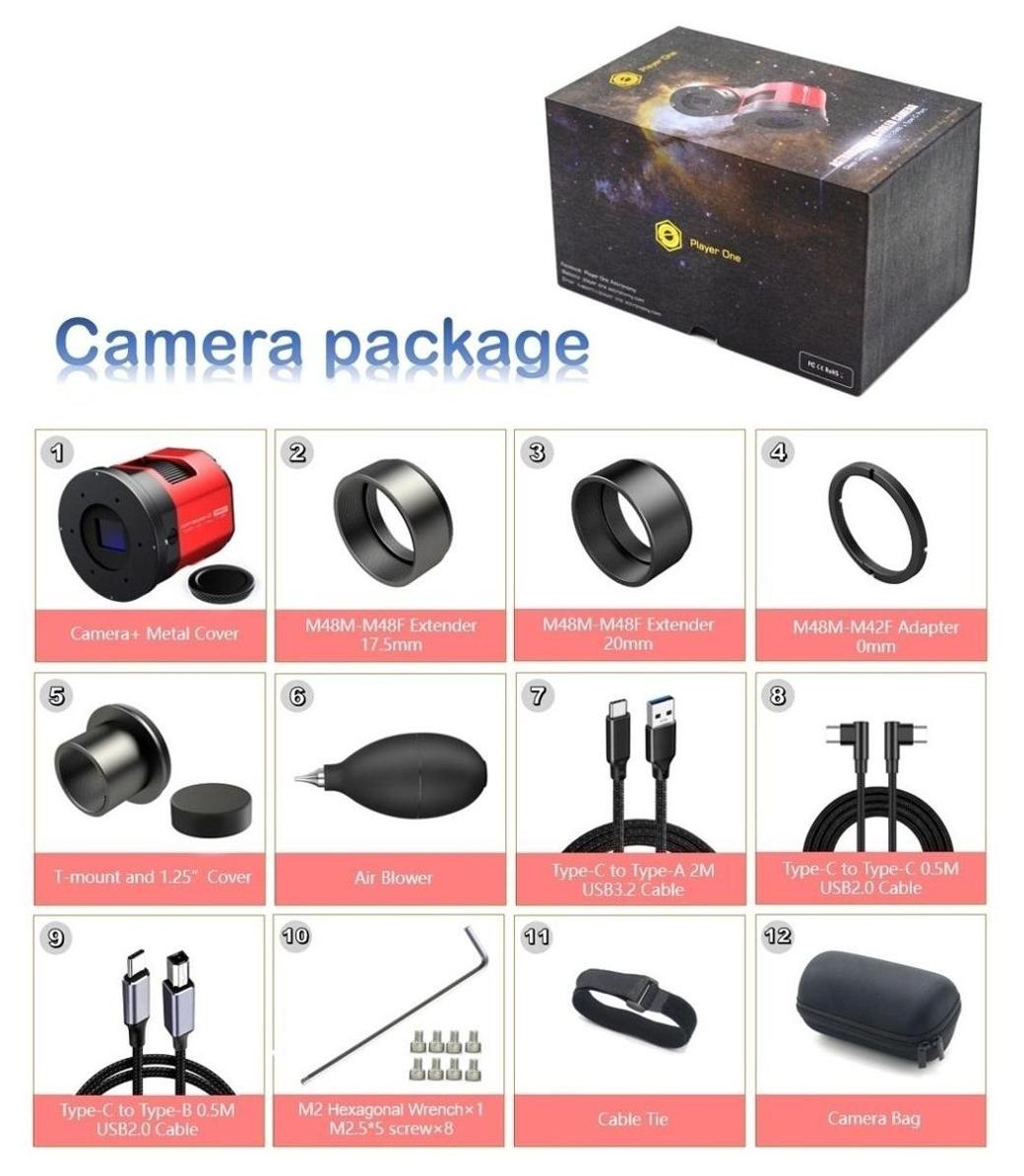
• threads: internal M54 × 0.75 (camera) + external M48 × 0.75 (nosepiece 2″ included)
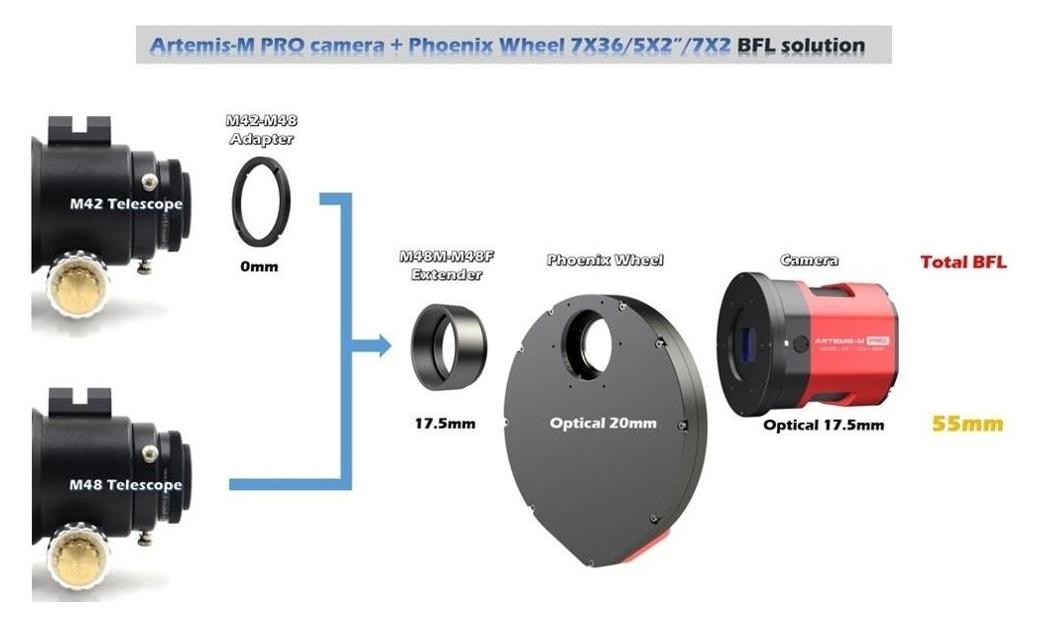
• compatible with Phoenix wheels, FD MAX drawer and OAG MAX Player One
• matrix: Sony IMX492 mono CMOS, rolling shutter
• resolution: 8288 × 5648 px (47 MP)
• pixel: 2.315 µm (BIN1) / 4.63 µm (BIN2)
• effective surface: 19.2 mm × 13.0 mm
• full well: 18.6 ke- (BIN1) / 65 ke- (BIN2)
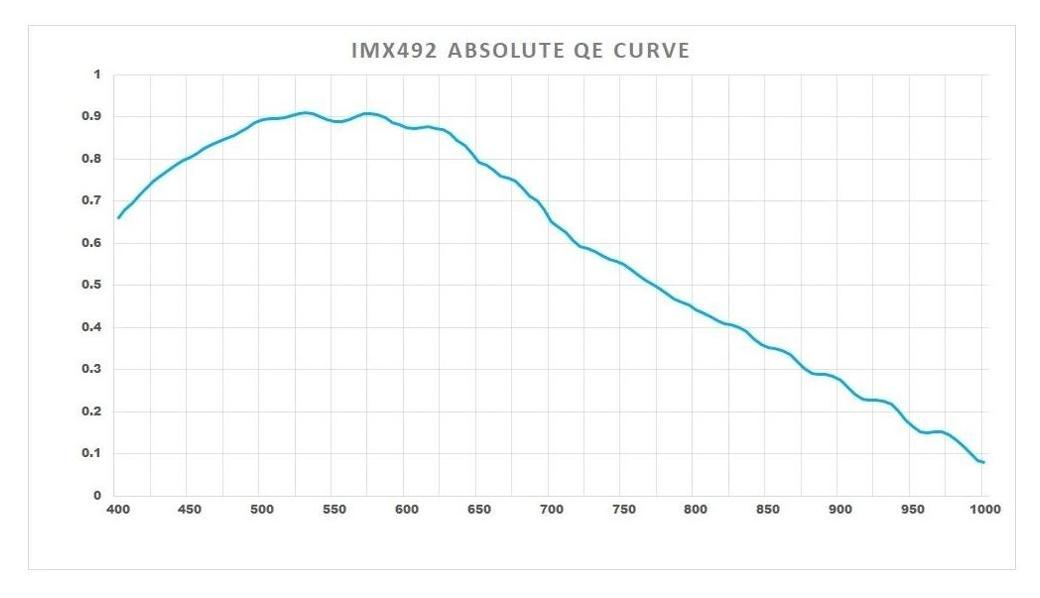
• Peak QE: ≈90% @ 510 nm
• ADC: 14bit / 8bit
• Buffer: 512MB DDR-III
• cooling: TEC 2-stage, ΔT 35–40 °C at 20 °C ambient
• TEC consumption: ≤ 3 A @ 12 V DC (5.5 × 2.1 mm socket)
• electronics power supply: 5 V from USB-C (≤ 500 mA)
• interfaces: USB-C 3.2 Gen 1, ST-4 (RJ-12)
• back-focus: 17.5 mm (without tilt-plate)
• dimensions: Ø 90 mm × 40 mm
• weight: 430 g
• systems: Windows 7/10/11 (ASCOM), macOS, Linux (INDI)
The ARTEMIS-M PRO is the ideal choice for astrophotographers who want to capture extensive nebulae, dark clouds, and diffuse clusters in extremely high resolution while maintaining low noise and high tonal dynamics. The combination of a small pixel size, deep cooling, and a large buffer make this camera a powerful tool for both high-quality deep-sky imaging and high-resolution imaging.