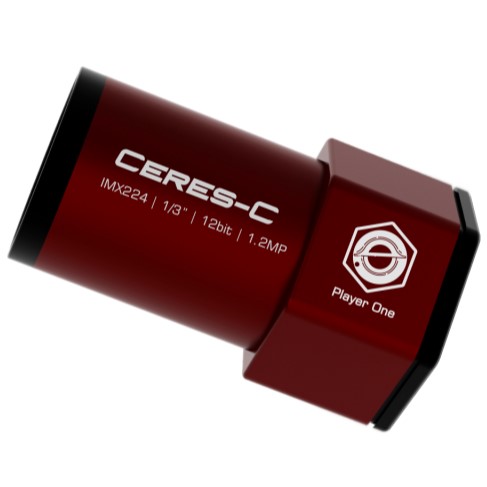
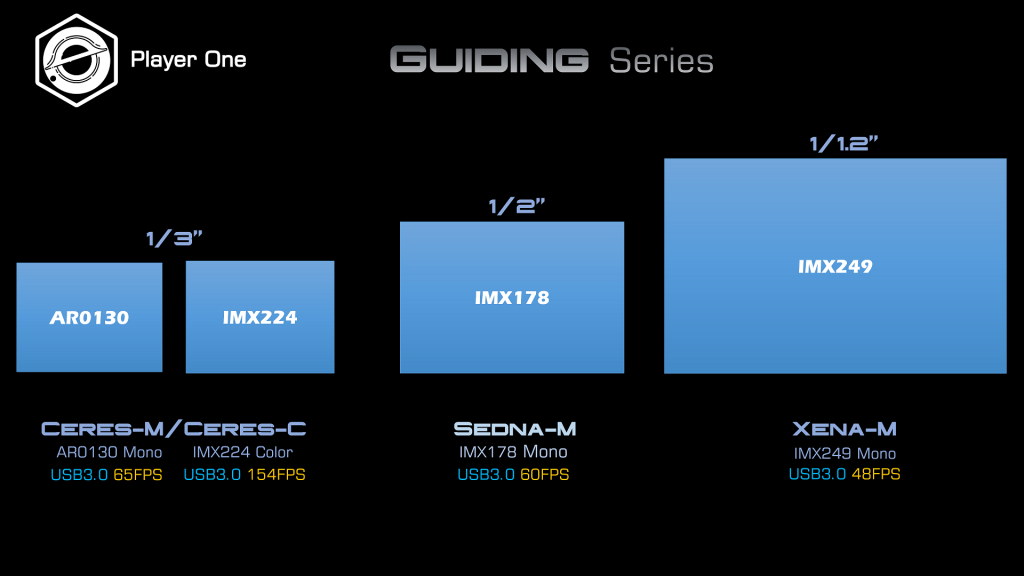
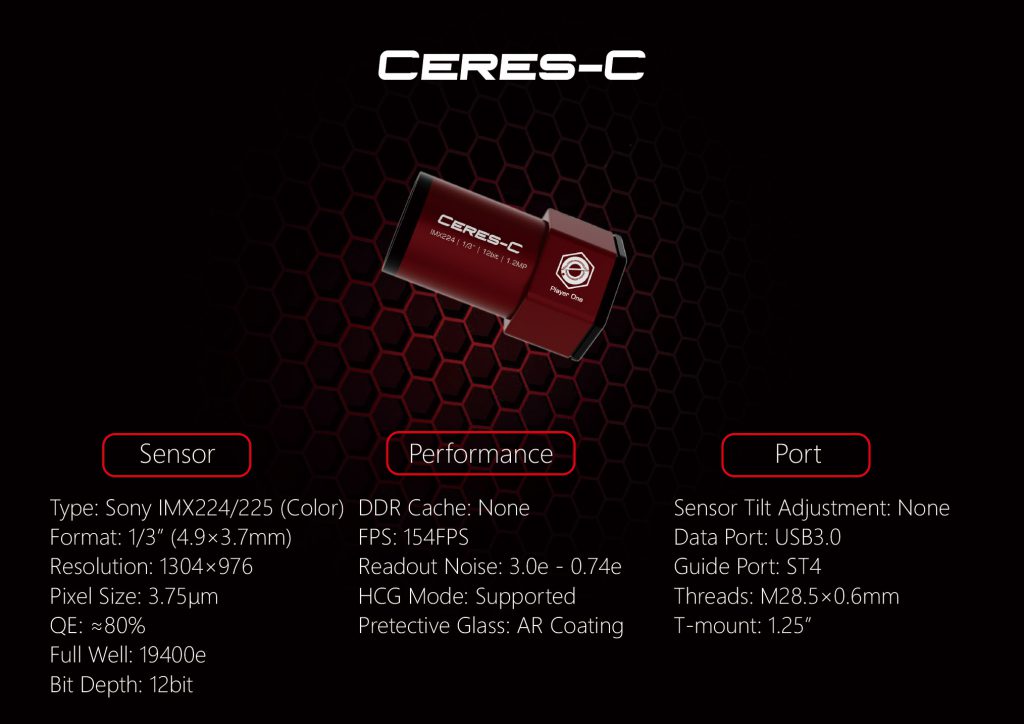
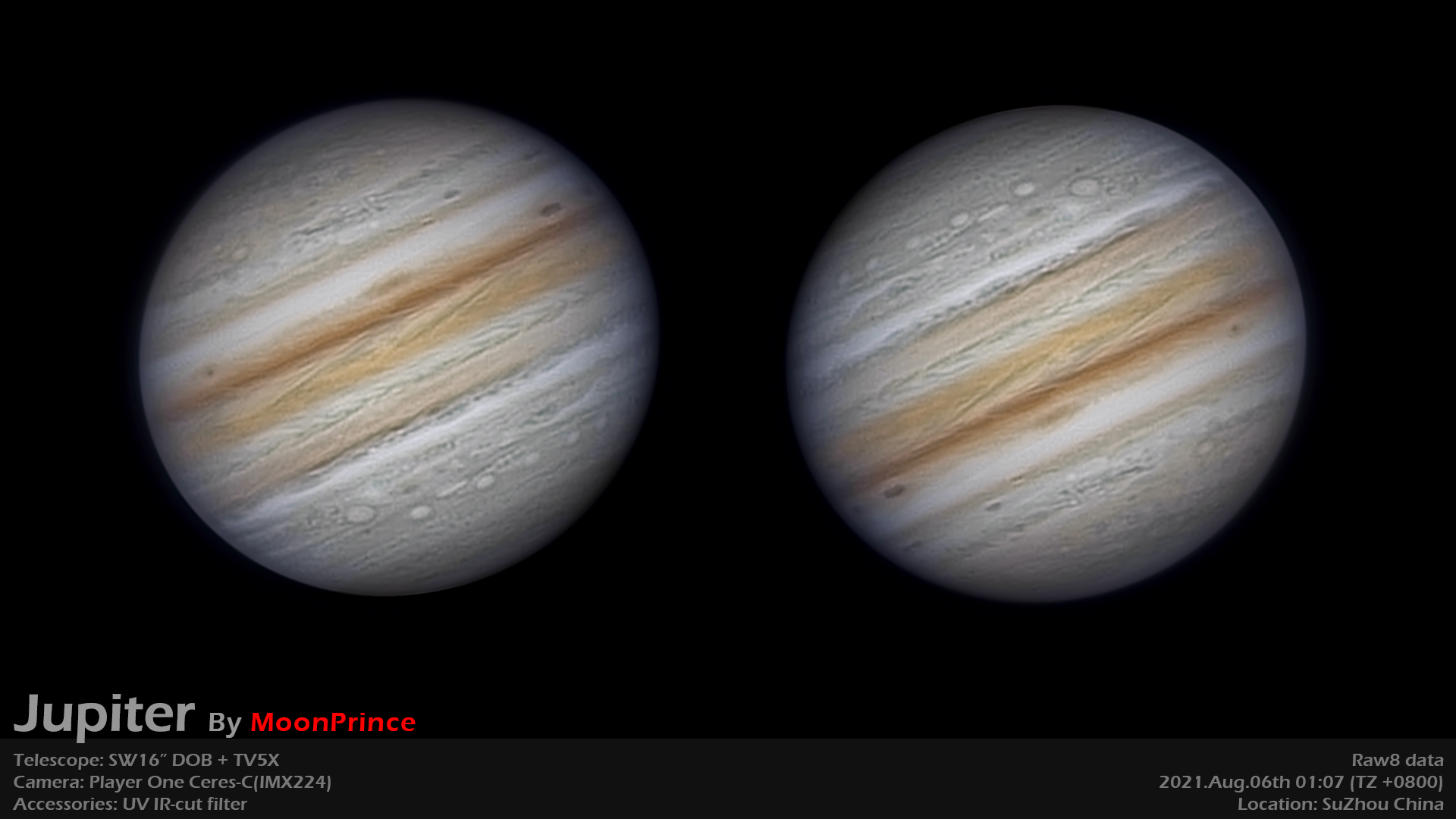
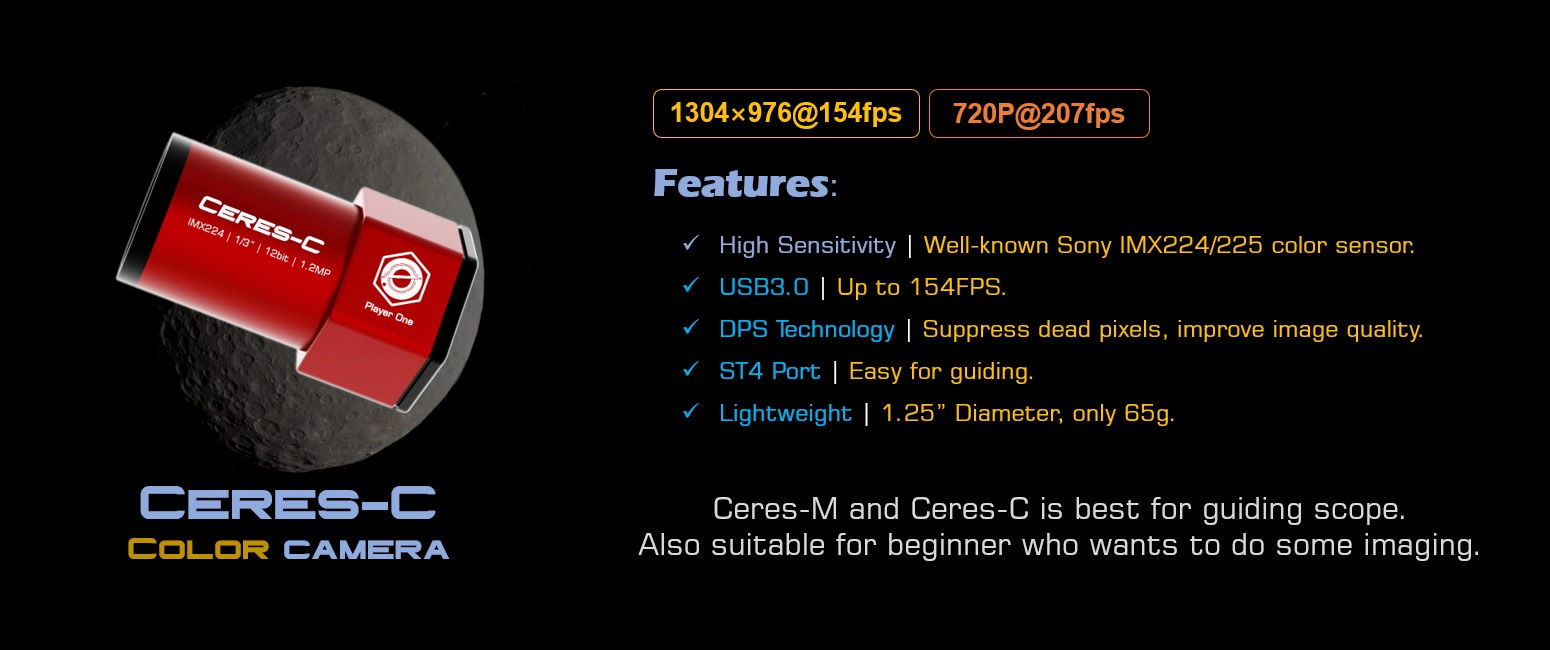
Player One CERES-C Color (SKU: POA-CERES-C ) is an extremely light and fast one-shot color camera designed for guiding, variable star photometry and recording planets, the Moon and ISS flybys. The heart of the camera is the valued Sony IMX224 COLOR sensor (1/3″, 1.27 MP), combining very low readout noise with high quantum sensitivity (≈77 %) - also in the near infrared. USB 3.0 electronics and a 256 MB DDR-III buffer allow recording up to 150 fps in full RAW10 resolution without dropping frames.
• Sony IMX224 COLOR sensor, 1/3″ – 1304 × 976 px, pixel 3.75 µm
• STARVIS technology – high visible + NIR sensitivity, no amp-glow
• speed up to 150 fps (RAW10) in full frame, 450 fps at ROI 640 × 480
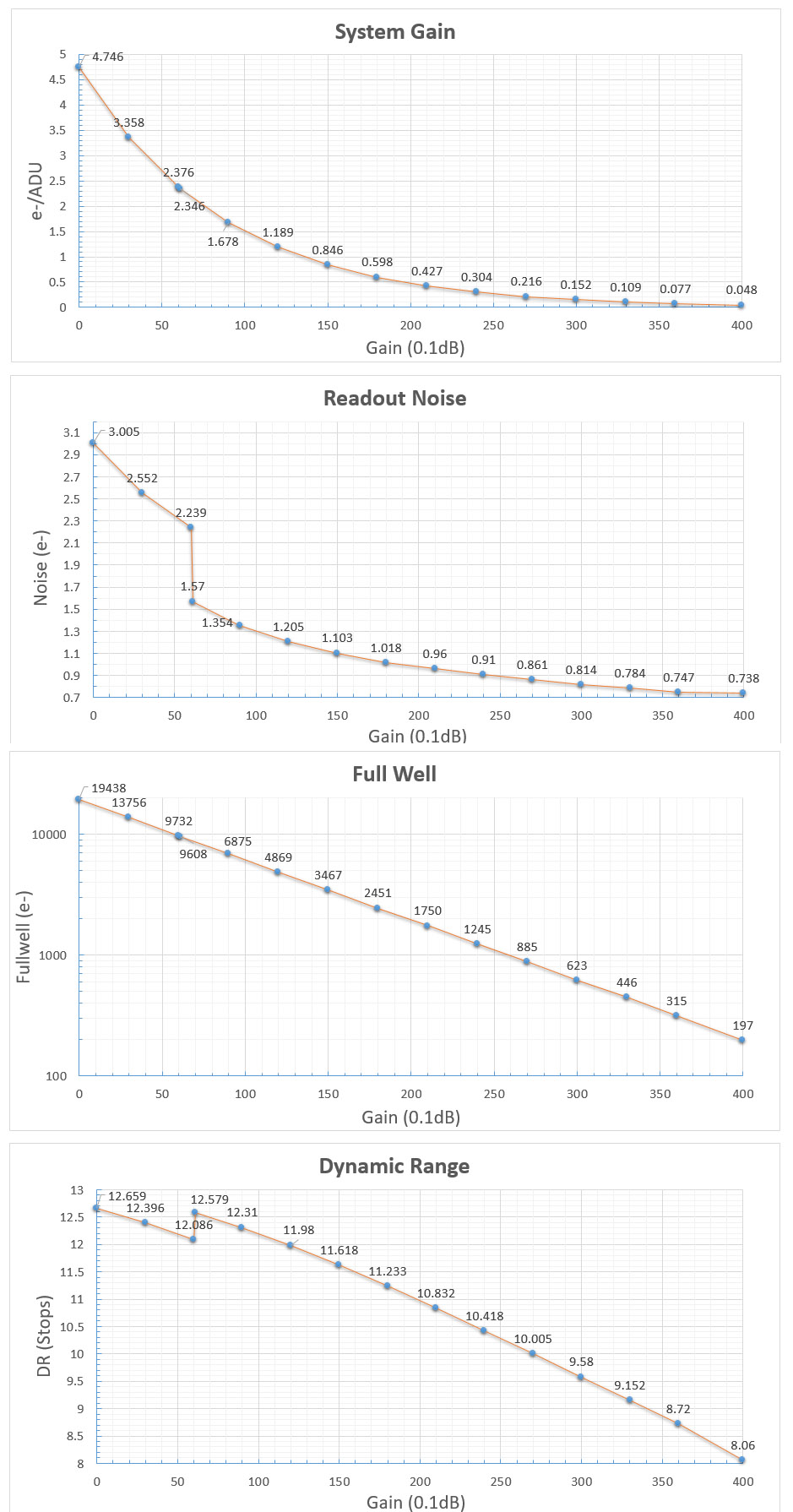
• full well 19 ke-, reading noise < 1.1 e- (HCG mode)
• 256 MB DDR-III buffer – continuous writing even with a slow disk
• passive PCS cooling system (radiator) – stable sensor temperature
• Super AR Plus window – high transmission 350–1000 nm
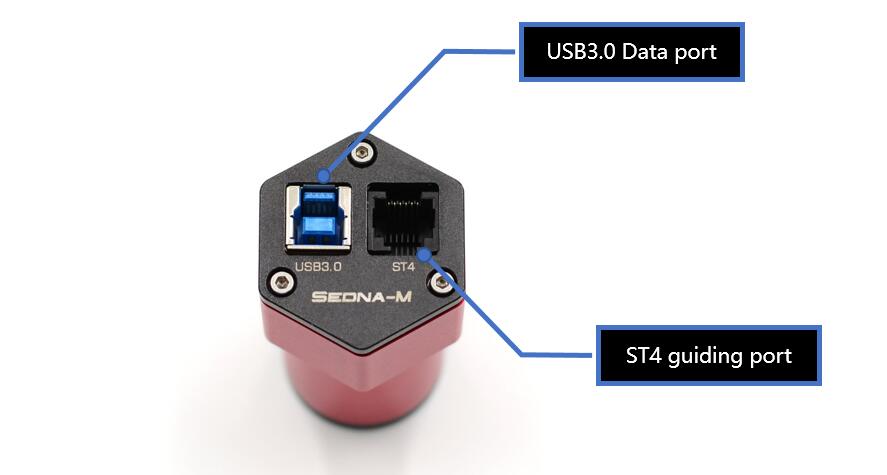
• USB-C 3.0 interface (400 MiB/s) + autoguider port ST-4 (RJ-12)
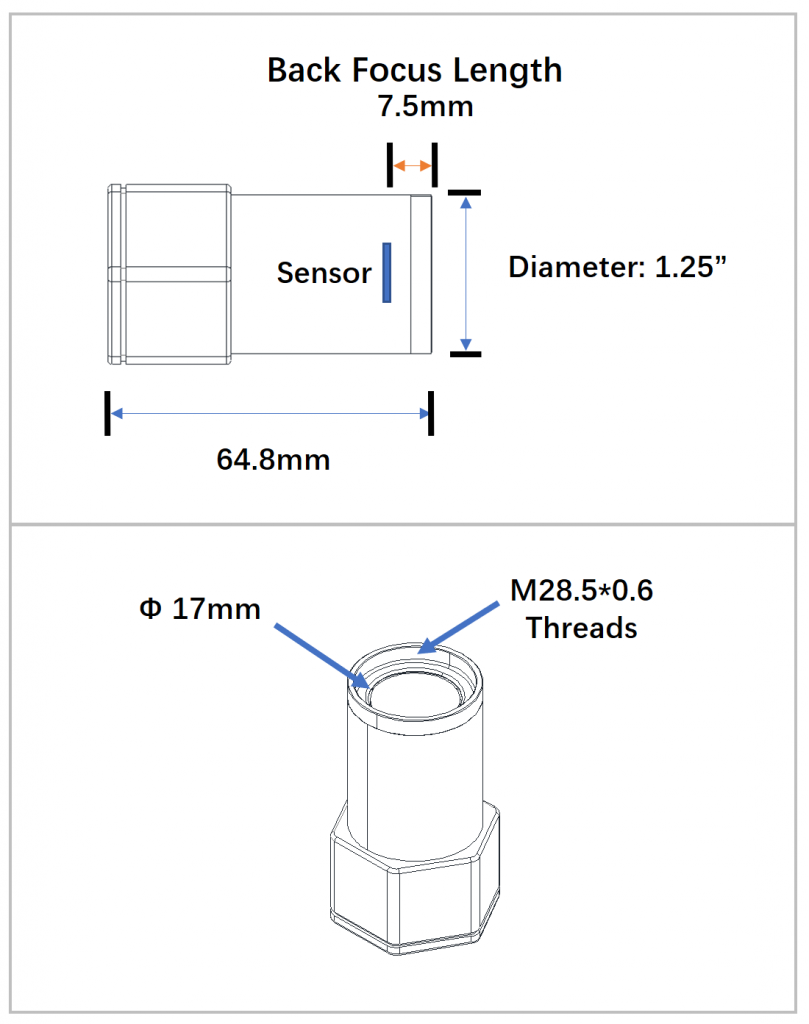
• internal threads M42 × 0.75 + nose 1.25″ (back-focus 12.5 mm)
• 5V power supply from USB (≤ 0.45 A) – no additional power cables
• matrix: Sony IMX224 C, CMOS, rolling shutter
• format / diagonal: 1/3″ (6.1 mm) – area 4.8 × 3.6 mm
• resolution: 1304 × 976 px (1.27 MP)
• pixel size: 3.75 µm
• ADC: 12 bit / 10 bit (RAW)
• full well: 19 ke- (gain 0)
• reading noise: 0.7 – 2.5 e- (HCG → LG)
• max. FPS: 150 fps @ 1304 × 976 (RAW10), 450 fps @ 640 × 480
• exposures: 32 µs – 1000 s
• Buffer: 256MB DDR-III
• back-focus (with 1.25″ nose): 12.5 mm
• dimensions / weight: Ø 40 mm × 30 mm / 62 g
• cooling: PCS passive; compatible ACS module (active)
• systems: Windows 7/10/11 (ASCOM), macOS, Linux (INDI)
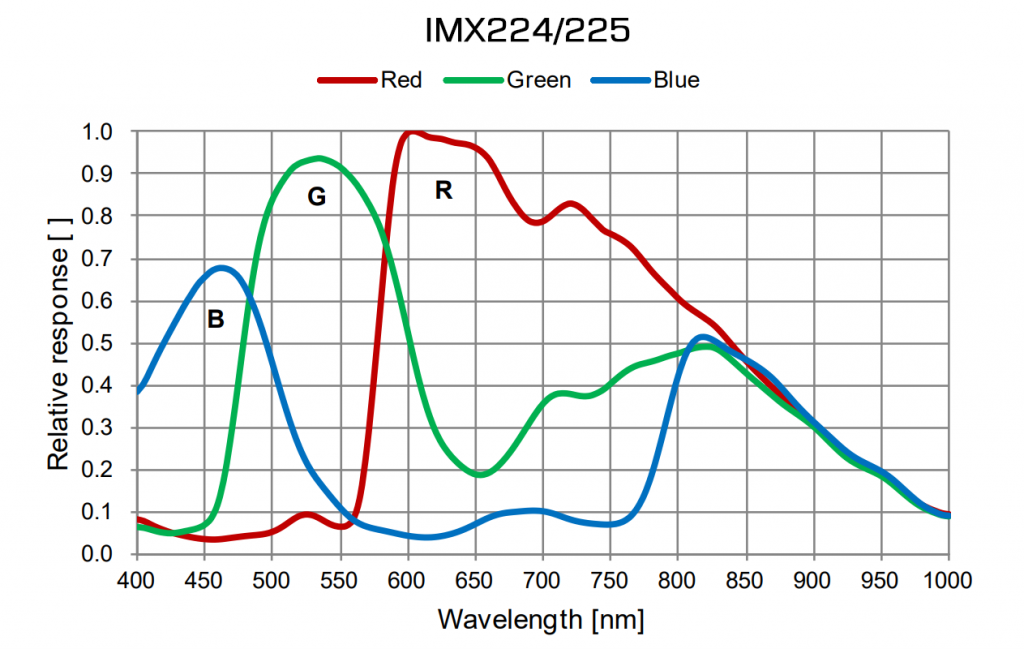
CERES-C is the ideal camera for precise guiding in OAG Mini, mobile planetary systems and for capturing fast phenomena where the highest frame rate and minimal noise count. The color matrix allows for a single color recording, and the high NIR sensitivity allows for work with IR-pass 685/850 nm filters, increasing sharpness in difficult seeing.