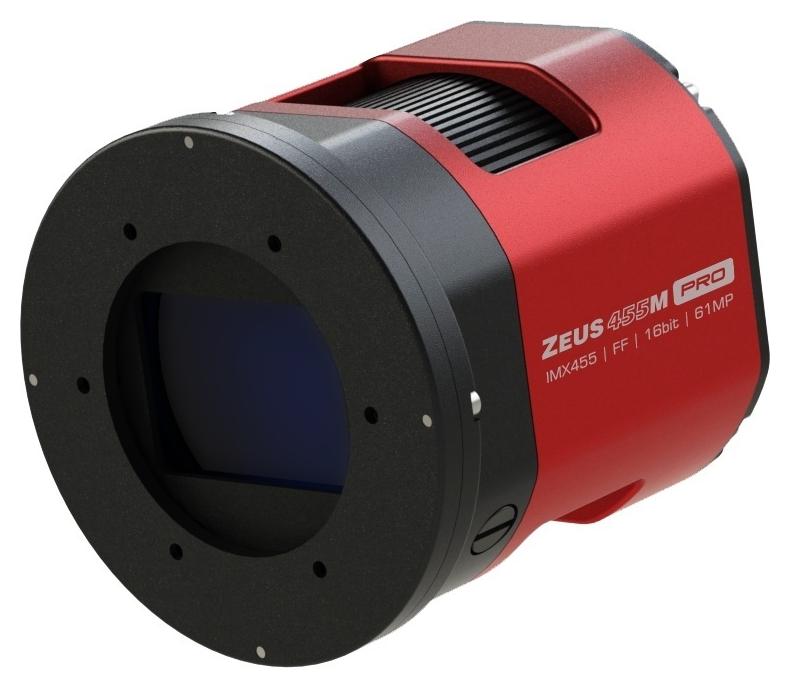
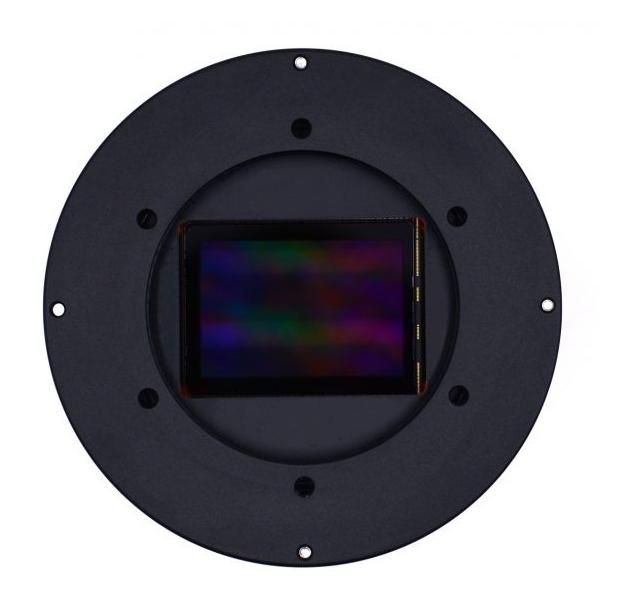
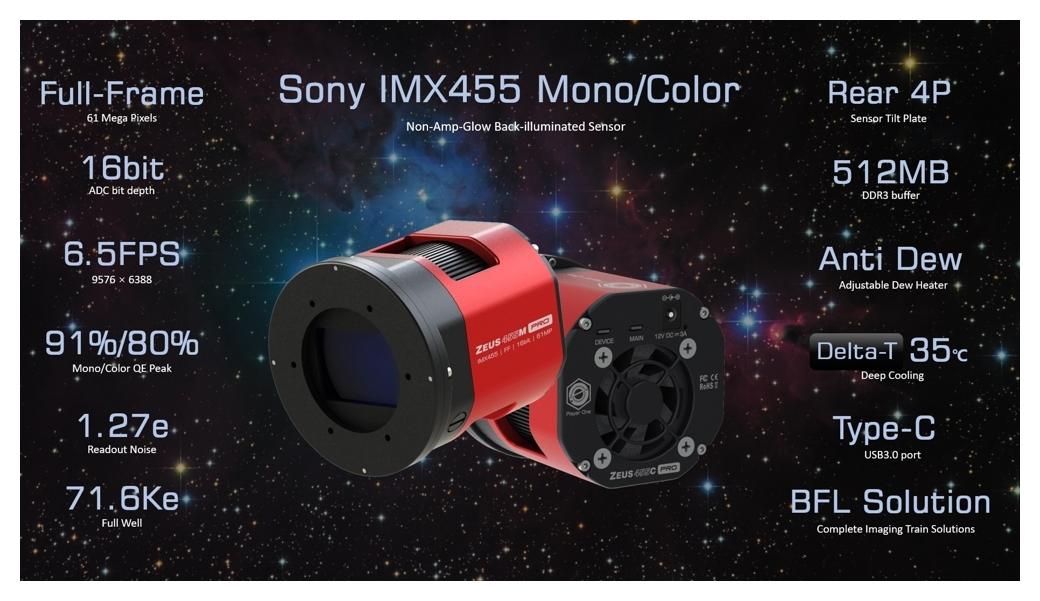
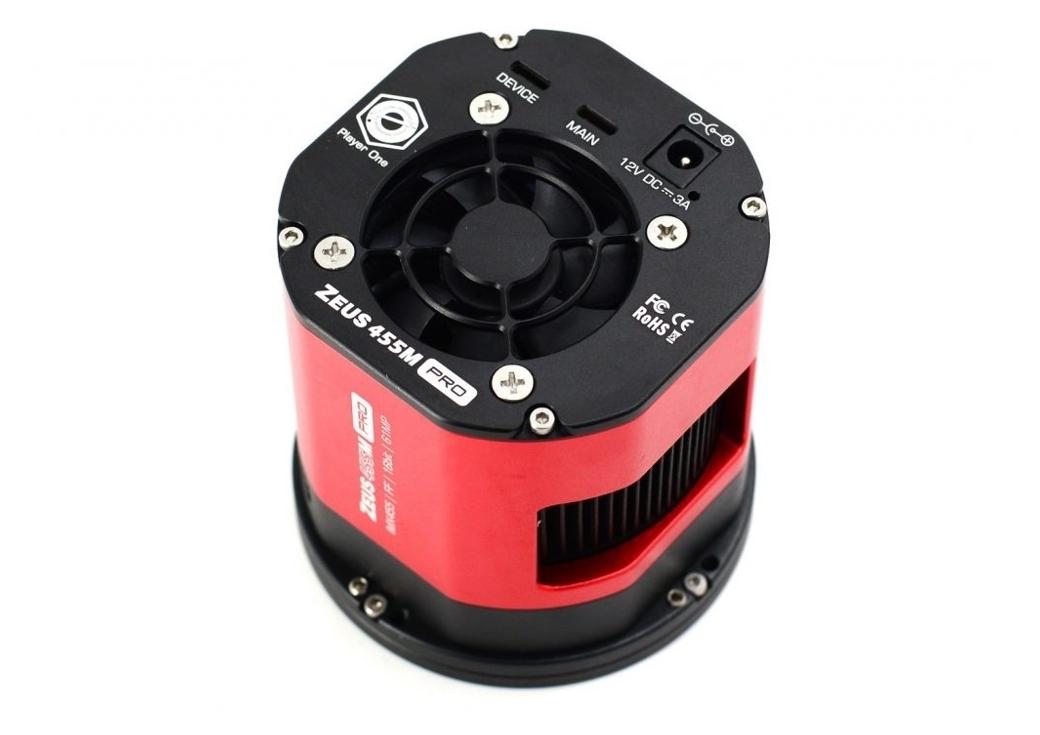
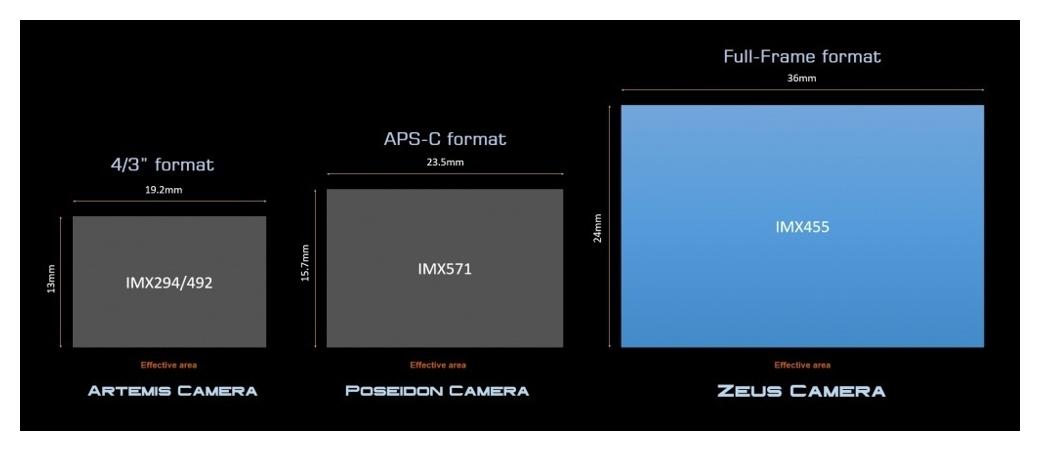
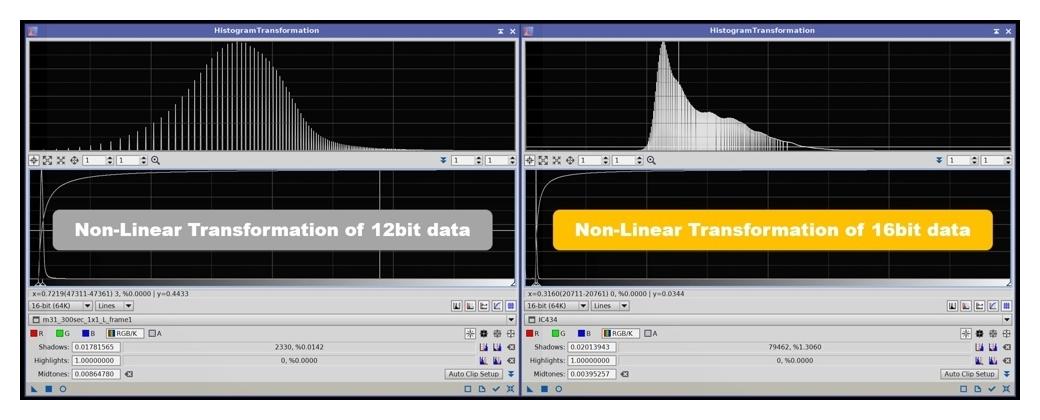
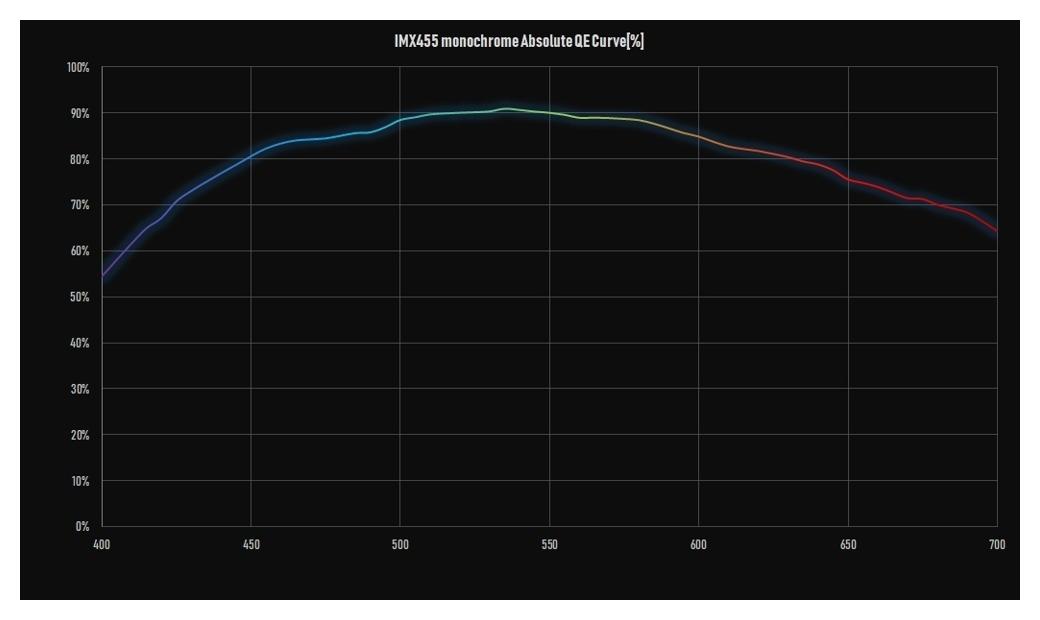
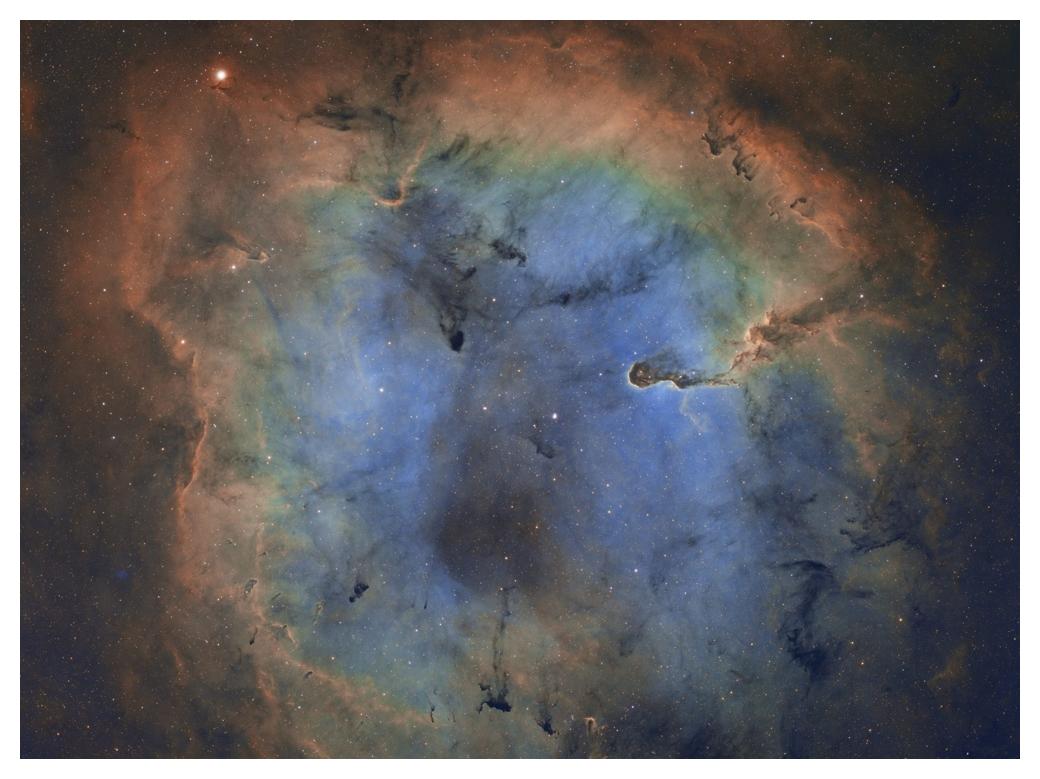
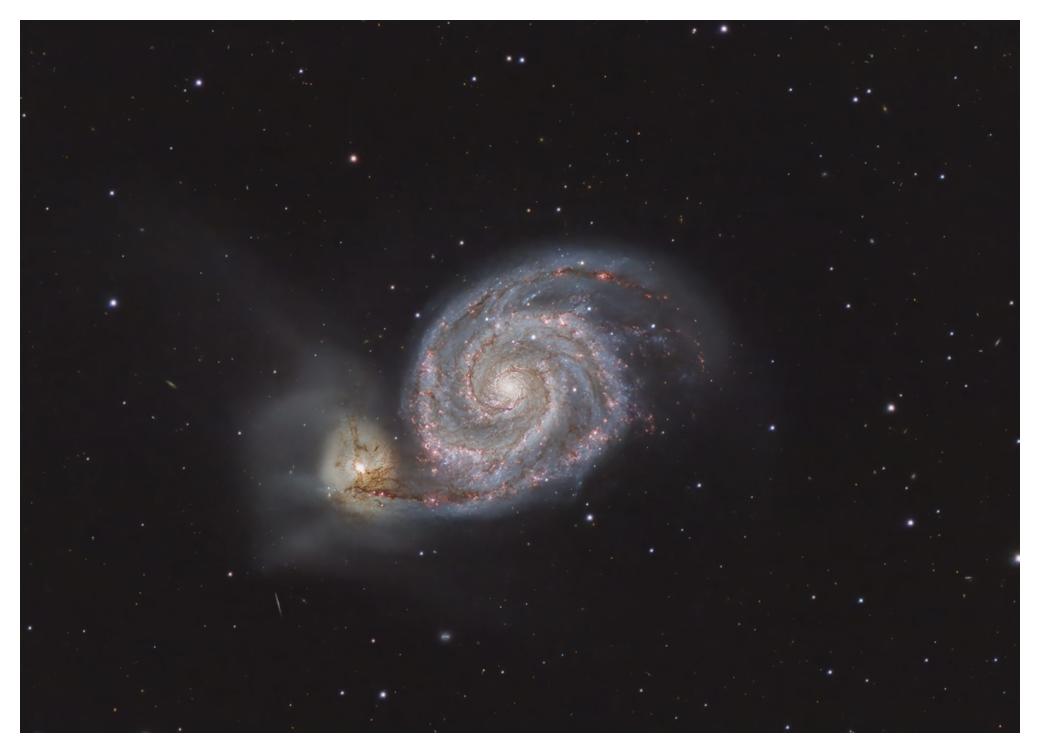
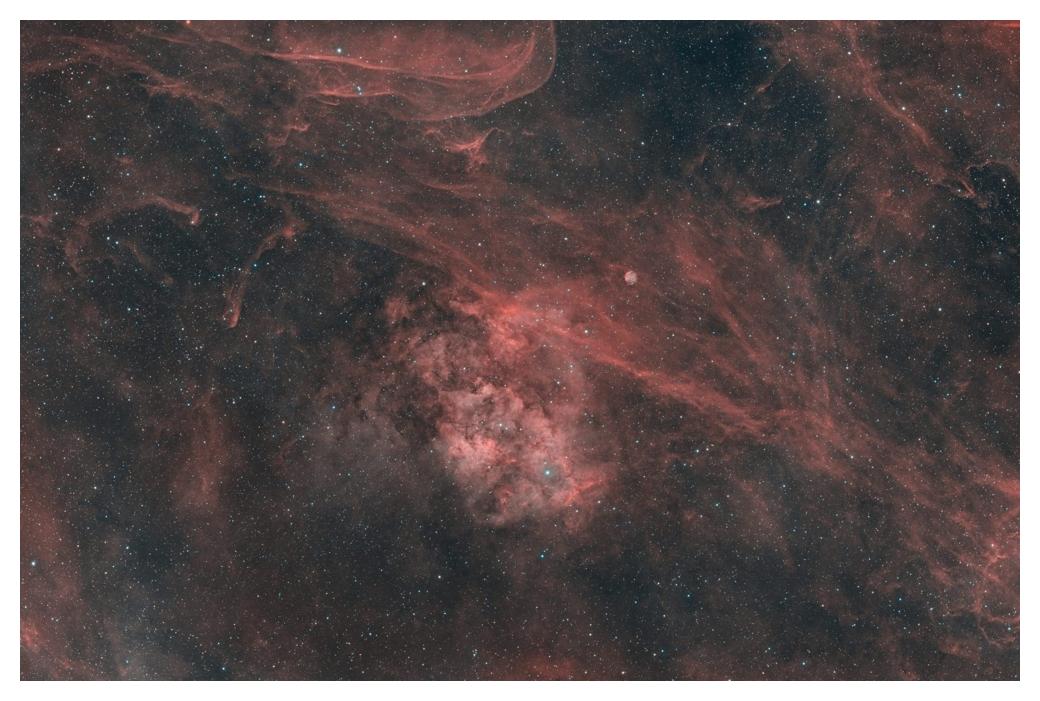
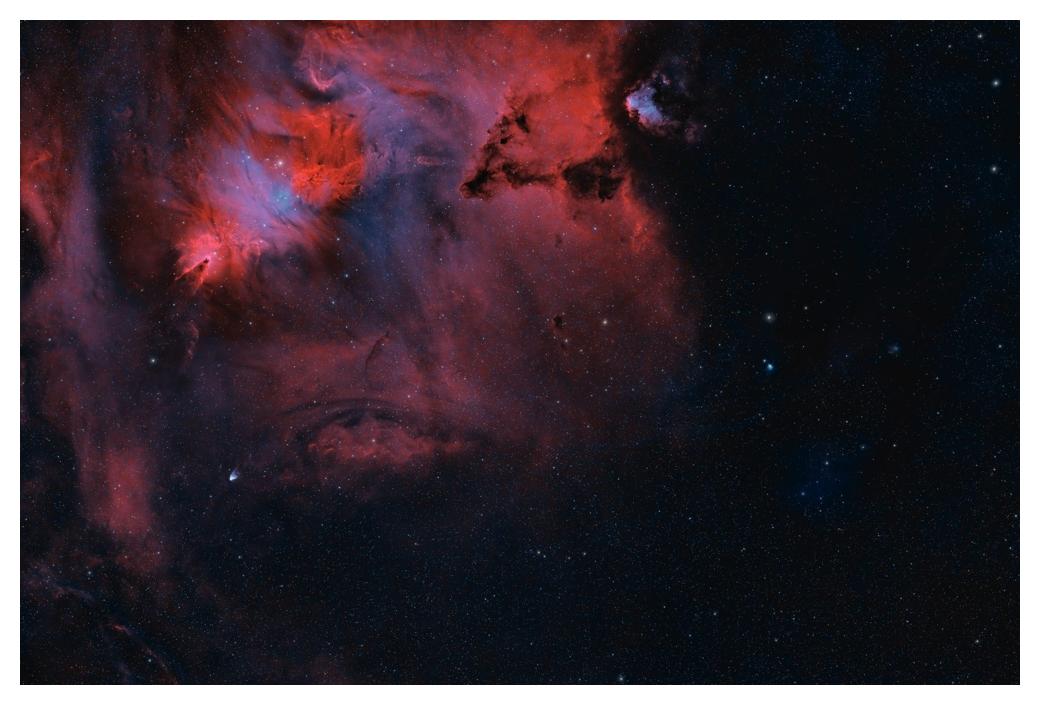
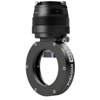
Player One ZEUS-M PRO Mono (SKU: POA-ZEUS-M-PRO ) is Player One's flagship monochrome camera. It is equipped with a full-frame Sony IMX455 MONO sensor (36 × 24 mm, 9576 × 6388 px) with a 16-bit ADC and a 3.76 µm pixel size. The sensor operates in HCG mode, offering readout noise of ≈ 1 e- and peak QE > 90 %. Two-stage TEC cooling lowers the sensor temperature by ~40 °C relative to ambient, and a 512 MB DDR-III buffer ensures stable RAW data recording without dropped frames.
• Sony IMX455 Mono full-frame sensor – 9576 × 6388 px (60 MP), 3.76 µm pixel
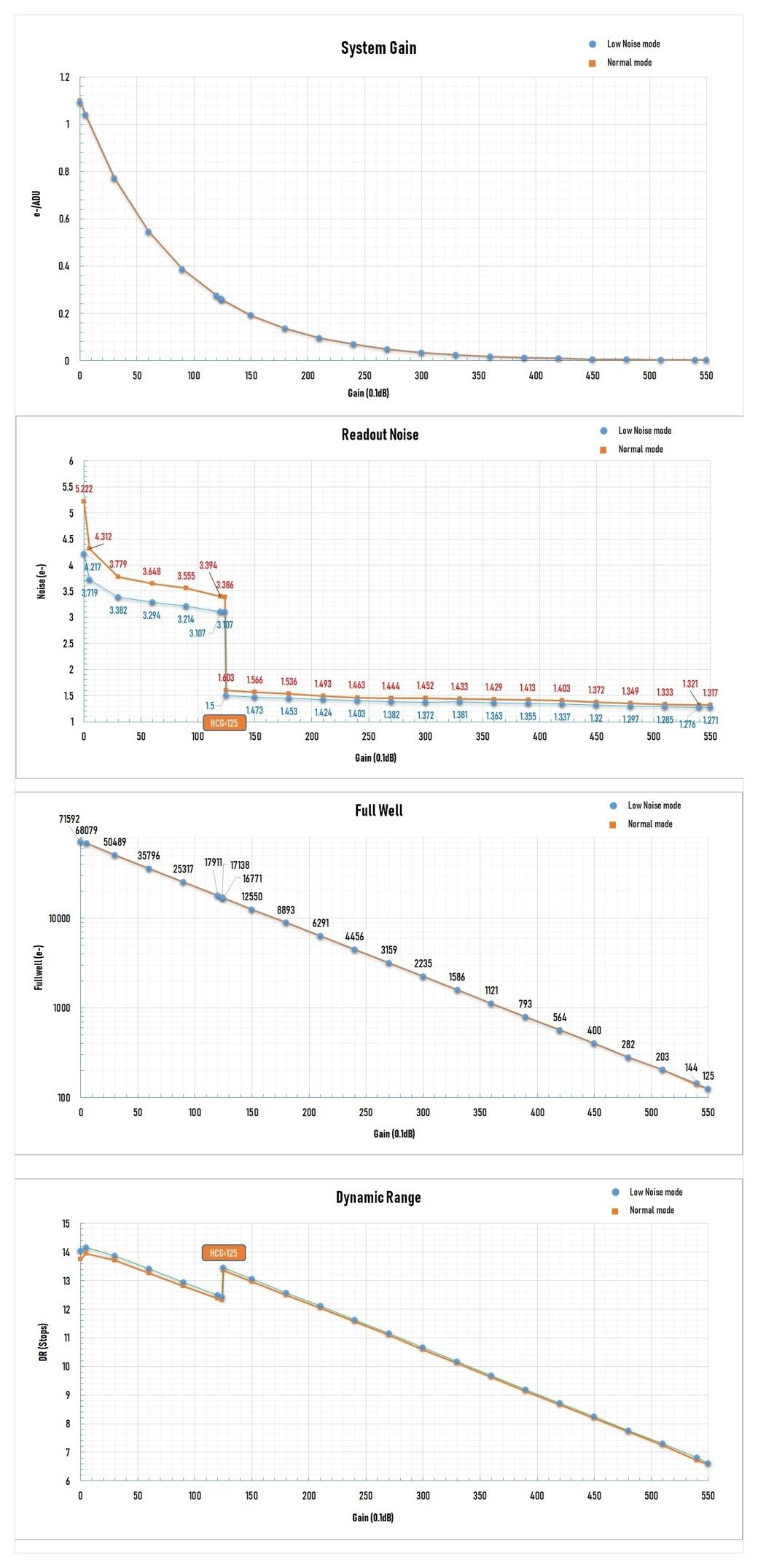
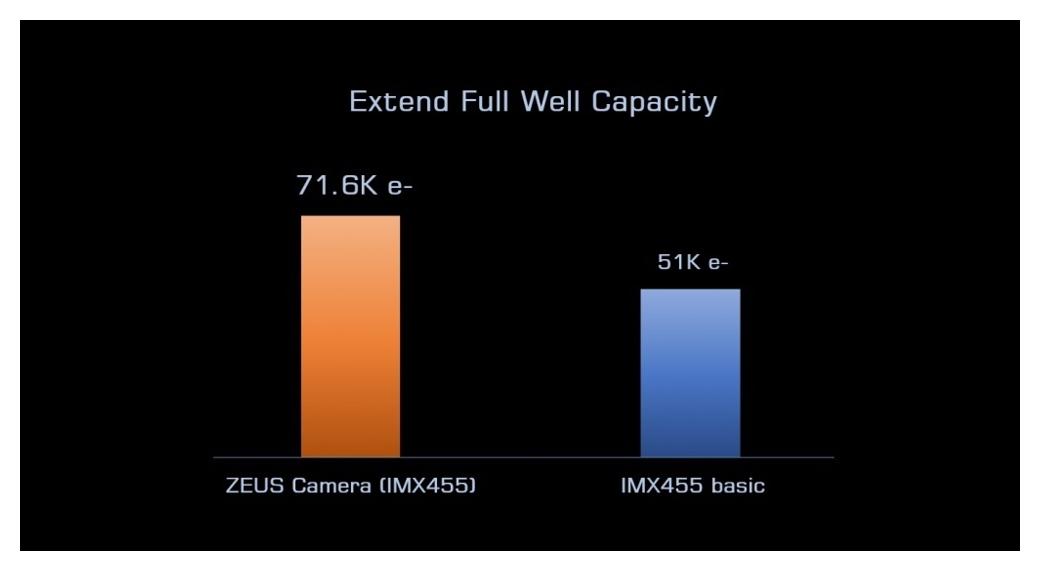
• 16-bit ADC, full well ≈ 73 ke- (gain 0) – impressive range > 14 EV
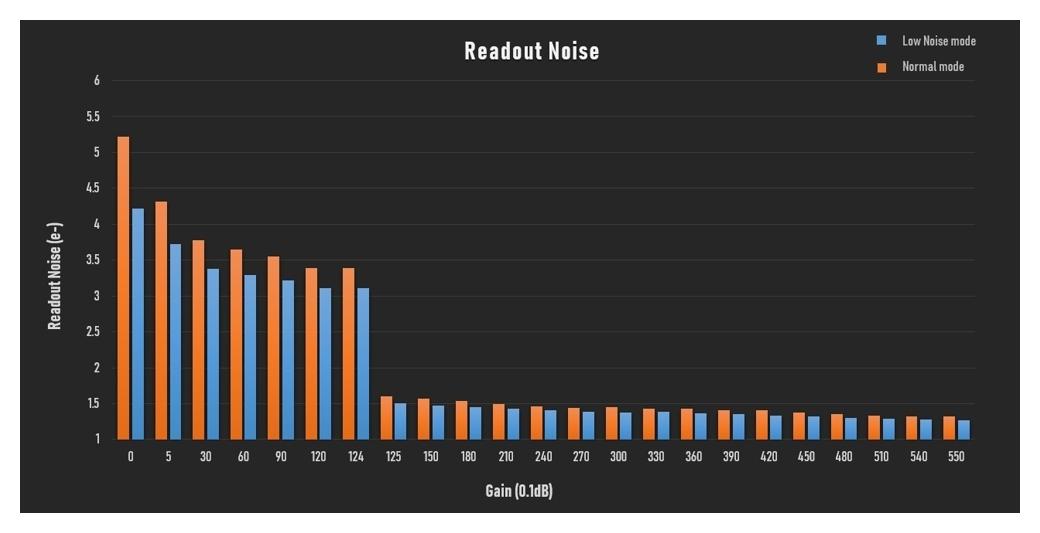
• read noise < 1.0 e- (HCG mode) – high contrast of delicate DSO structures
• speed up to 9 fps (RAW16) and 23 fps (RAW10) in full resolution
• 512 MB DDR-III buffer – smooth recordings even with long sequential exposures
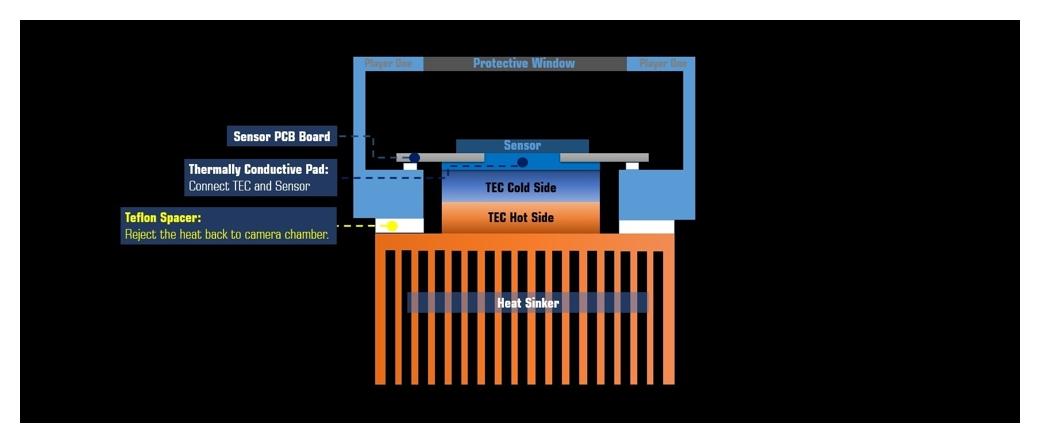
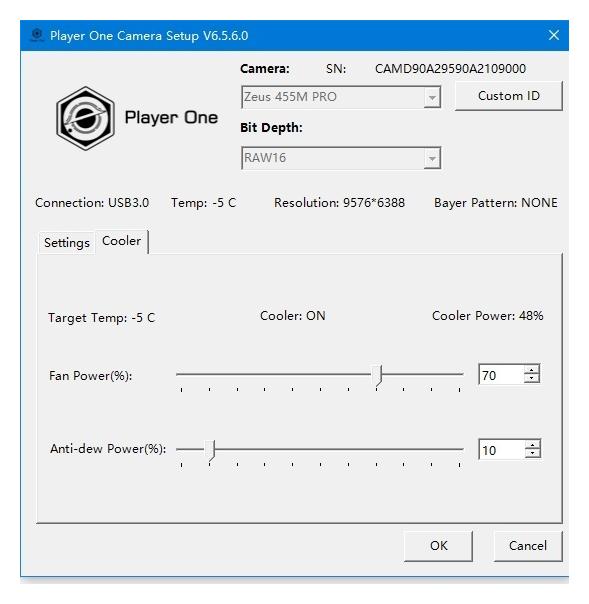
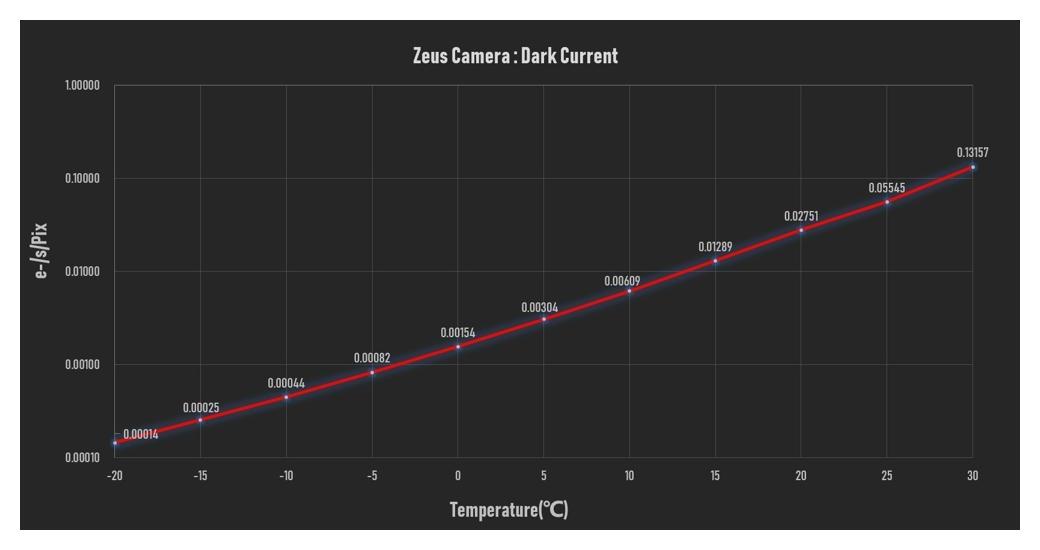
• two-stage cooling TEC ΔT 40 °C + integrated anti-fogging heater
• quiet PWM fan, PCS 2.0 radiator – stable sensor temperature
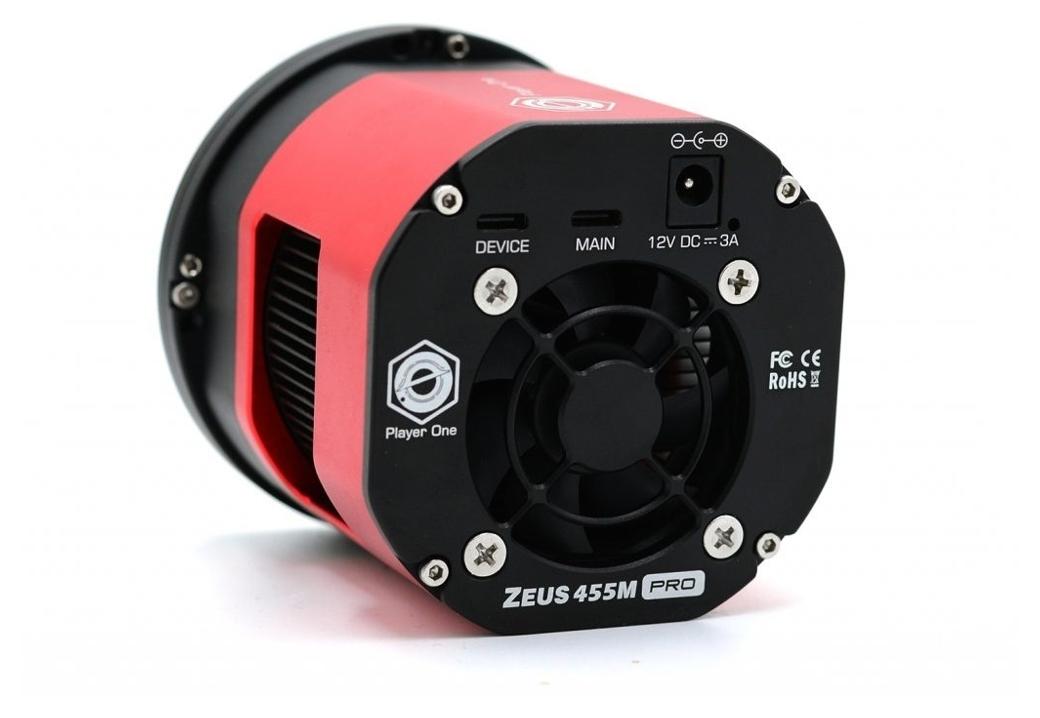
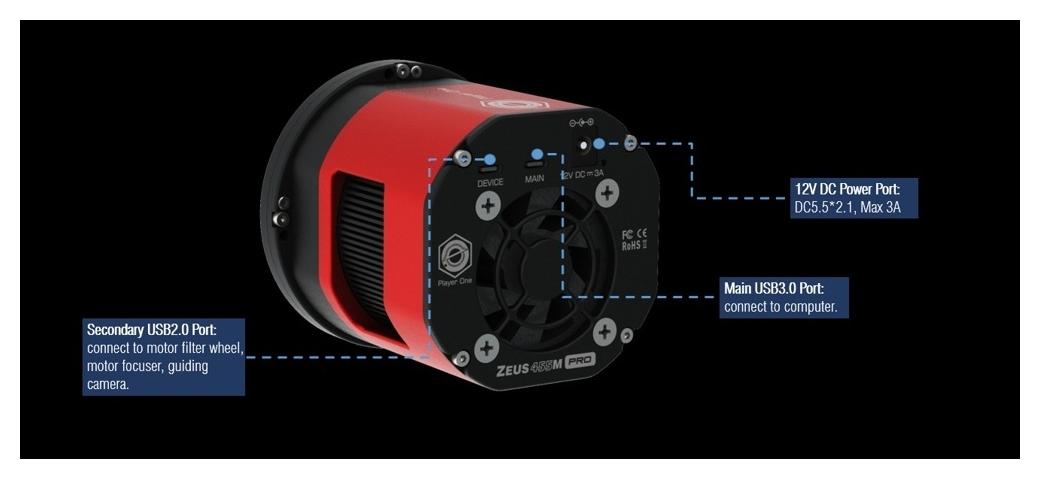
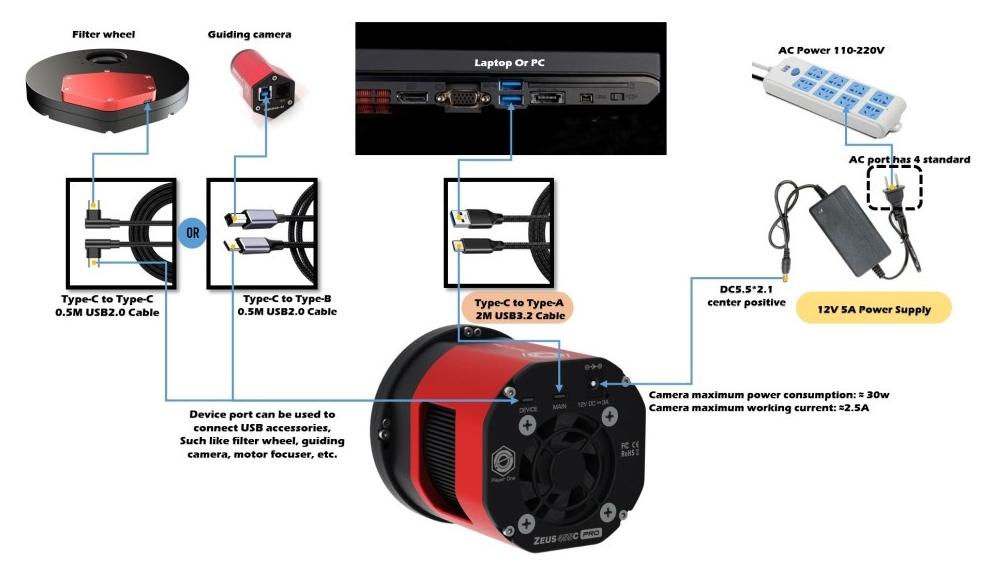
• USB-C 3.2 Gen 2 port (10 Gb/s) + ST-4 autoguider (RJ-12)
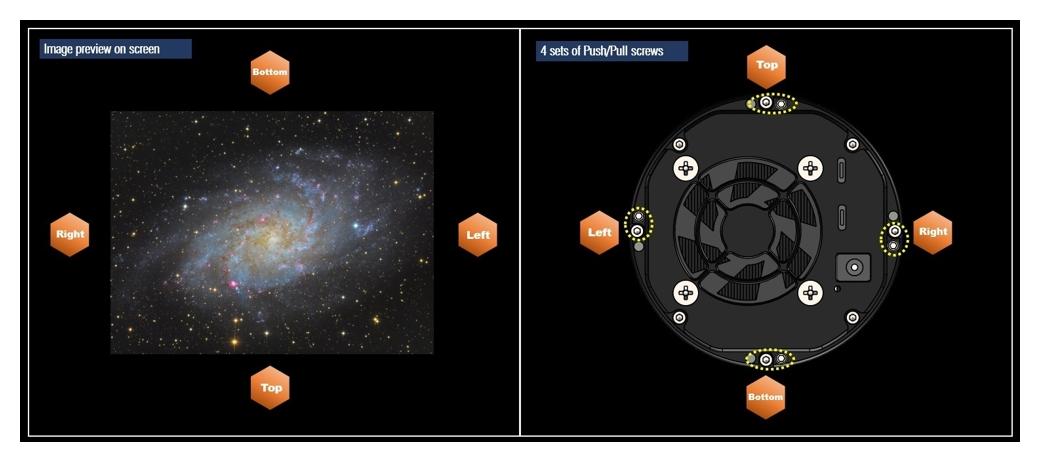
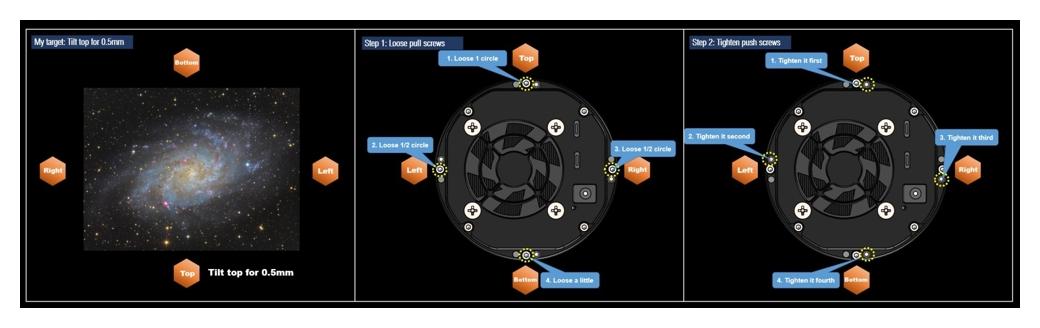
• adjustable tilt-plate (4 points) – easy alignment of the matrix plane
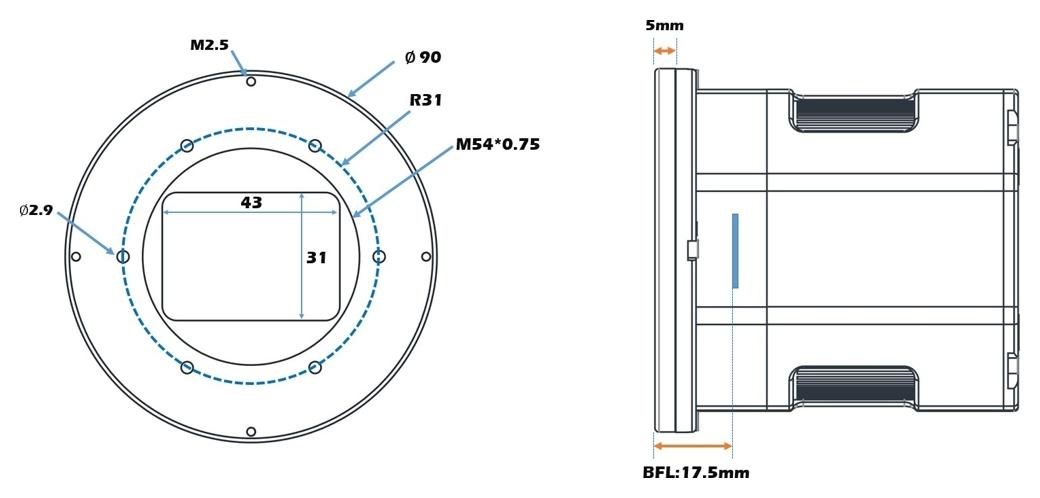
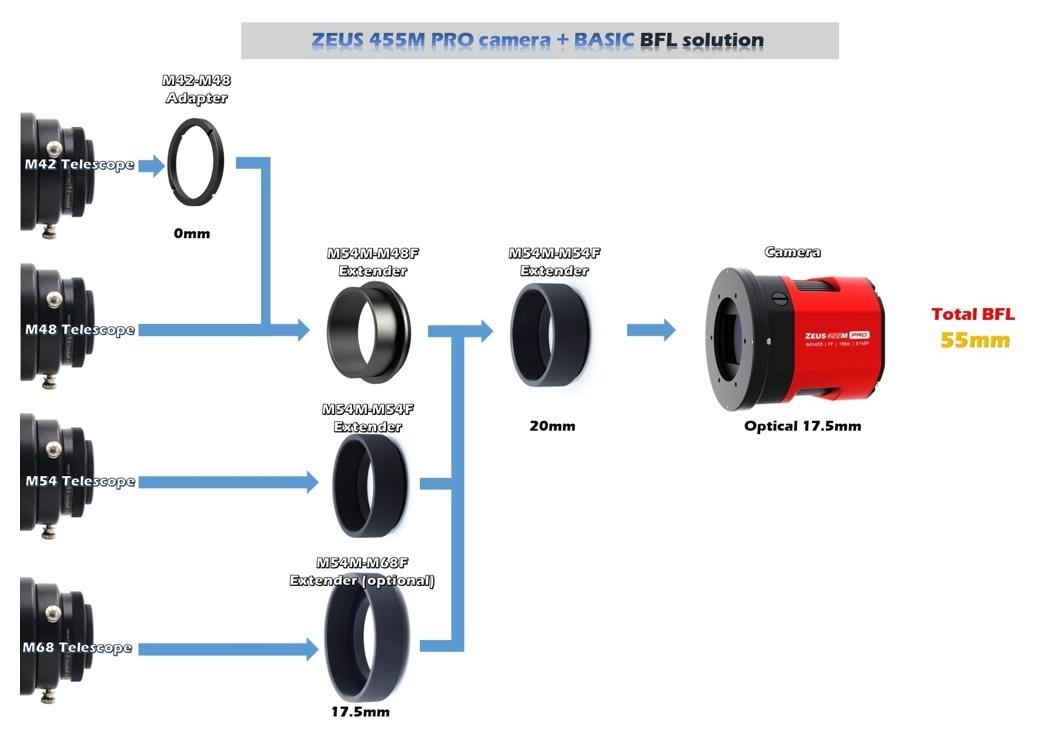
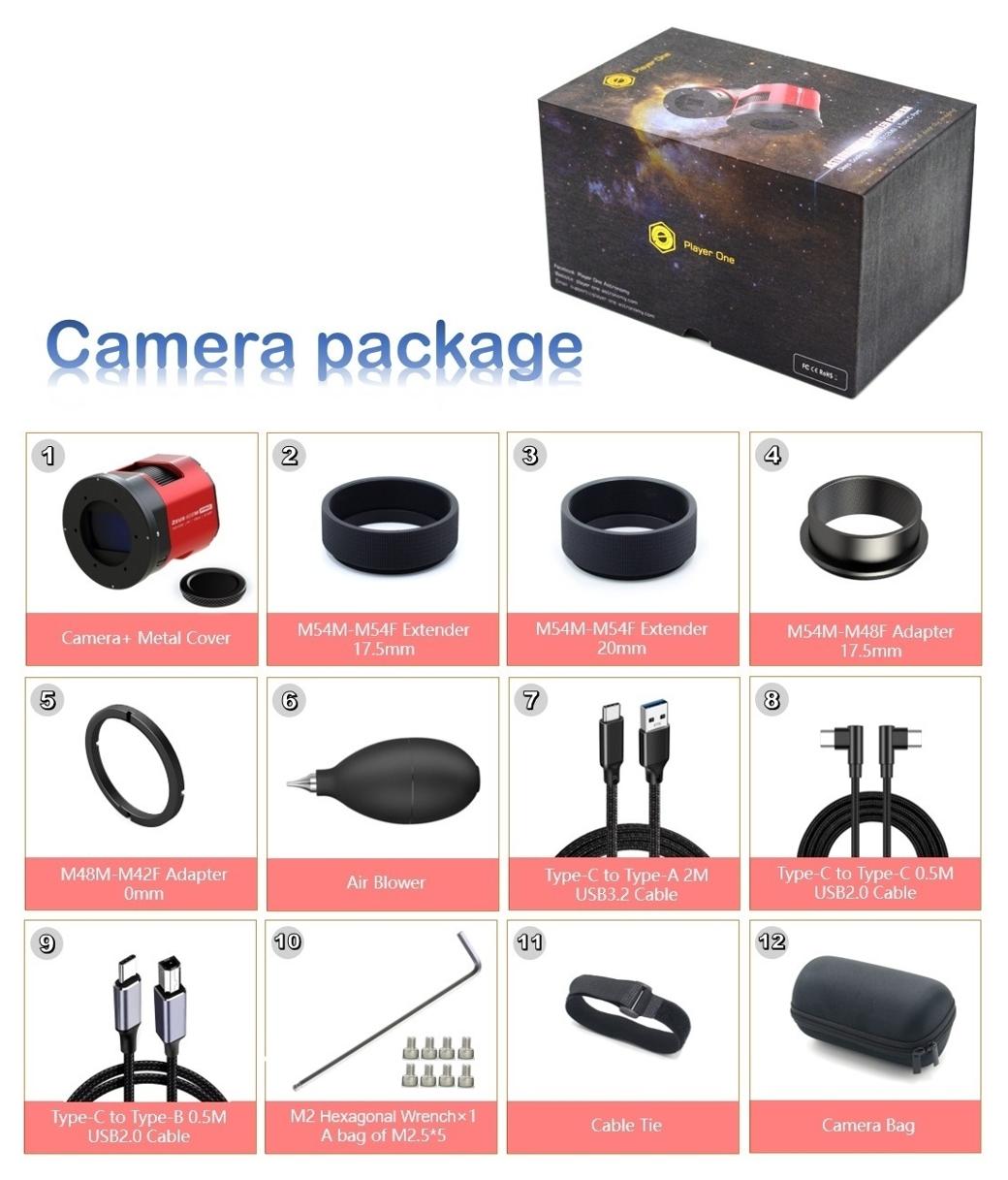
• Threads: internal M54 × 0.75 (camera) / external M48 × 0.75 (2″ nosepiece included)
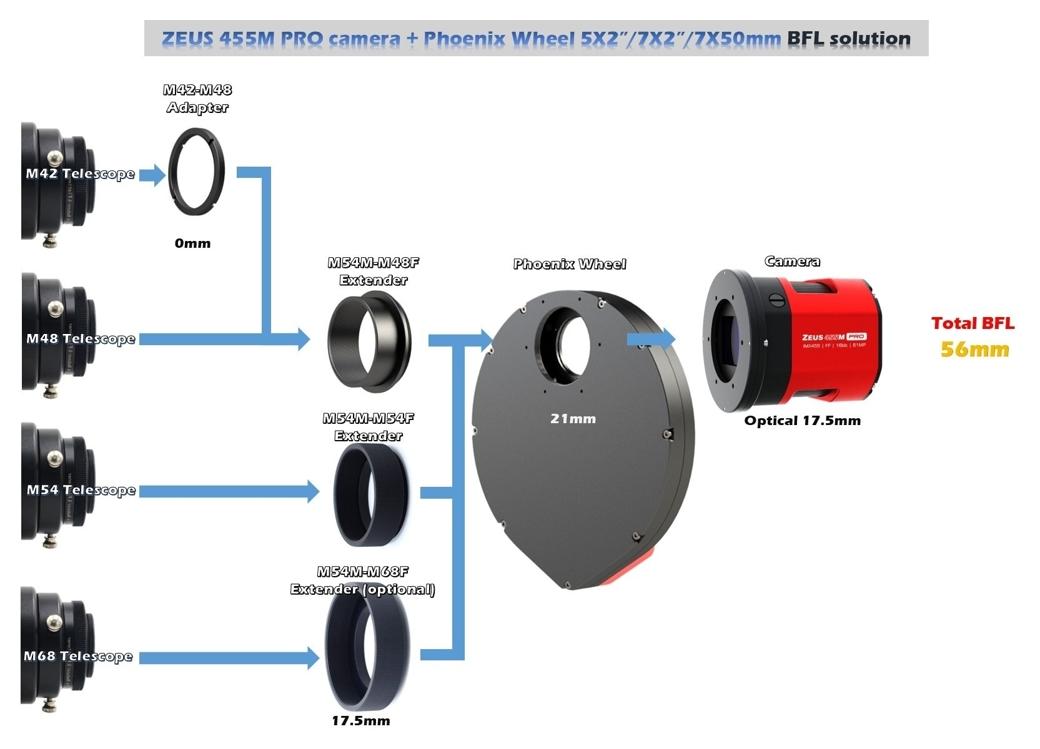
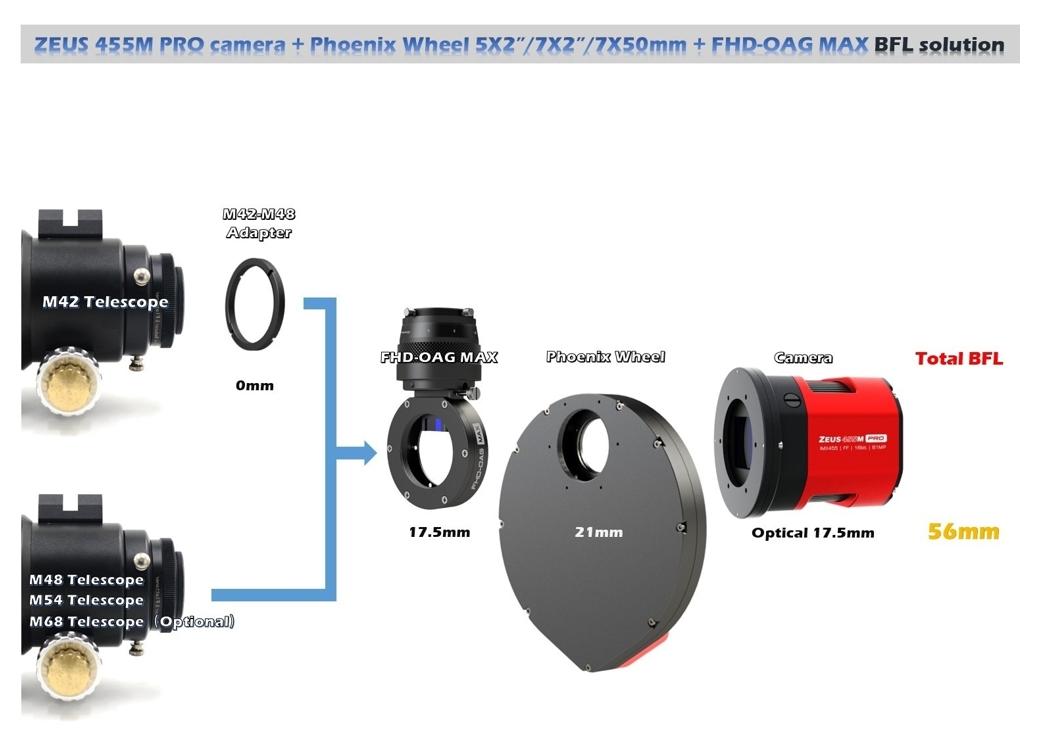
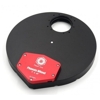
• full integration with the Phoenix wheel, FD MAX drawer and OAG MAX guide
• matrix: Sony IMX455 Mono, CMOS, rolling shutter
• format / diagonal: full frame 36 × 24 mm (43.3 mm)
• resolution: 9576 × 6388 px (60.2 MP)
• pixel size: 3.76 µm
• full well: ~73 ke- (gain 0)
• reading noise: 0.9 e- (HCG) – 3.0 e- (gain 0)
• ADC: 16 bit / 12 bit / 10 bit (RAW)
• max. FPS: 9 fps @ RAW16, 23 fps @ RAW10 (USB-C 3.2)
• Buffer: 512MB DDR-III
• exposures: 32 µs – 2000 s
• TEC: 2-stage, ΔT ≈ 40 °C (20 °C ambient), consumption ≤ 4 A @ 12 V
• electronics power supply: 5 V from USB (≤ 0.5 A)
• back-focus: 17.5 mm (without tilt-plate)
• dimensions: Ø 90 mm × 48 mm (without nose)
• weight: 810 g
• compatibility: Windows 7/10/11 (ASCOM), macOS, Linux (INDI)
ZEUS-M PRO is the most powerful mono camera in the Player One lineup – ideal for full-frame mosaics of nebulae, galaxies, clusters, and precise photometry. Deep cooling, a very large well, and 16-bit readout guarantee the highest data quality, while a broad ecosystem of accessories facilitates integration with any advanced astrophotography setup.