|
|
 |
| 0 items |
|
|
|
|
|
|
|
|
|
|
|
WARSAW, Grochowska 8-B
Mon-Fri:10 - 17, Sat:9-13
|
|
|
|
|
CHORZÓW, Katowicka 56
Mon-Fri:10 - 17, Sat:9-13
|
|
|
|
|
|
|
|
|
|
|
|
|
|
|
| |
|
|
| |
Customers who bought this product also purchased |
|
6.5 magnitudo Star Atlas (in Polish)
15 zł |

Rotary map of sky fi=30cm
15 zł |
Focus Solar Eclipse Glasses with ND5 filter film (SKU: 116175)
19 zł |
GSO Moon filter 1,25 inch
25 zł |
M48 extension ring 30 mm (GSO FF363)
39 zł |

Moon filter GSO ND 0,3 1,25" light grey T=50% (AD083)
39 zł |
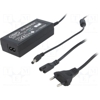
AC Power Supply 12 V / 3.5 A, 2.1 / 5.5 mm for Sky-Watcher HEQ5 / EQ6 mounts, Celestron NexStar / CPC, Bresser Messier EXOS GT (Cellevia)
55 zł |
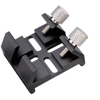
SVBONY Universal Dovetail Slots for Installation of Finder Scope for Optical Telescope; slots width: 5 mm (SKU: W2370B)
59 zł |
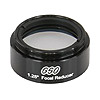
Focal reducer 0,5x 1,25" with filter thread (GSO)
69 zł |
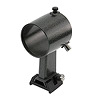
GSO 8x50 mount and standard shoe
69 zł |

Geoptik 30A049 counterweight bag
79 zł |
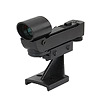
Star Pointer Finderscope (Sky-Watcher) (SKU: SW-7100)
89 zł |
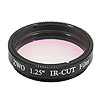
UV IR cut 1,25" filter (ZWO)
95 zł |

Erect Image Diagonal Prism 90° 1,25'' (GSO)
99 zł |

Baader Astro Solar Foil ND5 A4 290x200 mm (SKU: 2459281)
109 zł |
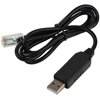
EQMOD cable for Sky-Watcher HEQ-5 / EQ6-R 95 cm long
119 zł |
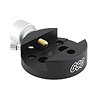
GSO dovetail mount (FF561)
129 zł |
Focal reducer 0,5x 2" with filter thread (GSO)
129 zł |
M48x0,75 / Sony-E adapter ring (William Optics, black)
229 zł |
GSO SV 30 mm 2in 70deg
249 zł |
GSO 8x50 finderscope 90 degrees + mounting bracket (right-angle, correct image / RA-CI, GSO)
259 zł |

Baader Planetarium Classic Ploessl 32 mm 1,25" (SKU: 2954132)
279 zł |
GSO SV 50 mm 2in 60deg
299 zł |
GSO 2x 2'' ED Barlow lens
299 zł |
Player One UV/IR cut Filter 2" Filter for UV/IR cut Luminance filter (SKU: POA-AH-UVIR-CUT-2)
319 zł |
ALU case for Sky-Watcher HEQ5 mount / head
339 zł |
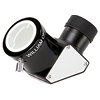
William Optics 90 degree prism diagonal 1,25" (Erect Prism D-EP90-125II)
399 zł |
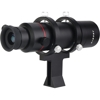
Svbony SV208 8x50 Straight-Through Correct Image Finderscope with Illuminated Reticle (SKU: W9160A)
399 zł |
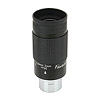
Sky-Watcher 8-24mm 1,25'' zoom eyepiece (SKU: SW-5908)
419 zł |
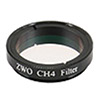
ZWO CH4 1,25" FWHM 20 nm filter
449 zł |
Optolong IR PASS 685 nm 2" (aka IR Pass685 Planetary Filter; SKU: OPL-IRPASS2)
499 zł |
2x 2" APO Telecentric Barlow Artesky (SKU: BARLOW-TELE-2X)
589 zł |

Baader Solar Continuum 7,5 nm 2" 540 nm (SKU: 2961581)
799 zł |
ZWO ASI 678MC (8,29 MPix, 3840 x 2160 px, 2 um)
1199 zł |
Sky-Watcher EQM-35 + NEQ-5 mount
1799 zł |
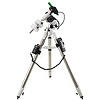
Sky-Watcher EQM-35 PRO Synscan GOTO + NEQ-5
3499 zł |
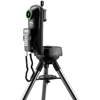
Sky-Watcher Fusion 120i Mount + Steel Tripod (SKU: SW-4193)
3739 zł |
|
|
[TELOTACAS8F12ML_GSO]
|
|