|
|
|
4719 zł
|
|
price without VAT: 3836,59 zł
|
| |
") Shop online: Shop online:
● ready for shipping
Shop in Warsaw (qty): 1
● ready for shipping
Shop in Chorzow (qty):
● not available
|
|
Sky-Watcher Synta Dobson 12 "is a powerful telescope for an advanced sky observer - an excellent tool for visual observations of the Solar System objects and the deep sky. The telescope with the main mirror diameter of 305 mm (12 inches) is the target equipment, most of the nice astronomy specialists, combining great observation possibilities with still acceptable portability.
This telescope is ideal for observing nebulae as well as open and spherical clusters and a number of beautiful galaxies. It should be remembered that all the planets of the solar system are also within range of the telescope, with a very large amount of surface detail, as well as many of their moons.
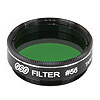
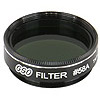
The telescope is also perfect for observing our natural satellite, although here, due to the amount of light falling close to full, it is worth using a moon filter, preferably dark green neutral gray ( neutral density ). A large, slightly over 30 cm long mirror collects almost 2,000 times more light than the human eye, and the resolution of 0.55 seconds of arc is a real phenomenon.
The mirror is made of Pyrex glass, ie borosilicate glass consisting of 8% boron oxide and 85% silicon oxide. It is the admixture of boron oxide that makes the mirror a bit lighter and, above all, has a lower coefficient of thermal expansion, which positively affects the quality of the images obtained.
Of course, although the size of the mirror is the key parameter, the telescope is well-designed in terms of mechanical and optical design. 1500 mm focal length, giving a huge aperture of f / 4.9, excellent 2-inch Crayford extraction with 1.25 "reduction, large 9x50 finder, two 25mm and 10mm Ploessla eyepieces and intuitively simple assembly Dobsonian azimuth.The extractor has a T-2 thread that allows you to attach an SLR camera, allowing you to photograph bright objects (appropriate reduction required for your camera, i.e. Canon, Nikon, Sony Alfa, Pentax or Olympus).
Dobsonian assembly is the simplest and, at the same time, the cheapest type of telescope assembly, which works very well for visual observations. The assembly is controlled by manually shifting it in two axes, in the azimuthal (horizontal) plane and in the height (vertical) axis.
The telescope consists of an optical tube measuring 147x35 cm and weighing 22.5 kg and an azimuthal assembly weighing 16.5 kg. The telescope is originally packed in three cardboard boxes, a Dobson assembly separately, an optical tube and a mirror with a frame. The optical system should be collimated after assembling before carrying out the observation (the Polish collimation instruction is attached to the set).
The telescope produced by the well-known Synta factory - manufacturer of, among others of such brands as Celestron, SkyWatcher, Omegon, Orion, Spinor Optics, Pentaflex and others.
Moon planets star clusters nebulae planes
| • Optical system: | Newton's reflector | | • Mirror diameter: | 305 mm | | • Focal length of the lens: | 1500 mm | | • Lighted up: | 1 / 4.9 | | • Accuracy of mirror manufacturing: | 1 / 8λ | | • Type of mirror glass: | Pyrex | | • Maximum useful magnification: | 600x | | • Dimensions: | - height of the whole telescope placed vertically on the assembly: 157 cm
- tube height: 150 cm
- tube diameter: 35.5 cm
- mounting height: 78 cm
- mounting diameter: 63 cm
| | • Dimensions of the telescope packed in transport boxes: | - tube: 54 x 53 x 157 cm, 22 kg
- main mirror: 46 x 46 x 25 15 kg
- Dobson assembly: 14 x 73 x 75 cm, 12 kg
| | • Total net weight: | 40 kg |
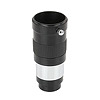
The set includes the following accessories: • Crayford eyepiece extractor with a diameter of 2 "with a reduction of 1.25" and a T2 thread
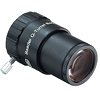
• PL 25 mm (over 60x) and 10 mm (over 150x) glasses
• Dobson assembly (azimuth box assembly)
• 9x50 finder with a cross 60 months (5 years) for mechanics and 2 years for electronics (manufacturer's warranty)


Author's comment on the photos:
"I am sending photos from all-night observations, which we conducted on the beautiful night of 6/7 September 2013. Yesterday I finished processing the last photo.
In the morning we saw the winter facilities.
Because we were focused on observations - I took pictures only in "breaks", but I'm still shocked at what this tube can do :) "
Teleskopy.pl would like to thank the author for sending us more wonderful materials. The photos were taken with a telescope after putting it on the Upgrade Kit for the 12 "mounting.
Note: when you click on a picture, it opens in a new window in full size; the exposure information at the bottom of each large size picture.

(Messier 27 - Dumbbells)

(Messier 31)

(Messier 31)

(Messier 33)

(Messier 42)

(Messier 57)

(Veil)

(Veil)
>> FREQUENTLY ASKED QUESTIONS <<
(click to expand the list of questions) Question : Will a beginner be able to assemble and operate this telescope?
Answer: We provide each telescope with a comprehensive instruction in Polish, from which the user will learn how to assemble the telescope and how to use it during observation. Clients usually do not have any difficulties with assembling the telescope as long as they read the instructions carefully.
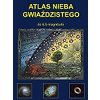
A separate issue is the search for objects in the sky during the first observations. That is why we recommend educational items in the Publications section (especially maps and astronomical guides) and Stellarium: an excellent, free "planetarium" program in Polish, ideal for studying the sky and planning observations.

ENTER AND DOWNLOAD THE STELLARIUM PROGRAM FOR FREE Question : Can a DSLR be attached to this telescope? What accessories do I need for this?
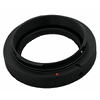
Answer: Of course YES, you can connect a DSLR to this, as well as to any other telescope. For this you need: a projection adapter i and a T2 ring appropriate to your SLR (there are 5 standards of SLR bayonets: Canon EOS, Nikon, Olympus E, Petax K and Sony Alfa / Minolta AF). These connectors are available in our online store in the section of astronomy accessories. Question : Can a compact camera be attached to this telescope? What accessories do I need for this?
Answer: Of course you can. A suitable shelf for compact cameras can be found in the astronomy accessories section of our online store ( universal adapter for compact digital cameras ). Question : Can a HYBRID type camera (a large compact camera with SLR dimensions) be attached to this telescope? What accessories do I need for this?
Answer: You may try to do this, but it is not recommended. The so-called hybrids do not work well in astrophotography, because they do not have the ability to take the lens off like an SLR, they have large dimensions and large lenses, which makes the rack systems impossible to use , while the vignetting is high, as you cannot bring the lens very close to the last optical surface of the telescope's eyepiece. We recommend buying a SLR or a cheap compact. Question : What else is worth buying for this telescope?
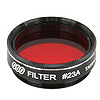
Answer: The presented telescope is a complete set ready to conduct astronomical observations on the first clear night. As an addition, we recommend educational publications in the first place, which will make both the use of the telescope and the observations themselves more conscious and easier. In addition, you should consider purchasing contrast planetary filters and solar filter foil (available from the Astronomical Accessories section). Question : Can this telescope be used as a viewing telescope / nature spotting scope?
Answer: NO. This mirror telescope (Newtonian) is not suitable for observing terrestrial objects as it produces an upside down image ("green down") and there are no optically good ways to "restore" it. However, this does not interfere with astronomical observations, because for the terrestrial observer the concept of top and bottom makes sense on Earth, it does not exist in space.
On the other hand, Newton's telescopes perform quite well in the photography of ground-based objects and in observing airplanes at cruising altitudes. Question : Can I observe both planets and nebulae with this telescope? Is it a telescope only for the city or just for the countryside?
Answer: All offered telescopes allow observation of the planets of the Solar System (all) and nebulae, that is, more precisely, galaxies, star clusters, emission nebulae, etc. A separate issue is the clarity of the details of the planets' surfaces and the number and brightness of nebulae objects. The smaller telescope has its sky, the big one - its own, but we can always count on wonderful observations of the surface structures of the Moon, the phases of Mercury and Venus, the Martian disc, Jupiter belts and the Galilean four moons of Jupiter, the ring of Saturn and the shields of Uranus and Neptune. The brightest nebulae, such as the Great Andromeda Nebula M31, the Great Orion Nebula M42 or the globular cluster in Hercules M13 always delight, even a small telescope will show several dozen of the most beautiful nebulae. Finally, the telescope, after equipping it with a sun filter, can be used to observe spots on the Sun's disc.
There is no division between city and country telescopes , there are rather recommendations: if the telescope is to be used mainly in the city, in conditions of urban light pollution and high atmospheric instability (buildings give warmth at night, warming the air and the image begins to "float" over a hot road on hot days!), then an achromatic refractor (lens telescope) or Maksutov (meniscus mirror) is recommended. Our target will be mainly planets and compact objects. On the other hand, under the tarry black, rural sky, it is worth using a Newton system telescope (mirror) with the largest possible mirror that we can afford, because we can count on a more stable and more transparent atmosphere and a large The possibility of observation of nebulae. Question : Does this telescope come with a tripod / mount?
Answer: Of course YES, every telescope has a mount, unless it is described as an OTA ( Optical Tube Assembly ). Question : You write that the telescope comes with an assembly, does it mean that you come and assemble the telescope for me?
Answer: Mounting does not mean mounting , but a telescope tube mounting system. It must be understood that we never conduct observations "by hand" with an astronomical telescope - we must mount the telescope on a system that enables its precise positioning in any region of the sky.
In the case of Dobson 's mount , the optical tube of the telescope is mounted on a type of box that plays the role of an azimuth mount, i.e. having two perpendicular axes: height ("up - down") and azimuth axis ("left right"). Question : I can see that this telescope is quite low. How / in what position is it observed?
Answer: Dobsonian mounted telescopes have an eyepiece view - so the place where we look / "put the eye" - often relatively low, especially when the diameter of the mirror does not exceed 35 centimeters. Nevertheless, observation is possible in a standing position, and the most comfortable position is sitting - for this purpose, it is worth getting a stool with an adjustable height or even a folding fishing chair. The recumbent position is rather not practiced: -) |