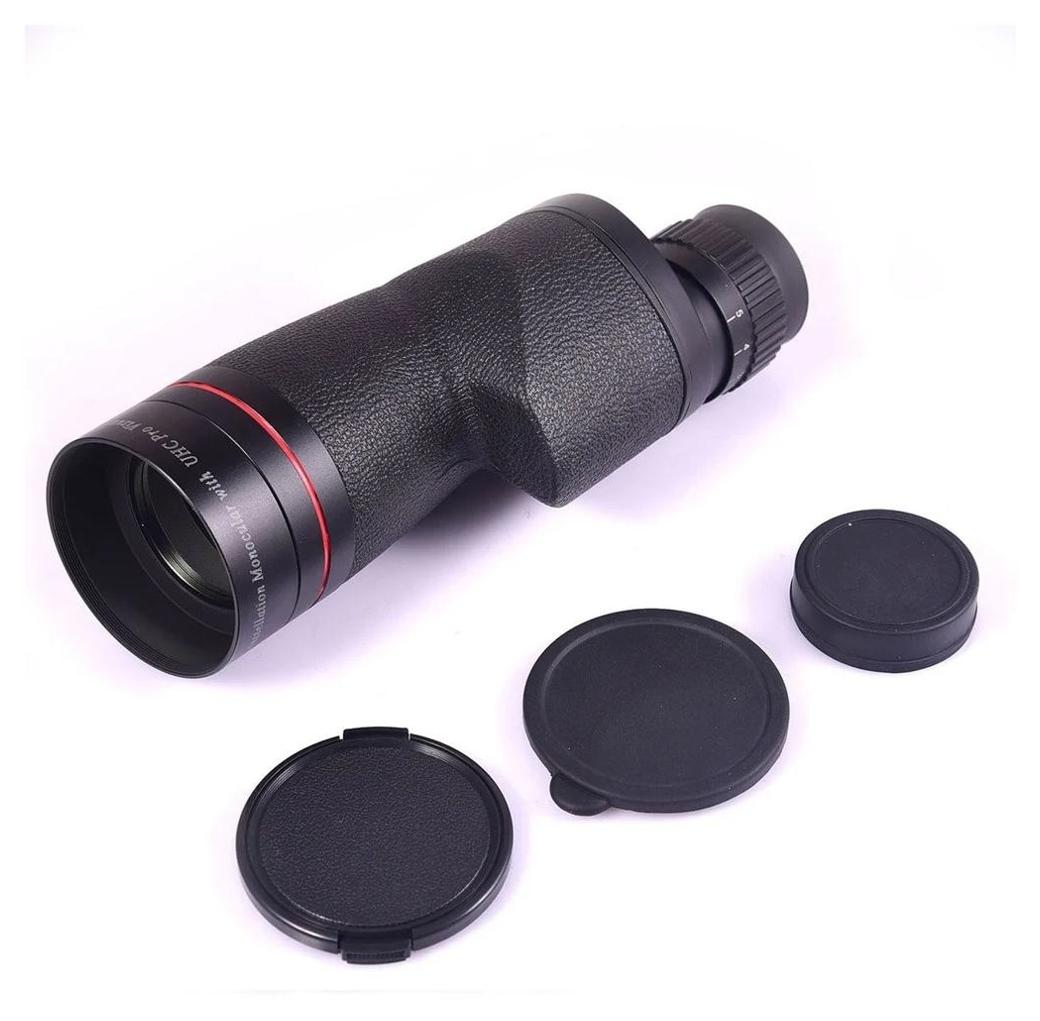
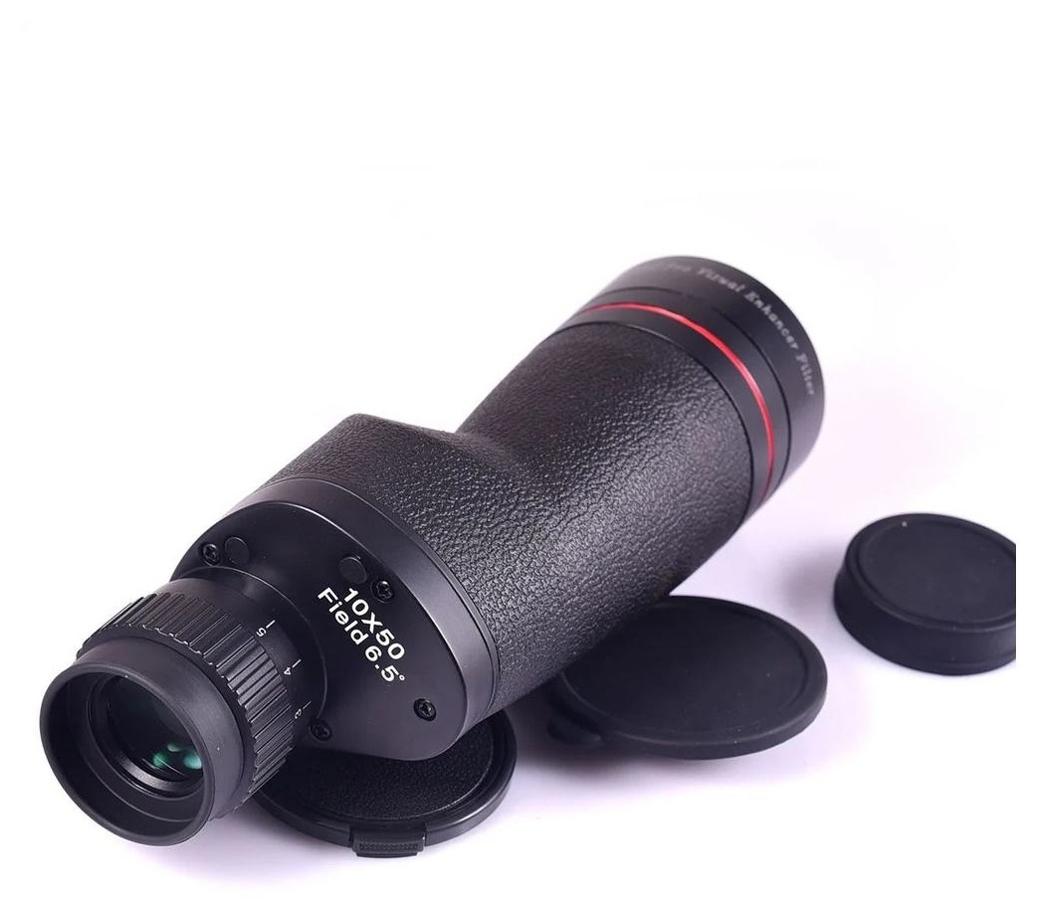
Antlia 10x50 mm Monocular is a versatile optical instrument designed for observing nature, birds, landscapes, sporting events and the night sky. Its 10× magnification enables comfortable observation of distant objects, while the 50 mm objective lens and 5 mm exit pupil provide a bright image even in lower-light conditions. The magnesium-alloy body is argon-filled, waterproof and shock-resistant. This version does not include the Antlia 8-EL UHC Pro filter.
• 10× magnification enabling detailed observation of distant objects
• 50 mm objective lens providing good low-light performance
• 5 mm exit pupil facilitating observation in lower-light conditions
• 6.5° field of view, corresponding to approximately 104 m at a distance of 1000 m
• prism made of BAK-4 glass
• 20 mm eye relief, also comfortable for spectacle wearers
• minimum focusing distance of 6 m
• manual focusing adjustment at the eyepiece
• argon-filled, waterproof construction reducing internal fogging
• shock resistance useful during field use
• lightweight and durable magnesium-alloy body
• compatible with the dedicated Antlia 8-EL UHC Pro 2" filter with lens hood
• Antlia 10x50 mm monocular
• protective objective lens cap
• protective eyepiece cap
• design: prism monocular
• magnification: 10×
• objective lens diameter: 50 mm
• field of view: 6.5°
• linear field of view: approximately 104 m / 1000 m (342 ft / 1000 m)
• exit pupil diameter: 5 mm
• eye relief: 20 mm
• minimum focusing distance: 6 m
• prism material: BAK-4
• focusing: manual
• body material: magnesium alloy
• protective gas filling: argon
• waterproof: yes
• shock-resistant: yes
• compatible filter: dedicated Antlia 8-EL UHC Pro Visual Enhancer 2" with lens hood, sold separately
• filter included: no
• warranty: 3 years
The Antlia 10x50 mm combines a large objective lens with the portability of a monocular, making it suitable for both daytime viewing and basic astronomical observation. The dedicated Antlia 8-EL UHC Pro filter module can be purchased separately, expanding the instrument’s capabilities to include observations of emission nebulae under moderately light-polluted skies.