|
|
|
168 EUR
|
|
price without VAT: 137 EUR
|
| |
 Shop online: Shop online:
● ready for shipping
Shop in Warsaw (qty): 3
● ready for shipping
Shop in Chorzow (qty):
● not available
|
|
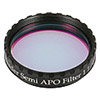
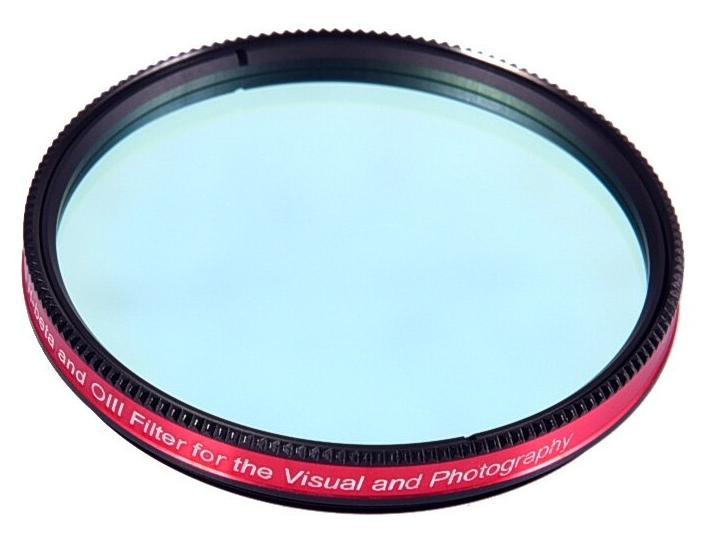
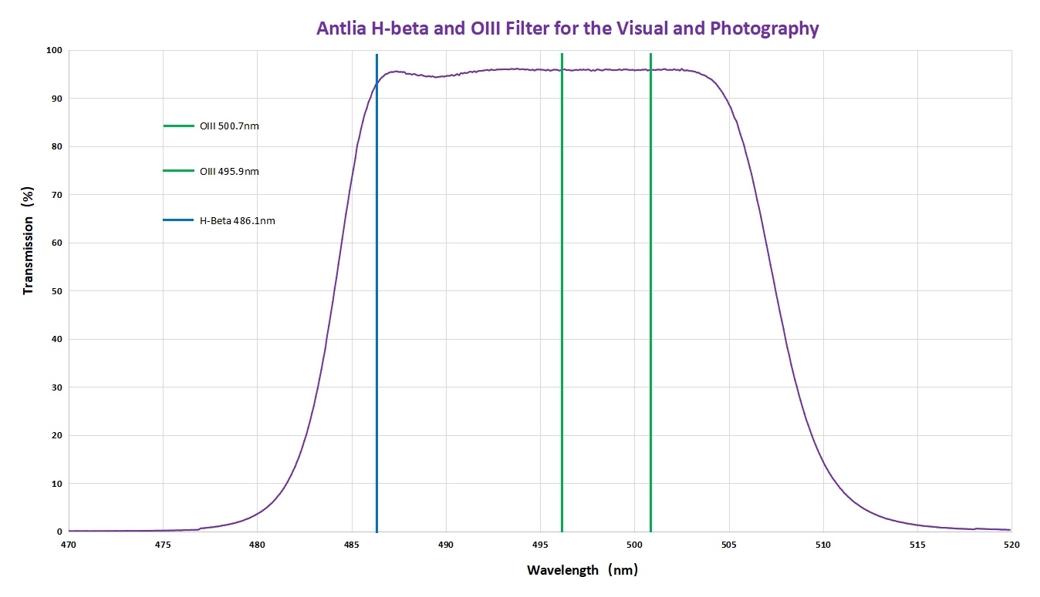
The Antlia HB-OIII 2" filter is a broadband optical filter designed for visual observations of nebulae and astrophotography of deep-sky objects. It transmits over 90% of light in key emission lines: H-beta (486.1 nm) and OIII (495.9 and 500.7 nm), which significantly increases the contrast of observed and photographed nebulae even in light-filled sky conditions. Thanks to high transmission and out-of-band blocking at OD4 (300–1000 nm), the filter effectively reduces the impact of light pollution and infrared radiation. This allows the faint structures of nebulae, supernova remnants, diffuse nebulae and planetary nebulae to be visible. Objects such as Veil, Dumbbell or M42 Orion appear much clearer, and the sky background becomes deeper and darker. Although the filter can be used for both photography (including with SLR cameras) and visual observations, large-aperture telescopes are recommended for the best results – especially due to the limited sensitivity of the eye at night. The filter is not suitable for observing the Sun. Looking directly at the Sun through it may cause permanent eye damage. • transmitted bands: H-beta (486.1 nm), OIII (495.9 and 500.7 nm)
• peak transmission: >90% for all three lines
• out-of-band blocking: OD4 in the range of 300–1000 nm
• filter thickness: 2 mm ± 0.05 mm
• optical substrate: single glass, no gluing
• surface quality: 60/40 (MIL-O-13830)
• Transmission wave front: λ/4 or better
• Surface parallelism: <30 arc seconds
• frame: 2" (thread M48×0.75)
• design: ultra-thin frame to minimize vignetting
• finish: black anodized, laser engraving • visual observations of nebulae: emission nebulae, planetary nebulae, supernova remnants
• broadband astrophotography with astronomical and DSLR cameras
• recommended telescopes: large aperture (8”+)
• not suitable for solar observation or daytime use
• looking directly at the Sun through the filter may cause permanent eye damage
|