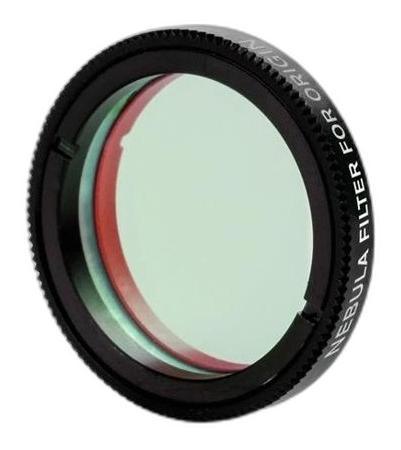
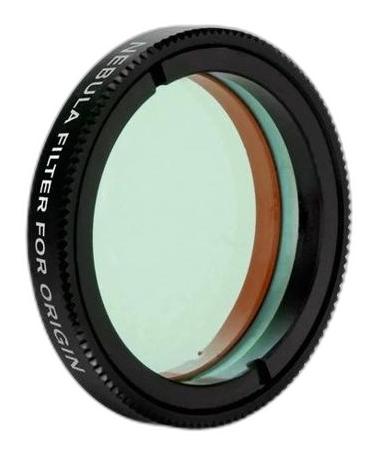
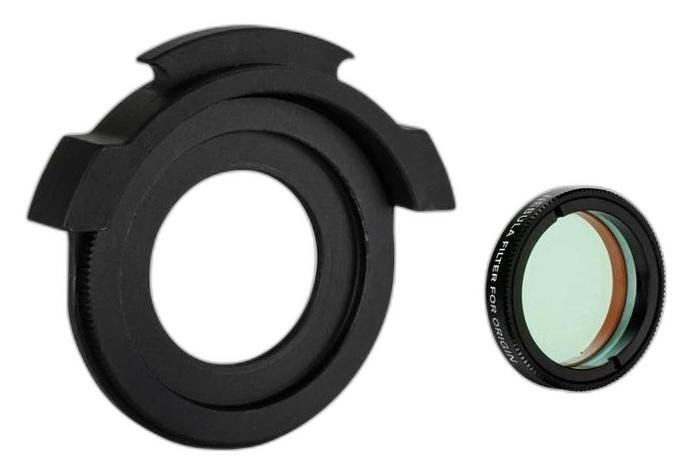
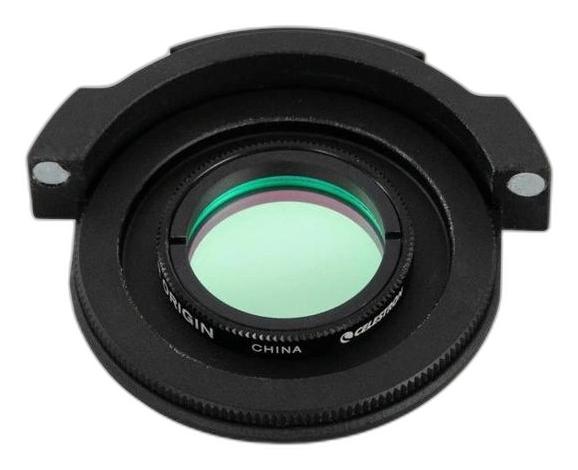
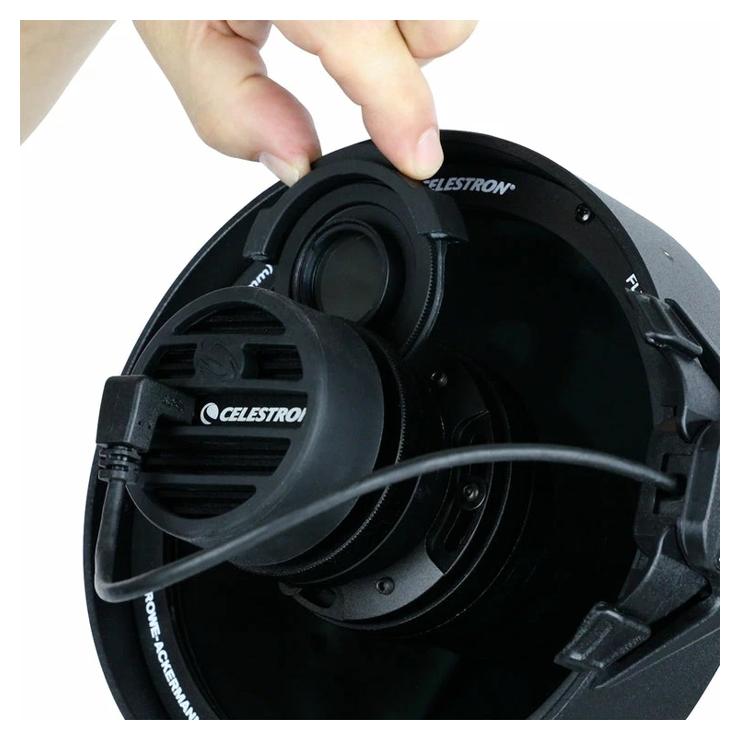
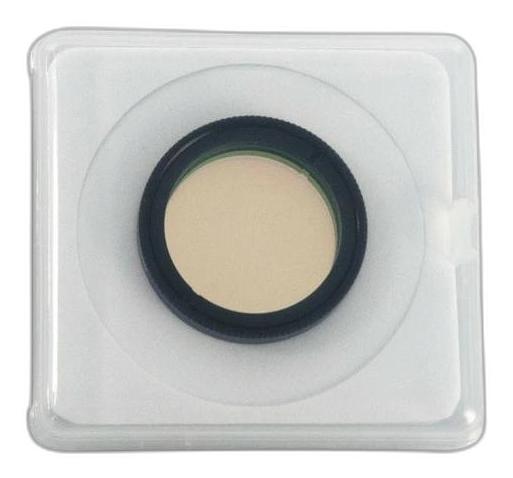
This specialized filter provides high transmission at the wavelengths emitted by emission nebulae while blocking other parts of the spectrum that would reduce contrast and detail. The result is a bright, high-contrast, colourful image of nebulae that clearly stand out against the dark background of the night sky.
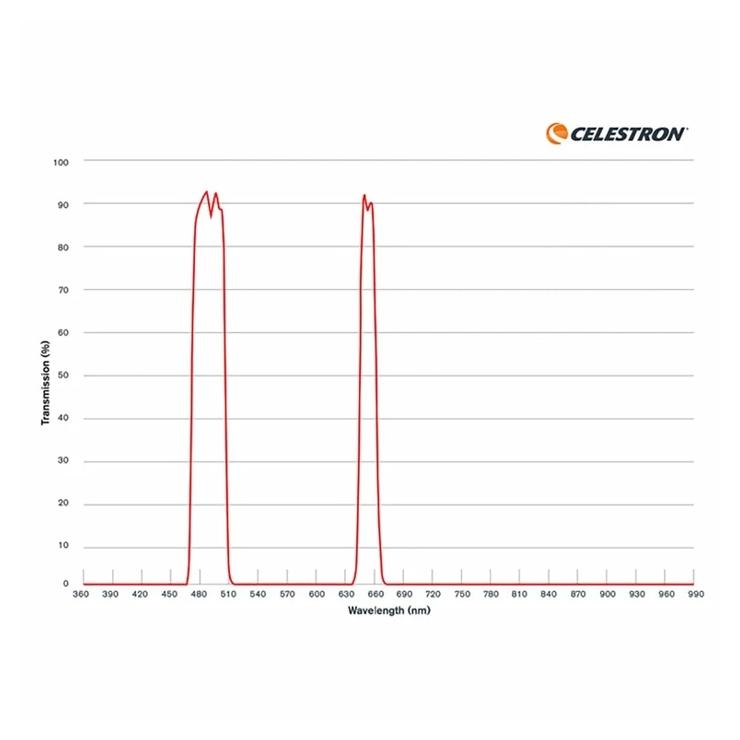
How does a nebula filter work? Emission nebulae radiate light primarily at specific wavelengths: Hα at 656 nm, Hβ at 486 nm, and OIII at 496/501 nm. By transmitting only these wavelengths and blocking the rest of the visible spectrum, the filter reduces the impact of light pollution. Artificial light is suppressed, while nebular emissions reach the camera sensor without obstruction.
This leads to significantly improved contrast, especially when imaging from light-polluted areas. Thanks to high transmission at the key wavelengths, nebulae remain bright, while the background sky becomes darker—allowing emission-line structures to stand out prominently.
The filter is ideal for photographing emission nebulae such as the North America Nebula (NGC 7000), the Lagoon Nebula (M8), the Orion Nebula (M42), the Carina Nebula (NGC 3372), and many similar objects.
The transmission profile reaches 85% or more at the key wavelengths (486 nm, 496/501 nm, 656 nm) and below 0.5% across the rest of the spectrum. As a narrowband filter, it blocks most visible light and passes only specific emission lines. For this reason, nebula filters are not suitable for imaging galaxies or star clusters, which emit light across a broad wavelength range.
• filter size: 1.25"
• spectral classification: narrowband
• anti-reflection coatings: AR
• application: astrophotography
• target objects: deep-sky emission nebulae
• warranty period: 24 months