What is an atmospheric dispersion corrector (ADC)?
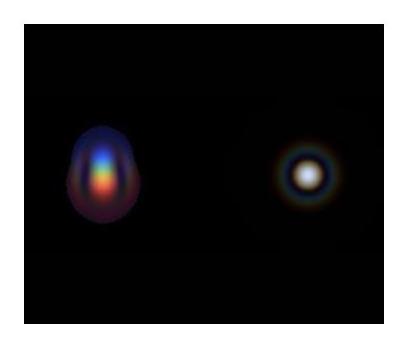
As light from stars and planets passes through the Earth's atmosphere, it is refracted by the layer of air. The strength of this refraction depends on the wavelength; a phenomenon called dispersion, which causes annoying halos at the edges of planetary images.
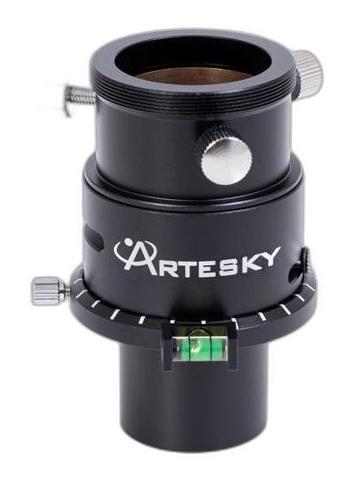
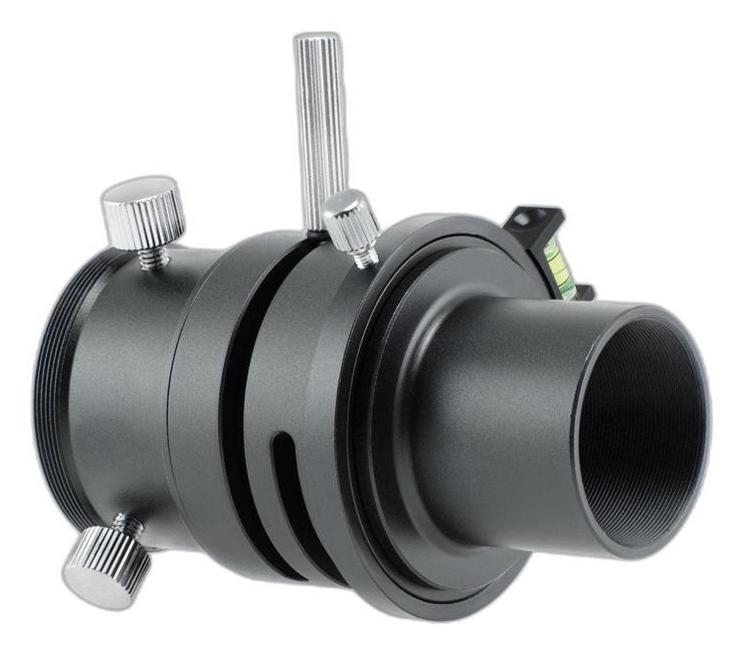
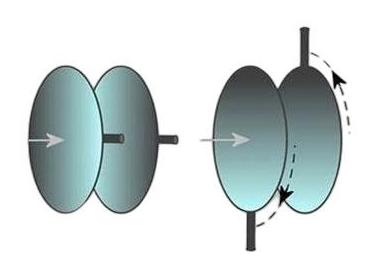
The atmosphere therefore basically acts like a telescope lens with chromatic aberrations. This means that even using high-quality optics, free of chromatic aberrations, you will always have these halos. The dispersion of the Earth's atmosphere in fact cannot be corrected by the optics of your telescope. This is where the small Artesky ADC device comes into play: it consists, in essence, of two rotatable prisms made of silicate glass. The prisms generate, so to speak, their own chromatic aberration, which compensates for that of the terrestrial dispersion. The ADC thus corrects this annoying phenomenon. The position of the prisms is adjustable via a small slide.
The phenomenon of dispersion depends greatly on the height of the observed object in the celestial vault.
The lower the object, the longer the path its light has to take through the atmosphere, and therefore the greater the resulting dispersion. It is precisely the bright planets that are often low on the horizon, especially when you are at high latitudes. Thanks to the Artesky ADC you can observe the planets with greater brightness and without chromatic aberrations not only when they are high in the sky, but also when they are at sunrise and sunset. This allows considerable flexibility in choosing your observing times.
Halos are only the most obvious effect of dispersion. Especially in photography this phenomenon is annoyingly visible in contrasts, as can be clearly seen in the examples given. Of course, it is possible to increase the contrast in post-production, but not without losing resolution. Since the use of the ADC in photography is particularly useful, this device is equipped on both sides with a T2 mount.
To ensure high light transmission, the optical surfaces of the ADC are coated with a multilayer coating. This coating is specially optimized for astrophotography, in the range between 200 and 700 nanometers.
The use of the ADC depends on the telescope used. For it to work properly, the focal ratio should be less than f/10. This is always the case with SC telescopes, however with other optics the use of a Barlow lens may be useful.
|
| Connection (camera side) | T2 |
| Connection (telescope side) | 1.25" |
| Connection (eyepiece side) | 1.25" |
| Connection (opposite side) | T2 |
| Optics coating | FMC |
|
| Weight (g) | 200 |
| Outer material | Aluminum |
| Useful opening | 30mm |
|
| Usable for visual observations | Yes |
| Useful for photography | Yes |