|
|
|
501 EUR
|
|
price without VAT: 407 EUR
|
| |
 Shop online: Shop online:
● ready for shipping
Shop in Warsaw (qty): 1
● ready for shipping
Shop in Chorzow (qty):
● not available
|
|
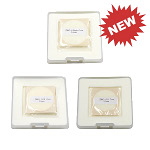
To meet the needs of the ever-growing group of people involved in professional astrophotography, the ZWO company has developed a new version of narrowband filters intended for taking pictures in the HSO color palette.
All filters included in the kit are characterized by high transmission and a half-bandwidth of only 7 nm. They were made on a glass substrate with a thickness of 2 mm and were covered with a full multilayer coating.
The main task of narrowband filters is usually not to eliminate light pollution, but to increase the contrast between the photographed objects and the background sky. The new version of the ZWO filters, however, allows for the observation and - above all - a color photograph of nebulae (emission, planetary, remnants of supernova explosions) even in conditions of the highest pollution with artificial light.
Attention! In the case of Hα and SII filters, their orientation is important. The surface with the purple coating should face the camcorder or camera. • a set of three filters dedicated to astrophotography in the HSO (HST) palette with a maximum transmission of about 90%
• band half width of 7 ± 0.5 nm
• filters covered with a full multilayer coating, made on a substrate of high quality optical glass that eliminates the halo effect around stars • Filter type: narrowband filter, rimless
• Filter diameter: 36 mm
• filter thickness: 2.0 ± 0.03 mm
• Half bandwidth (FWHM): 7 ± 0.5 nm
• maximum transmission for the 656 nm (Hα) line: ˜90%
• maximum transmission for the 672 nm (SII) line: ˜90%
• maximum transmission for the 500 nm (OIII) line: ˜90%
• IR blocking range: 700 - 1100 nm
• out-of-band transmission: <0.1%
• equivalent optical density for the blocked range: OD3
• type of coating: full multilayer coating (FMC) • ZWO Hα 7 nm filter
• ZWO SII 7 nm filter
• ZWO OIII 7 nm filter
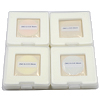
• plastic protective boxes


(above: orientation of Ha and S-II filters in relation to the telescope and camera; for O-III the orientation does not matter)

|