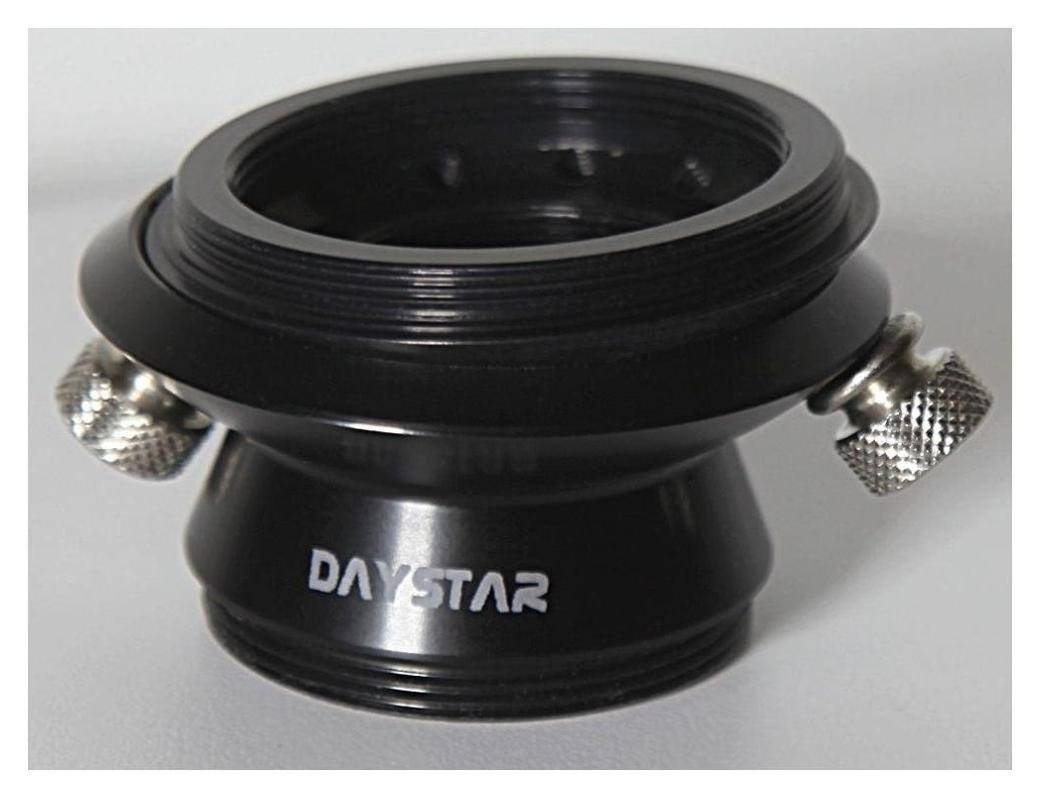
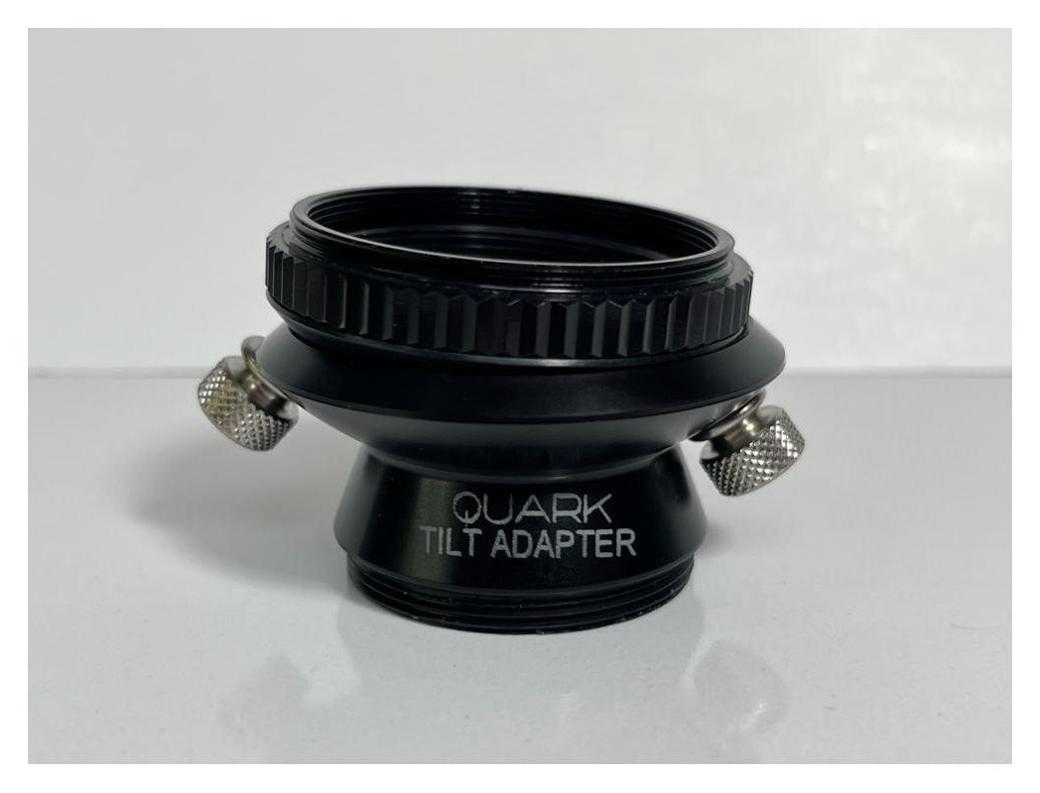
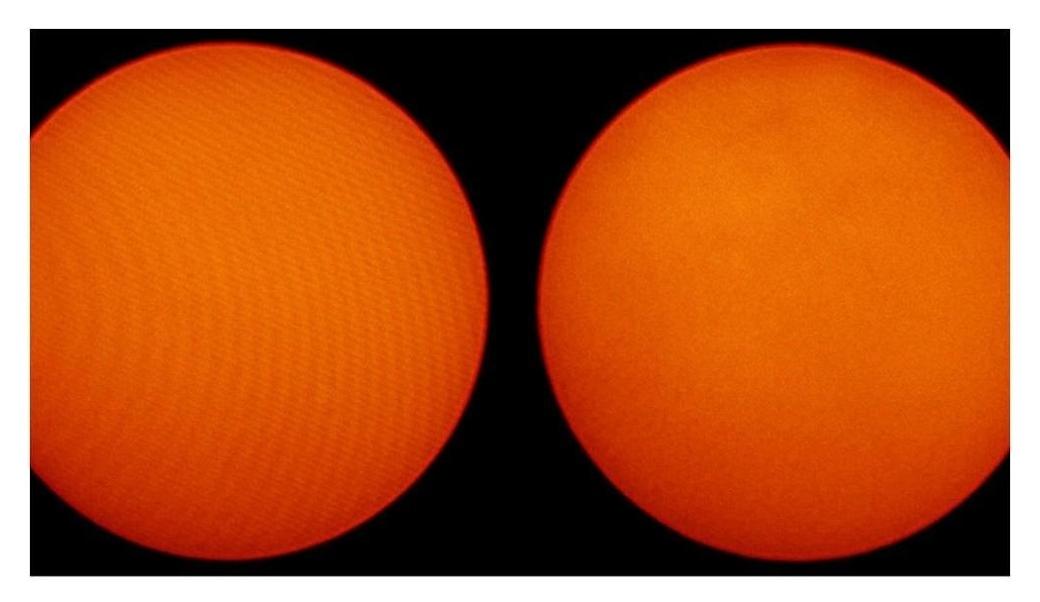
Daystar Filters Interference Eliminator – Quark to T adapter, no reduction (SKU: IEQT) is a tilt adapter designed to eliminate interference patterns such as Newton’s Rings that frequently appear in narrowband monochromatic imaging, particularly in Hydrogen-alpha solar photography. These interference fringes occur when nearly parallel light reflects internally within the camera sensor or optical components of the imaging system.
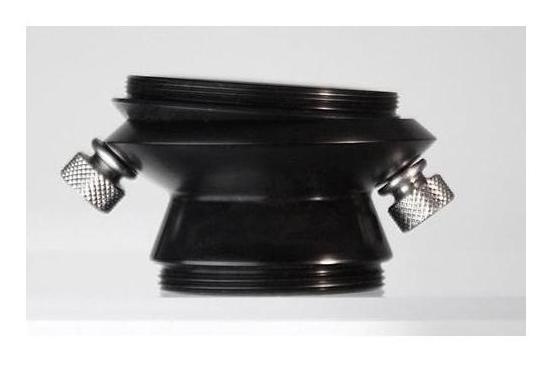
The adapter mitigates this effect by slightly tilting the camera relative to the optical axis. This changes the angle of incidence of the incoming light and modifies the internal optical path lengths inside the sensor, reducing the interference pattern. The design maintains the center of the image sensor in the same position, ensuring that framing, focus position and vignetting remain unchanged while adjusting the tilt.
The IEQT model is designed to connect DayStar Quark solar filters directly to cameras equipped with a standard T thread (M42×0.75). This version does not include any focal reducer, preserving the native focal length of the optical system.
• tilt adapter designed to eliminate interference patterns (Newton’s Rings)
• optimized for narrowband monochromatic imaging such as H-alpha
• adjustable tilt mechanism relative to the optical axis
• maintains sensor center position without altering framing or vignetting
• direct connection between DayStar Quark and T-thread cameras
• no focal reduction – preserves native system focal length
• H-alpha solar astrophotography
• imaging systems using DayStar Quark filters
• astronomical cameras with T thread (M42×0.75)
• type: interference eliminator tilt adapter
• telescope/filter interface: DayStar Quark
• camera mount: T thread (M42×0.75)
• function: adjustable tilt relative to optical axis
• focal reduction: none
For proper operation the adapter should be installed directly in front of the camera in the imaging train. Adjust the tilt gradually until the interference pattern disappears or becomes sufficiently minimized.