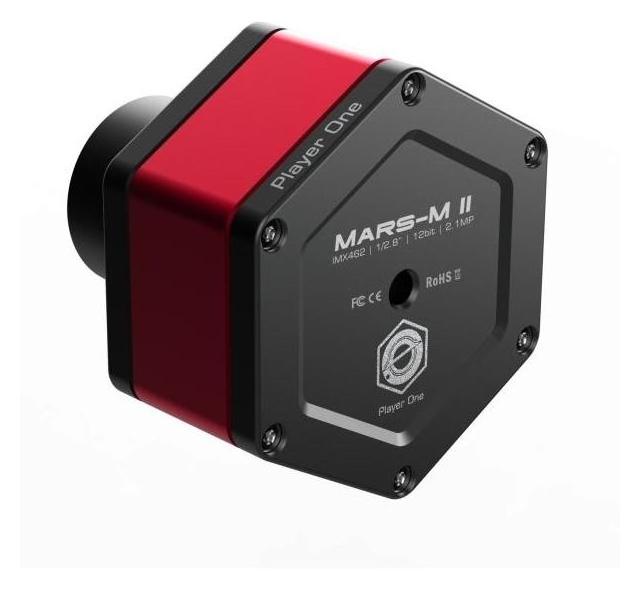
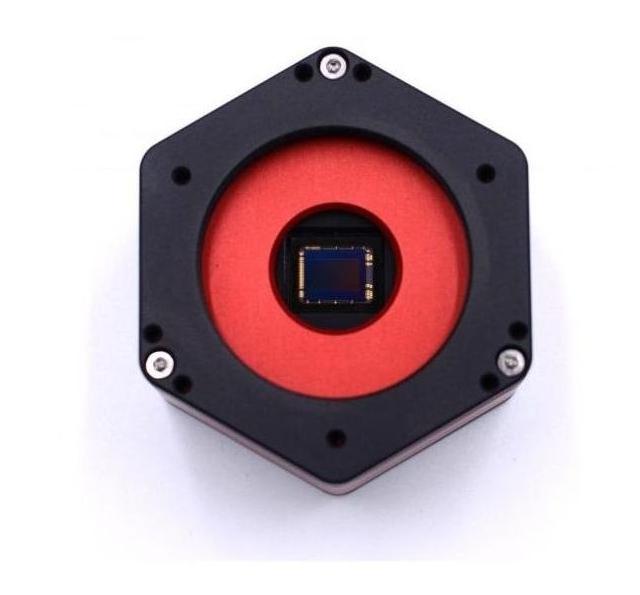
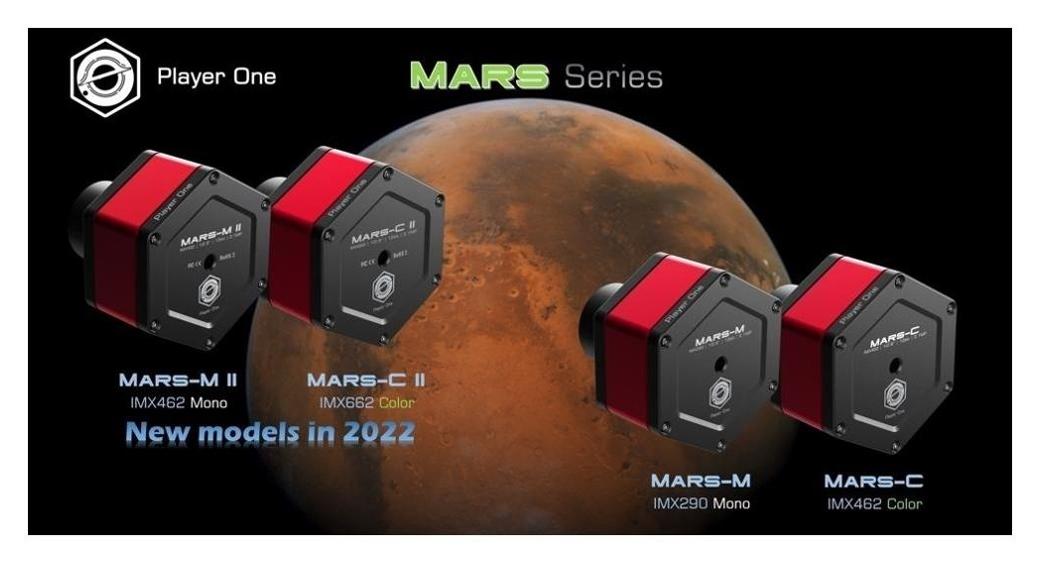
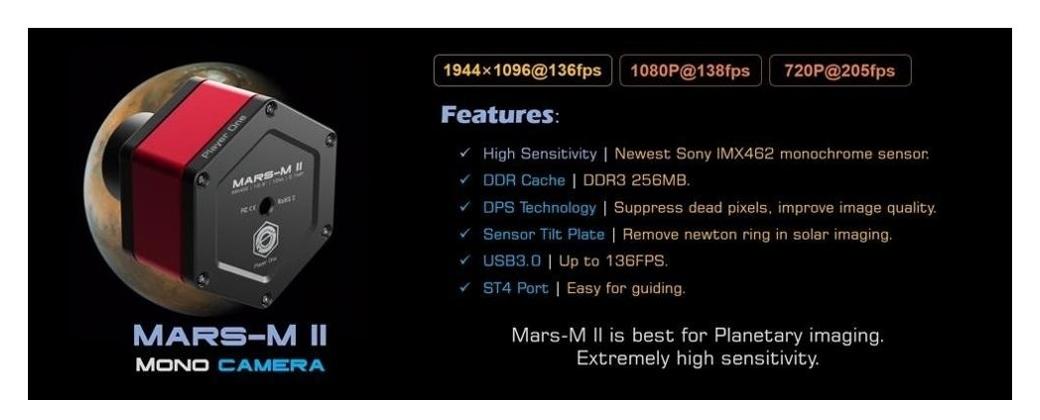
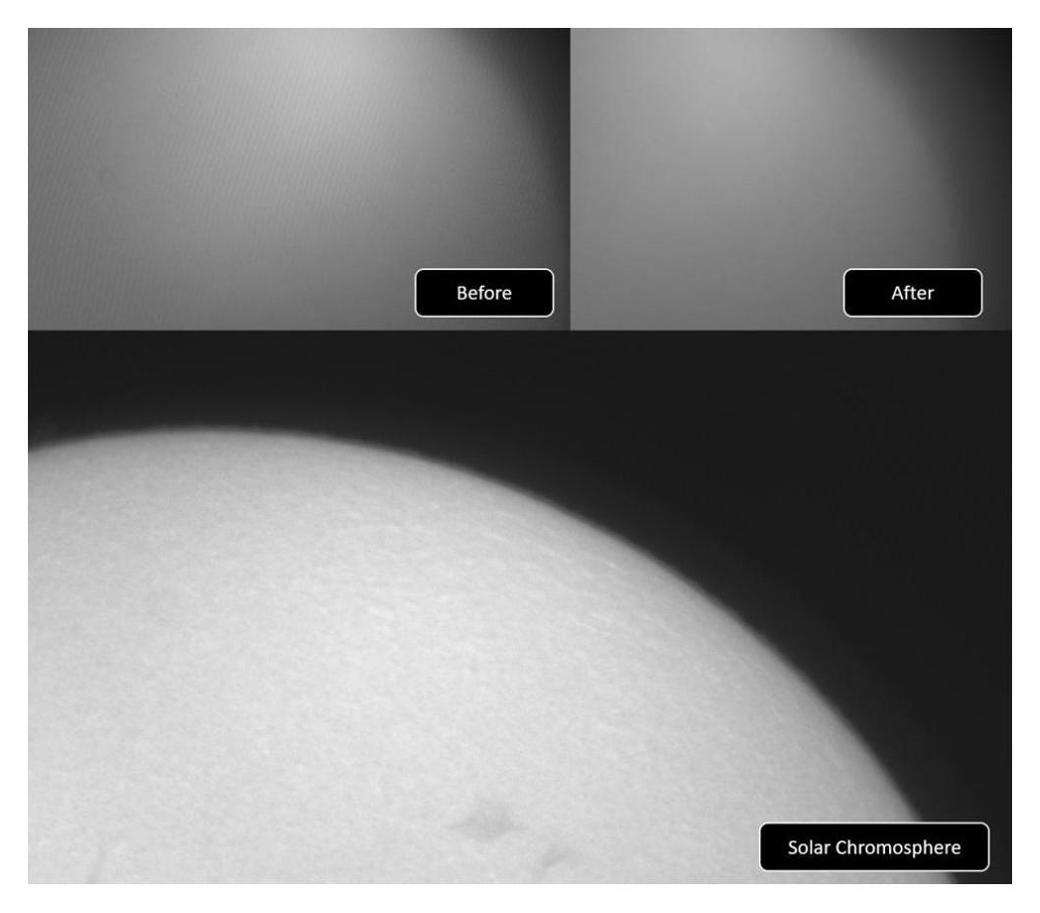
Player One MARS-M II Mono (SKU: POA-MARS-M-II) is the second generation of an ultra-sensitive planetary camera based on the Sony IMX462 mono sensor (1/2.8″ format, 2.1 MP). The STARVIS sensor with a 2.9 µm pixel offers exceptionally low readout noise < 1 e- in HCG mode and excellent sensitivity in the near infrared (QE > 90 % @ 850 nm). This makes the camera ideal for imaging planets, the Moon, the Sun (with H-α / Ca-K filters) and for NIR observations – e.g. transits of Jupiter's moons.
• Sony IMX462 mono sensor (1936 × 1096 px, 2.1 MP, pixel 2.9 µm)
• max. 135 fps in full frame (RAW 10), 400 fps at ROI 640 × 480
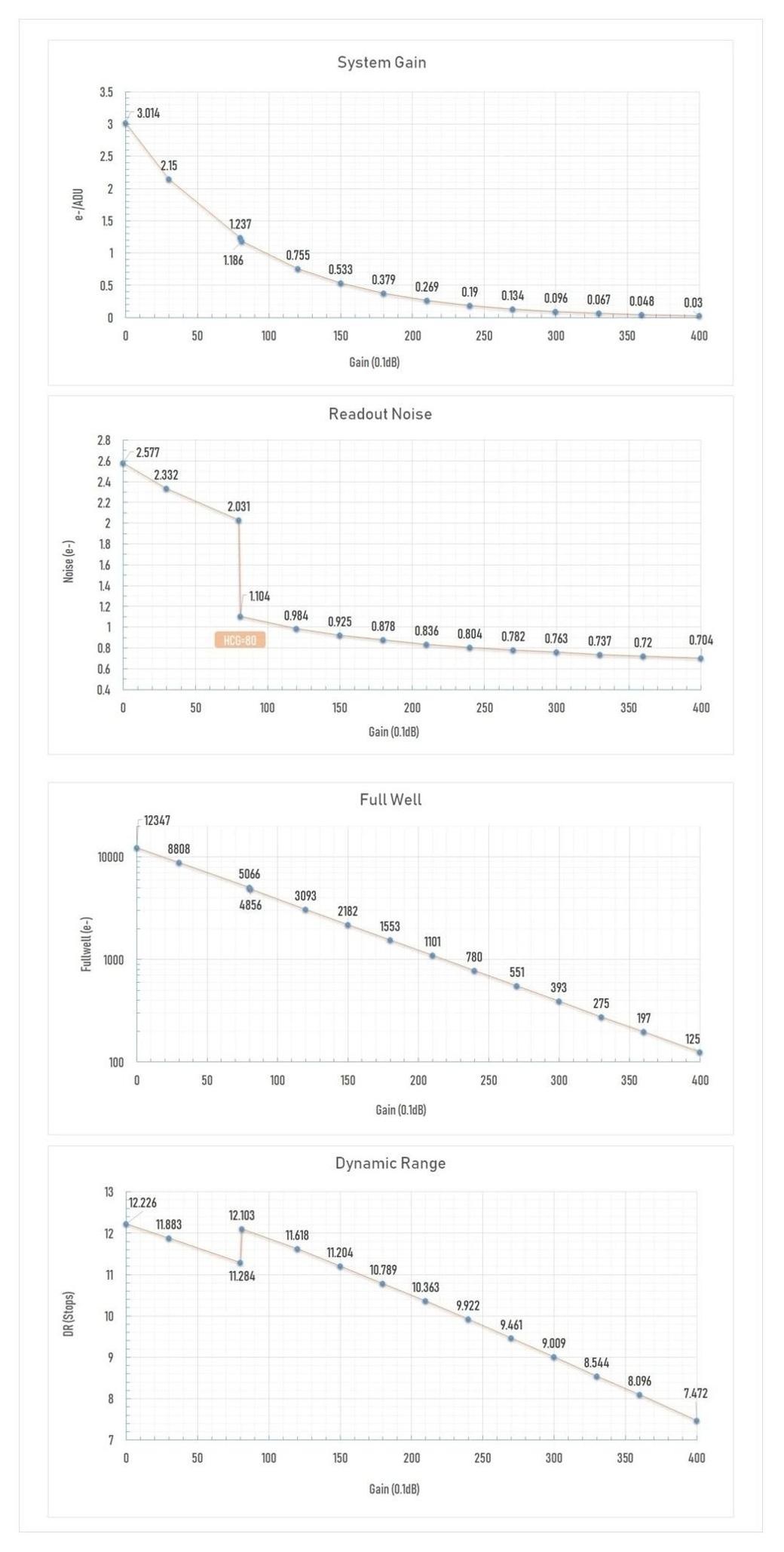
• extremely low reading noise: 0.6 e- @ HCG (gain ≥ 200)
• full well 13 ke- (gain 0) – excellent dynamic range
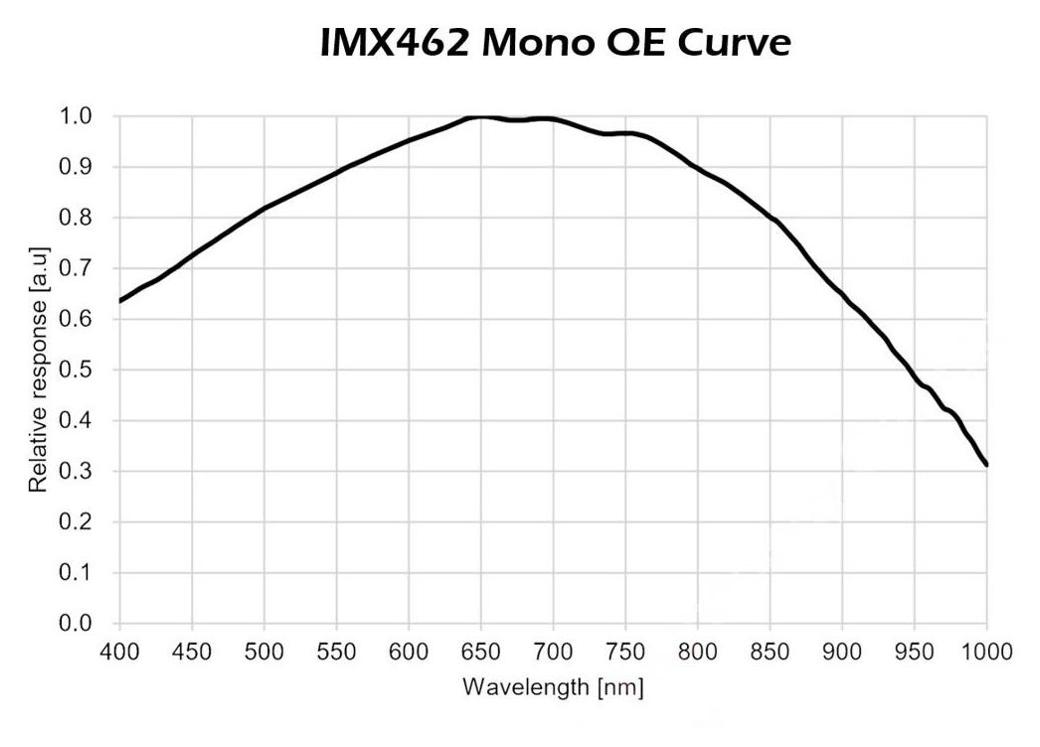
• high NIR sensitivity (>90% QE @ 850 nm) – ideal for methane and IR-pass filters
• 256 MB DDR-III buffer – no dropped frames in fast bursts
• passive PCS cooling system + possibility of connecting the ACS module
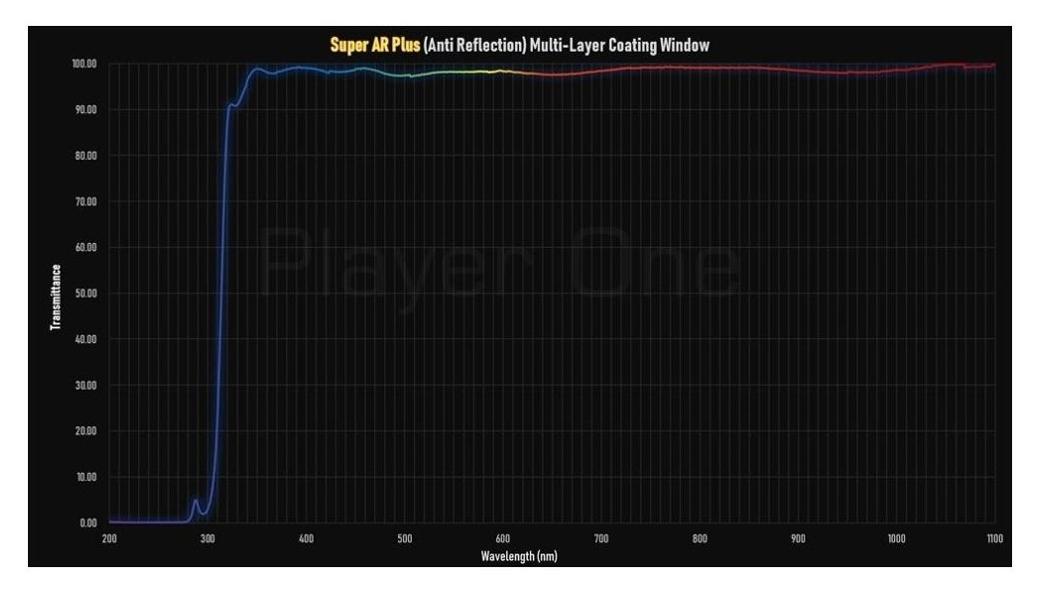
• Super AR Plus protective window (transmission 350–1100 nm)
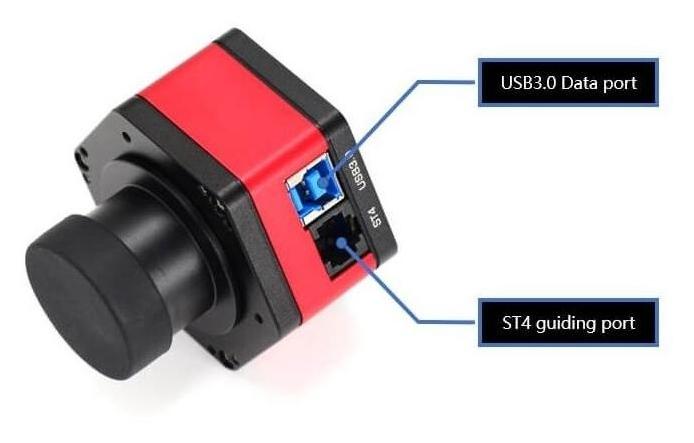
• USB-C 3.0 interface (up to 400 MiB/s) + ST-4 guider port (RJ-12)
• Threads: M42 × 0.75 internal + 1.25″ nose – easy integration with tilters and FD MINI
• 5V power supply from USB (≤ 450 mA) – no additional power cables
• matrix: Sony IMX462 mono, CMOS, rolling shutter
• format / diagonal: 1/2.8″ (6.46 mm)
• resolution: 1936 × 1096 px (2.12 MP)
• pixel: 2.9 µm
• ADC: 12 bit / 10 bit (RAW)
• full well: 13 ke- (gain 0)
• reading noise: 0.6–2.9 e- (HCG–LG)
• max. FPS: 135 fps @ 1936 × 1096 (RAW10)
• exposures: 32 µs – 2000 s
• Buffer: 256MB DDR-III
• back-focus: 12.5 mm (with 1.25″ nose)
• dimensions/weight: Ø 66 mm × 32 mm / 180 g
• power supply: 5 V DC (USB-C), consumption ≤ 0.45 A
• compatible OS: Windows 7/10/11 (ASCOM), macOS, Linux (INDI)
MARS-M II is perfectly matched to telescopes with focal lengths of 1500–6000 mm – it provides correct sampling at both visible and IR wavelengths. It works great with CH 4 (889 nm) and UV-pass filters in lucky imaging , allowing for impressively sharp details of gas planet atmospheres, Saturn's rings or solar flares in H-α.